





Hammered Copper Wall Mirror
These hammered copper wall mirror pieces bring honest metalwork and warm metallic tones into a room.
Hammered Copper Wall Mirror
A hammered copper wall mirror combines metalworking tradition with functional home decor from the late nineteenth and early twentieth centuries. These pieces emerge predominantly from the Arts and Crafts movement, reflecting a design ethos that celebrated manual labour over industrial manufacture.
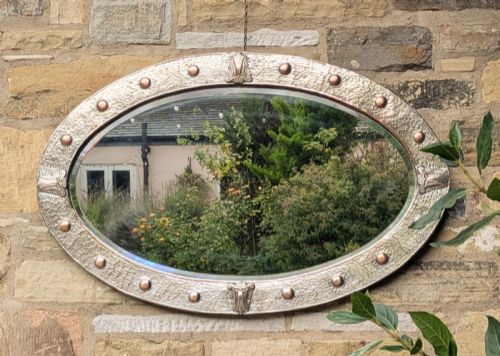
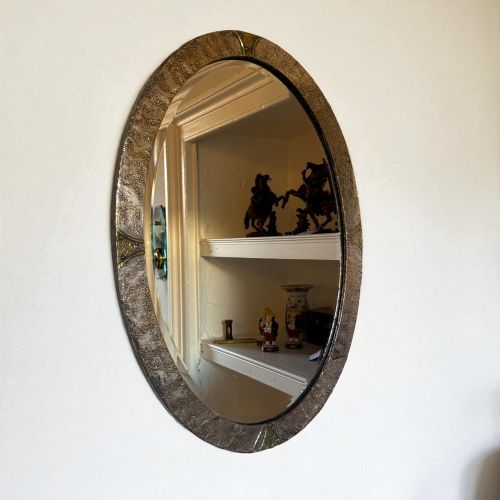
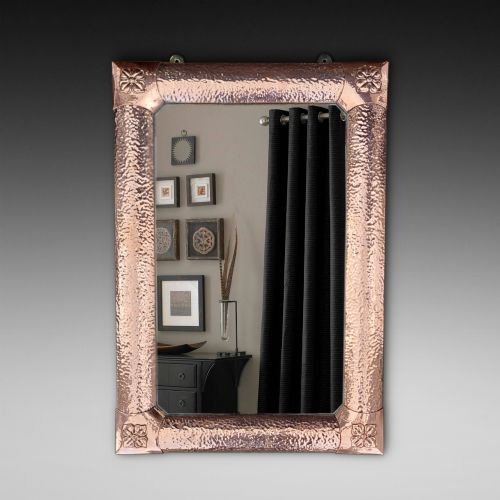
Buyers will most frequently encounter rectangular, oval, and round formats bearing hand-beaten metal frames. The surface texture demonstrates the physical impact of the maker's hammer, creating an organic finish that catches ambient light differently than cast or stamped metal.
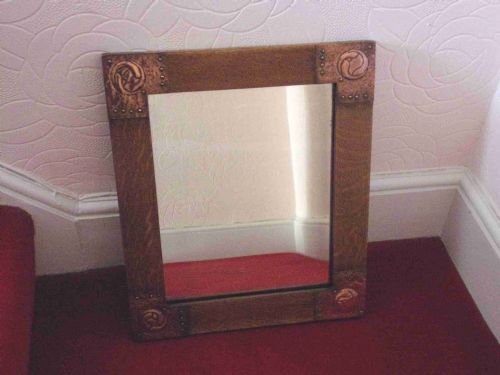
Dating primarily from the Edwardian era through to the nineteen-twenties, these items often incorporate wooden backing structures and original mirror glass. Examples range from plain metal surrounds to pieces embellished with Celtic knots, Ruskin cabochons, or silver plating.
How they were made
The construction of a hammered copper wall mirror relies on sheet copper beaten by hand over a wooden or metal form to achieve its characteristic relief texture. Craftsmen mounted these metal frontages onto timber frames, frequently securing them with visible brass or copper rivets that contributed to the aesthetic.
Glazing typically involved bevelled glass plates set securely behind the metal border to add depth to the reflection. Additional decorative elements such as ceramic cabochons or contrasting silver plate were integrated directly into the copper surface during fabrication.
Hammered Copper Wall Mirror Retail Price Guide 2026
Typical asking prices for hammered copper wall mirror among the pieces listed under this phrase on Sellingantiques today, from the lower quarter to the upper quarter. They describe what is for sale here now, not the wider market.
Listings feature pieces spanning from eighteen ninety through to nineteen twenty, incorporating materials such as oak, brass, and bevelled glass alongside copper.
What varies in quality
The quality of a hammered copper wall mirror rests in the depth and control of the hand-beaten texture across the metal surface. Superior examples display deliberate, rhythmic hammer marks rather than uniform mechanical stamping, showing the distinct touch of the artisan.
Material integration and secondary ornamentation further distinguish finer pieces from standard production. The inclusion of genuine Ruskin cabochons, substantial oak backing boards, or attribution to prominent firms elevates the standard of craftsmanship visible in the finished object.
Liberty and Co
The Hammered Copper Wall Mirror Glossary
- Arts and Crafts
- A design movement spanning the late nineteenth and early twentieth centuries that championed handcraftsmanship and simple forms. It rejected mass production in favour of traditional techniques.
- Bevelled glass
- Mirror glass featuring an angled edge ground down to a thinner perimeter. This technique refracts light and adds a decorative border to the reflection.
- Ruskin cabochon
- A colourful glazed ceramic stone produced by the Ruskin pottery. These cabochons were frequently set into metalwork as decorative accents.
- Celtic knot
- An interlaced decorative pattern derived from ancient insular art. It appears frequently as a motif on metalwork and woodwork from the period.
- Silver plate
- A thin layer of silver applied to the surface of a base metal object. It provides the appearance of solid silver while utilising copper or brass underneath.
Hammered Copper Wall Mirror: Frequently Asked Questions
What periods do these mirrors come from?
The pieces originate primarily from the late Victorian period, the Edwardian era, and the nineteen-twenties. Most examples date specifically from around nineteen hundred to nineteen ten.
Production aligns closely with the height of the Arts and Crafts movement, capturing the aesthetic preferences of that era.
Are the mirror plates original?
Many pieces retain their original bevelled glass, which often exhibits minor foxing or age spots. These natural signs of ageing verify the antiquity of the object.
Replacement glass does occur over time, so examining the backboards and fixings helps determine originality.
How do I clean hammered copper?
Dusting the metal frame gently with a dry cloth preserves the natural patina accumulated over the decades. Avoid abrasive polishes that strip away the historic finish.
Harsh chemical cleaners can damage both the copper surface and any applied silver plating or cabochons.