





Hallway Coat Stand Mirror
A hallway coat stand mirror combines a glass plate with hooks and a frame, offering a practical spot for hats and coats.
Hallway Coat Stand Mirror
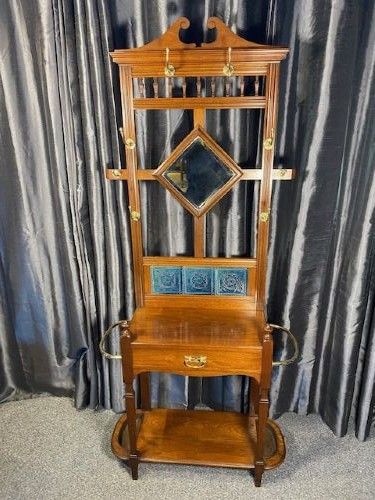
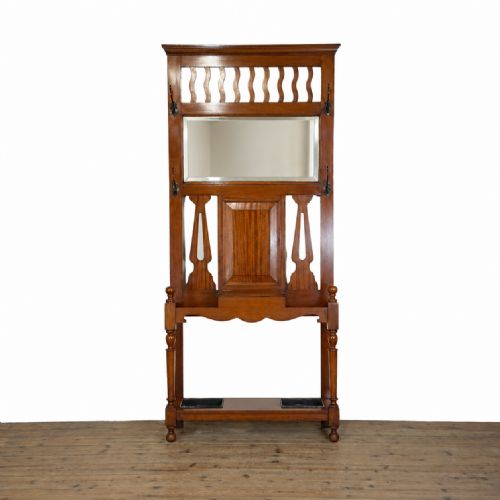
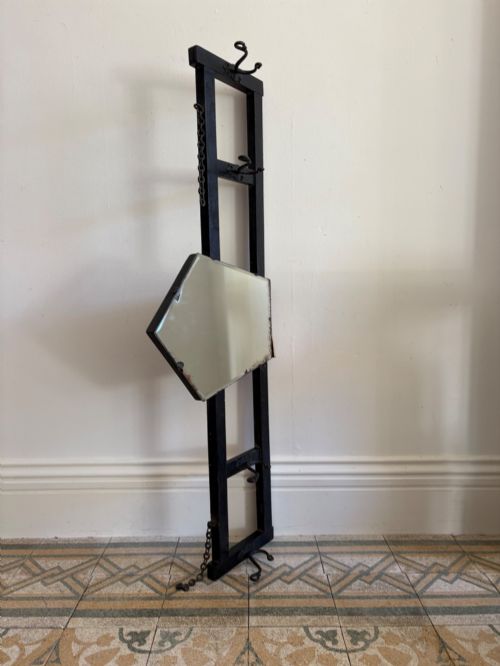
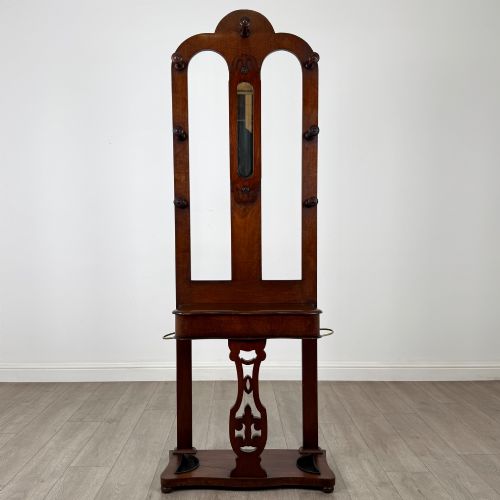
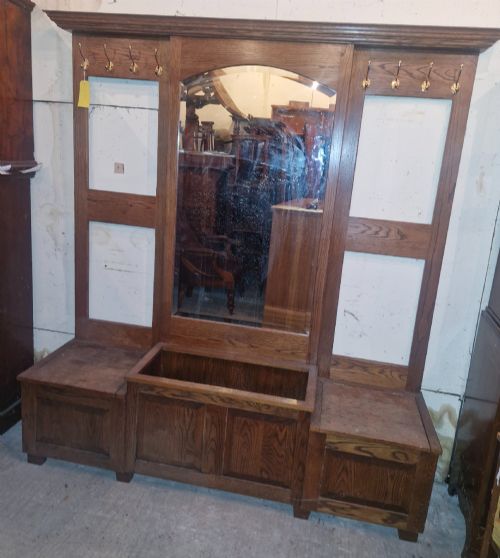
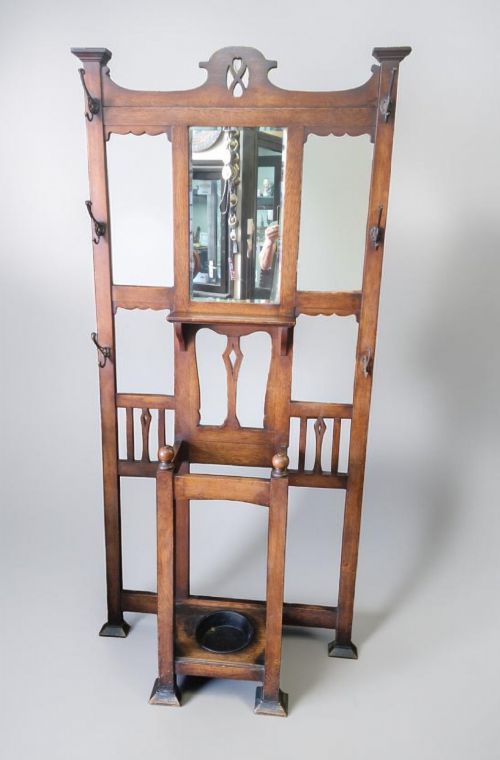
A hallway coat stand mirror serves as a functional entrance piece, combining upright timber or metal frames with integrated glass plates and brass or iron hooks. Buyers encounter substantial freestanding pieces alongside narrow wall-mounted versions designed for compact spaces.
The selection spans Victorian, Edwardian, and early twentieth-century periods, alongside specific styles such as Art Nouveau, Aesthetic Movement, and Dutch Revival. Pieces emerge primarily in oak and mahogany, with occasional examples executed in bamboo, cast iron, and walnut.
Materials and construction techniques
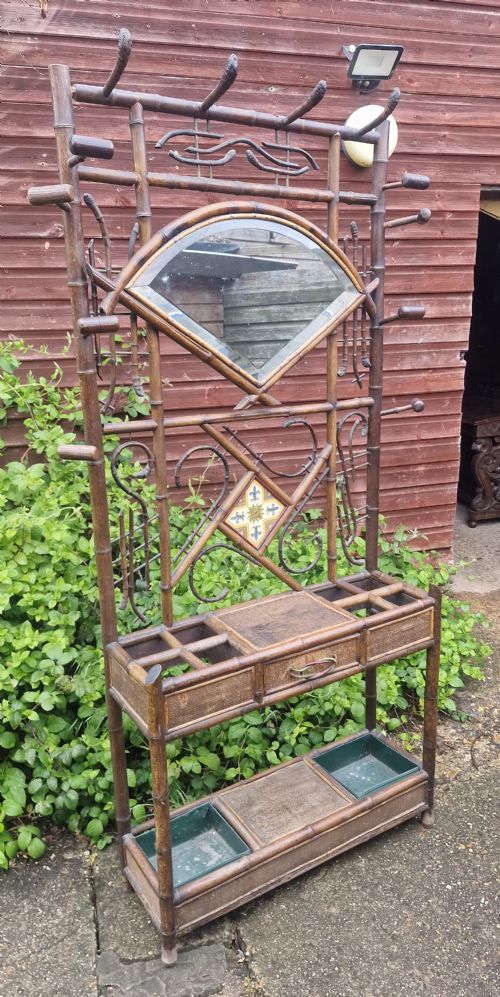
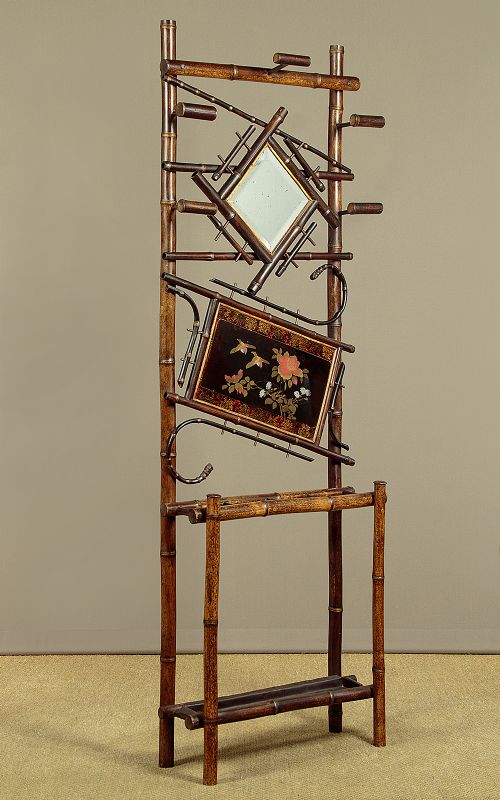
Carpenters utilised solid and veneered hardwoods like oak and mahogany for the primary framework, often applying carved ornamentation or turned spindle details. Bamboo and bentwood construction appear in lighter, more flexible designs from the late nineteenth and early twentieth centuries.
Metalwork played a structural and decorative role, with cast iron and brass utilised for coat hooks, umbrella trays, and structural supports. Glass mirror plates, frequently bevelled, were secured into wooden or metal frames behind the primary hanging zones.
Hallway Coat Stand Mirror Retail Price Guide 2026
Typical asking prices for hallway coat stand mirror among the pieces listed under this phrase on Sellingantiques today, from the lower quarter to the upper quarter. They describe what is for sale here now, not the wider market.
Distinctions in construction and material standard
Superior examples display dense, well-figured timber, deep carving, and robust joinery that supports heavy oak and mahogany structures without wobble. Lesser pieces rely on thinner stock, simpler applied ornamentation, or lighter secondary timbers.
The integration of secondary materials defines the upper tier, seen in thick bevelled mirror plates, substantial marble shelves, and heavy cast brass or iron hardware. Standard variations show simpler flat glass, plain wooden backing boards, and lighter metal hooks.
Fischel·Gillows
The Hallway Coat Stand Mirror Glossary
- Hall stand
- A freestanding hall furniture piece combining a mirror, coat hooks, umbrella storage, and sometimes a small shelf or seat. These items stood near front doors for daily outdoor wear.
- Bevelled plate
- A mirror glass with an angled, polished edge that catches the light. This treatment adds depth and refinement to the central glass.
- Bentwood
- Wood softened by steam and bent into curved shapes under pressure. This technique produced lightweight, flowing frames seen in early twentieth-century pieces.
- Aesthetic Movement
- A late nineteenth-century design style emphasising visual beauty over narrative meaning. Pieces in this idiom often utilise bamboo or ebonised wood with simple geometric lines.
Hallway Coat Stand Mirror: Frequently Asked Questions
How do I clean the mirror plate?
Use a soft cloth with standard glass cleaner applied directly to the cloth rather than the glass, preventing moisture from seeping behind the antique silvering.
Take care to avoid letting liquid pool at the wooden or metal frame edge where old adhesives or backing boards might be vulnerable.
Are these pieces suitable for small hallways?
Many narrower freestanding designs and wall-mounted variations fit restricted entrance spaces while still providing hooks and a glass plate.
Check the footprint dimensions and umbrella well depths before placement to ensure clearance for opening doors.
How do I secure a heavy hall stand?
Freestanding examples with tall frames and heavy wooden hoods benefit from wall anchors attached discreetly to the upper rear structure.
This prevents tipping when heavy coats and umbrellas hang from the brass or iron hooks.
What maintenance do oak and mahogany frames need?
Apply a coat of quality beeswax periodically to nourish the timber surface and maintain a soft sheen without building up heavy residues.
Avoid placing these items directly beside active heat sources to prevent timber shrinkage or veneer lifting.