
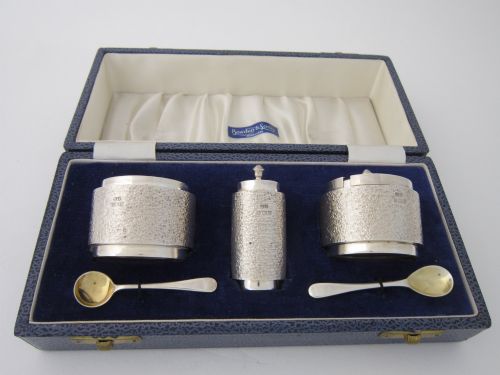
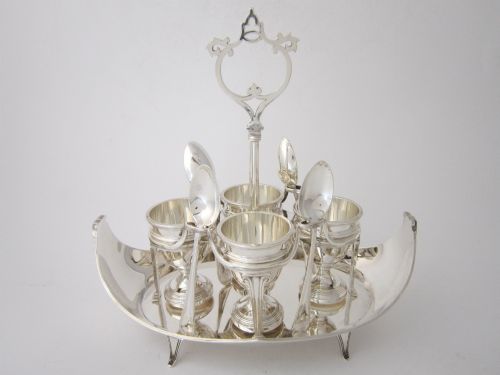
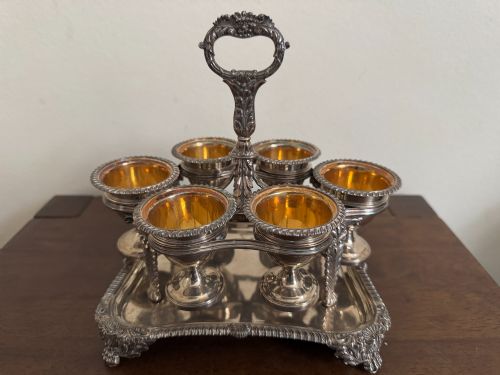


Hallmarked Silver Cruet
A hallmarked silver cruet brings genuine refinement to the table, offering matched vessels for salt, pepper, mustard and oils.
Hallmarked Silver Cruet
A hallmarked silver cruet is a structured tabletop set designed to hold liquid and dry seasonings for dining, appearing in forms ranging from multi-piece condiment collections to specialised egg cruet stands. When searching for a hallmarked silver cruet, buyers encounter everything from Georgian frames with casters and bottles to mid-century modern condiment sets.
The pieces on this page span several centuries, with particular strength in Georgian and George V examples alongside later mid-century items. Forms include cased sets of four or five pieces, individual condiment sets, and framed stands complete with glass bottles.
Materials and technique
These sets utilise sterling silver for the stands, frames and caster bodies, often combined with cut glass for bottles and jars. Some pieces feature gold gilt or gold plate highlights on the interior bowls or spoons.
Silversmiths employed traditional manufacturing techniques such as casting, hammering and piercing to create the frames, applying official assay office hallmarks to certify the metal standard.
Listings on this site range from 18th-century Georgian Warwick cruets to 1960s Elizabeth II condiment sets in sterling silver.
What separates the top of the range
Quality in a hallmarked silver cruet depends upon the weight and gauge of the sterling silver used in the stand and mounts, as well as the completeness of matching bottles and casters. Sets that retain their original cut glass components and associated spoons command greater respect.
The distinction also lies in the crispness of the silversmith's chased or pierced decoration on the frame and the legibility of the town marks, date letters and maker's stamps.
William Burwash·Charles Thomas Fox·Wilmot Manufacturing Co·Viners·John Schofield
The Hallmarked Silver Cruet Glossary
- Hallmark
- A series of official marks stamped on precious metals showing the standard of purity, the assay office, and the year of manufacture. These stamps allow collectors to date the piece precisely.
- Caster
- A small cylindrical jar with a pierced top used for shaking sugar or dry spices onto food. They form the central vertical elements in many traditional cruet frames.
- Cruet stand
- The fitted metal frame or tray designed to hold multiple condiment bottles, casters and pots securely together on the dining table. They often feature a central carrying ring.
- Silver gilt
- Sterling silver that has been coated with a thin layer of gold on the surface, often seen on the interior of salt cellars to protect the metal from corrosion.
- Condiment set
- A matched group of small vessels holding table seasonings such as mustard, salt and pepper. These evolved from larger cruet frames during the twentieth century.
Hallmarked Silver Cruet: Frequently Asked Questions
What is a hallmarked silver cruet used for?
A hallmarked silver cruet is used to hold and present table condiments such as salt, pepper, mustard, vinegar and oil during meals.
Historically, these sets sat at the centre of the dining table so diners could season their food according to individual taste.
How do I date a silver cruet?
You date a silver cruet by reading the hallmarks stamped onto the metal frame, which include a specific letter code for the year.
Additional clues come from the overall style, such as Georgian piercing or Art Deco geometric lines.
Are glass inserts original to the set?
Glass inserts and bottles are often original if they fit the frame snugly and match the cut patterns and period of the silver stand.
Replacement glass bottles are common due to breakage over centuries of domestic use.
How do I clean a silver cruet?
You clean a silver cruet using a mild silver polish and a soft cloth, taking care around any cut glass or fabric linings.
Avoid harsh abrasives that can wear away the hallmarks or damage the silver surface.