
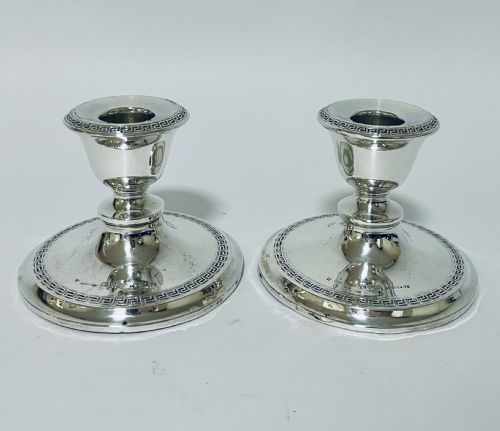
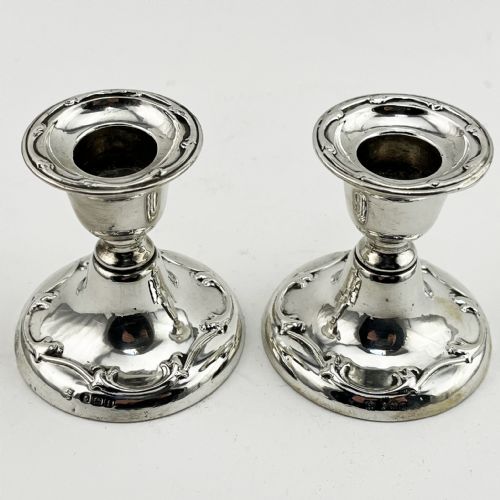
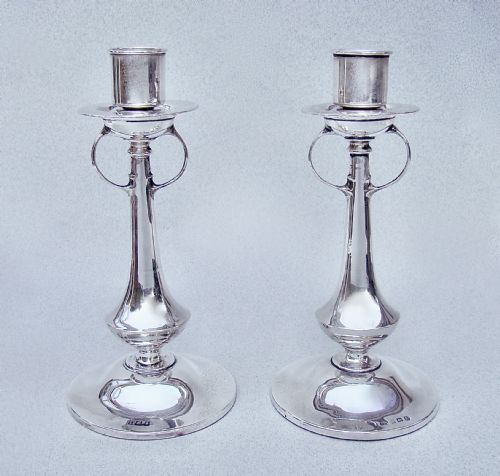


Hallmarked Silver Candleholders
Hallmarked silver candleholders bring steady light and bright metal to a room, spanning Victorian chambers to mid-century modern designs.
Hallmarked Silver Candleholders
Hallmarked silver candleholders include tall candlesticks, dwarf versions, desk models, and chambersticks designed to hold wax lights securely. When you search for hallmarked silver candleholders, you encounter pieces intended for dining tables, sideboards, and writing desks across domestic interiors.
The selections on this page draw from Victorian, Edwardian, and mid-century periods, alongside styles such as Neo-Classical and Arts & Crafts. Most examples appear in pairs, shaped from sterling silver and standard silver.
Makers stamp these items with official hallmarks indicating assay offices like Birmingham, Sheffield, and London, alongside dates spanning the late nineteenth century through to the 1970s.
How they were made
Silversmiths formed these candleholders using sterling silver and standard silver, often weighted internally with resin or plaster to provide stability at the base. Makers shaped columns, nozzles, and drip pans through spinning, casting, and hand-assembly.
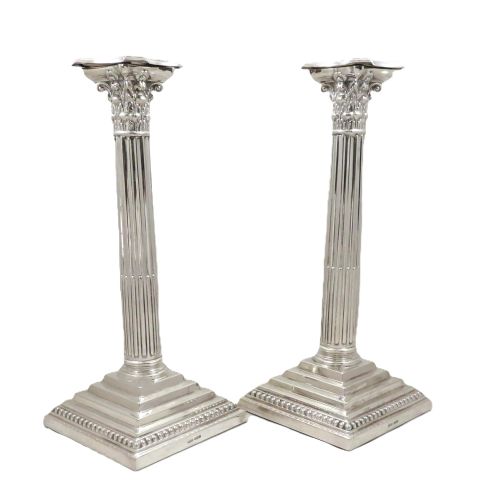
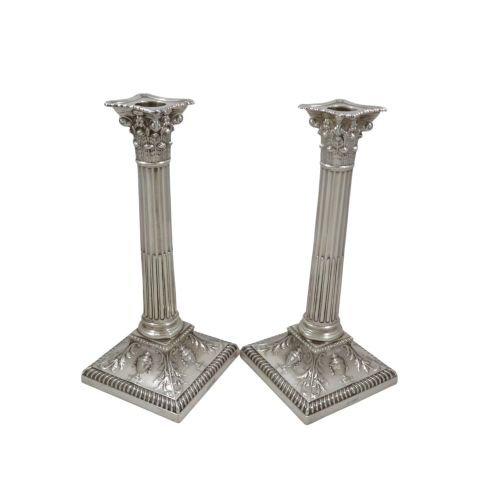
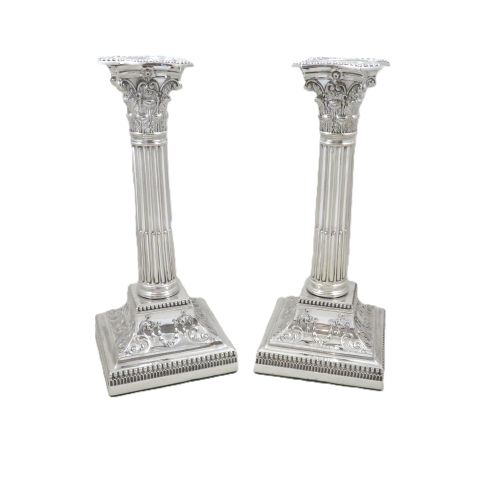
Workshops applied decorative elements such as Corinthian capitals, reeded shafts, and trefoil bases using classical revival patterns or Arts & Crafts texturing. Guilds and firms stamped each completed piece with official assay office marks and maker initials to certify metal purity.
Many chambersticks retain tiny conical snuffers that look like miniature metal party hats waiting for a very small guest.
What varies in quality
Quality rests upon the crispness of the casting in details like acanthus leaves, fluting, and Corinthian capitals. Earlier Victorian and Edwardian examples often display deeper relief work and more robustgauge metal than later mid-century items.
The integrity of the maker's mark and assay stamp contributes to the standing of a piece, alongside whether items survive as matched pairs or sets of four. The weight of the silver relative to the weighted interior base also distinguishes finer production.
James Fenton·Thomas Bradbury And Sons Ltd·William Hutton And Sons·Goldsmiths And Silversmiths Co·Garrard And Co Ltd·Elkington And Company·Geoffrey Bellam
The Hallmarked Silver Candleholders Glossary
- Hallmark
- A series of official marks stamped on precious metals indicating the standard of purity, the assay office, and the year of manufacture.
- Chamberstick
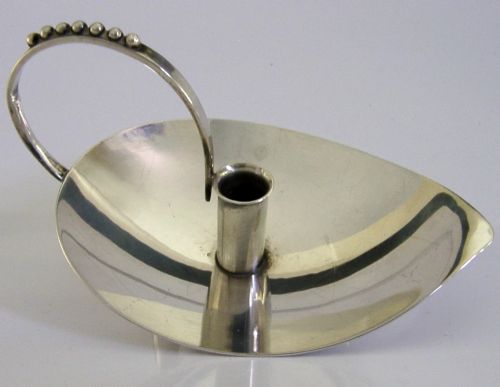
- A low candleholder featuring a wide drip pan and a loop handle, originally designed for carrying from room to room.
- Dwarf Candlestick
- A shortened version of a standard candlestick, standing lower to the surface and suited for desks or small tables.
- Corinthian Column
- A classical column style featuring an ornate capital decorated with carved acanthus leaves, frequently utilised on tall candlesticks.
- Sterling Silver
- An alloy comprising ninety-two point five percent silver and seven point five percent other metals, mostly copper.
Hallmarked Silver Candleholders: Frequently Asked Questions
What is a chamberstick?
A chamberstick is a low portable candleholder with a saucer-like base and a handle, used historically to light pathways through dark hallways.
These pieces often include a matching conical snuffer resting in a small clip beside the socket.
How do I date a silver candlestick?
You date a silver candlestick by examining the struck hallmarks, which include a distinct letter code corresponding to the assay year.
Additional clues emerge from the prevailing design style, such as Neo-Classical columns or mid-century modern minimalist forms.
Why are silver candlesticks weighted?
Makers weighted the bases of silver candlesticks with resin, pitch, or plaster to provide stability and prevent them from tipping over.
Solid silver of that thickness would make the pieces prohibitively heavy and expensive.
How should I clean silver candleholders?
Clean silver candleholders gently with a specialist silver cloth or mild polish to remove tarnish while preserving the underlying hallmarks.
Avoid abrasive agents that wear down crisp details on classical capitals and decorative stems.