

Hall Stand with Umbrella Rack
A hall stand with umbrella rack commands the entrance, combining coat storage and stick holders in solid oak, mahogany, or cast iron.
Hall Stand with Umbrella Rack
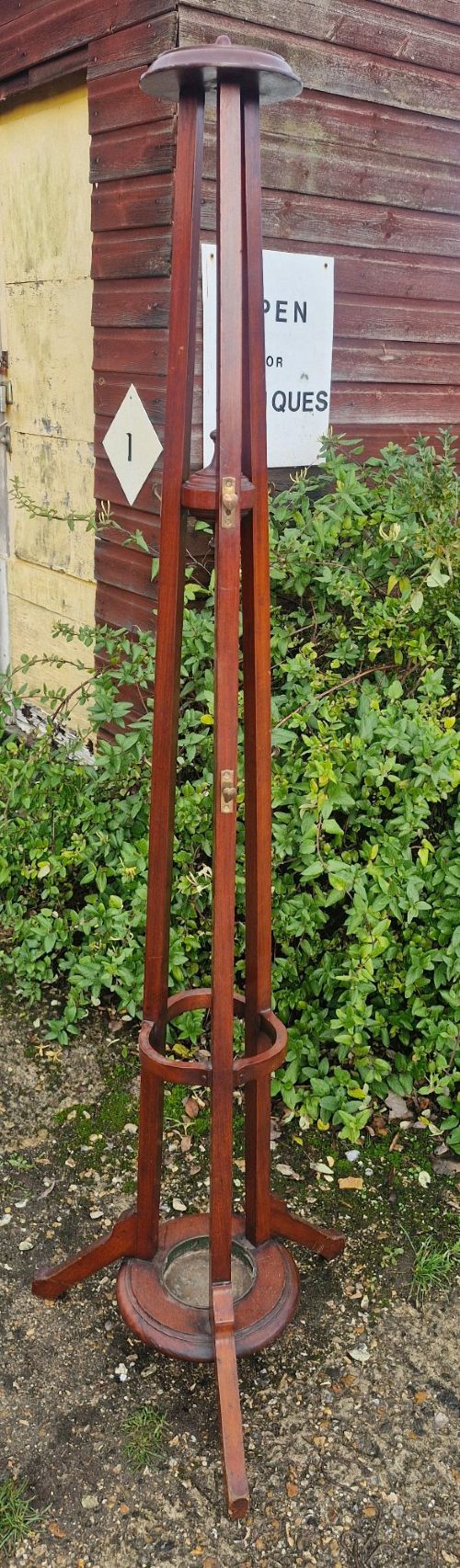
A hall stand with umbrella rack organises an entryway by combining hooks for hats and coats with dedicated wells or rings for walking sticks and wet umbrellas. These entrance pieces emerge most frequently from the Victorian and Edwardian periods, constructed to handle the daily traffic of coats, hats, and wet weather gear.
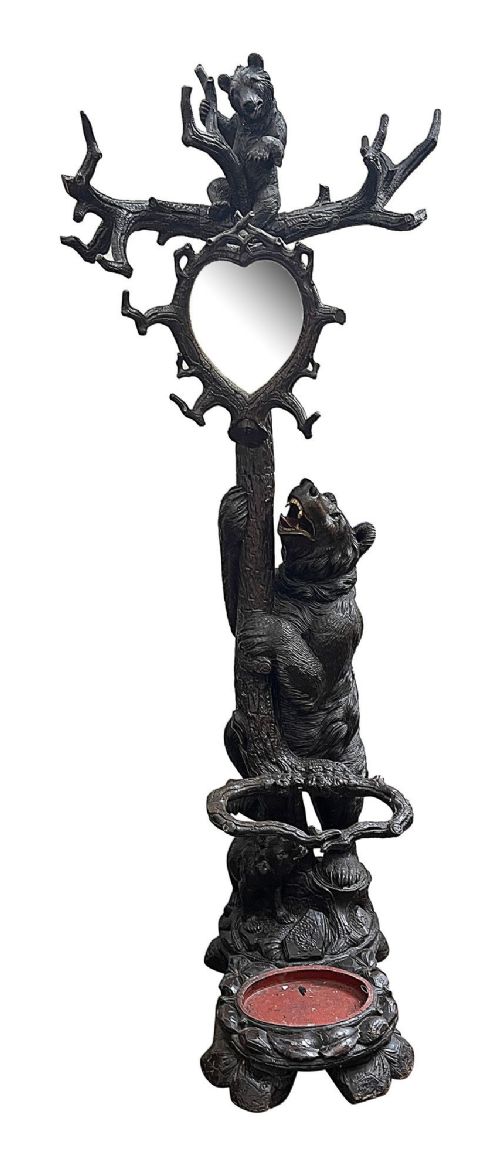
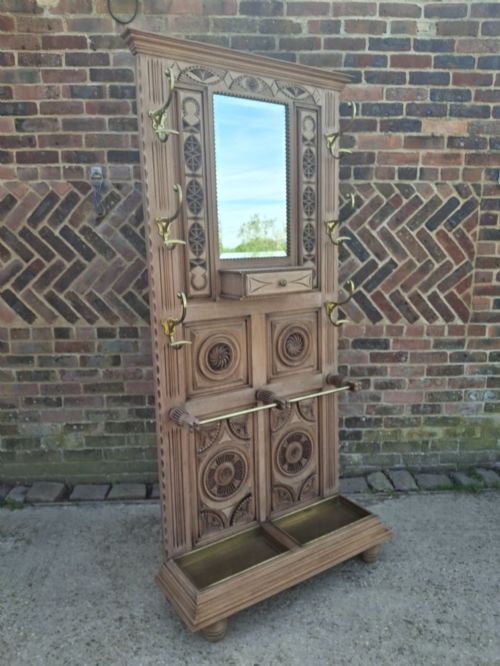
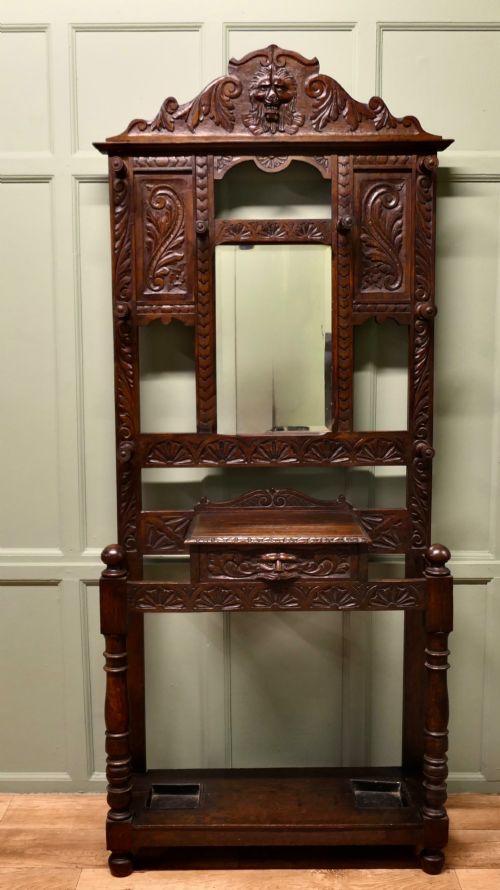
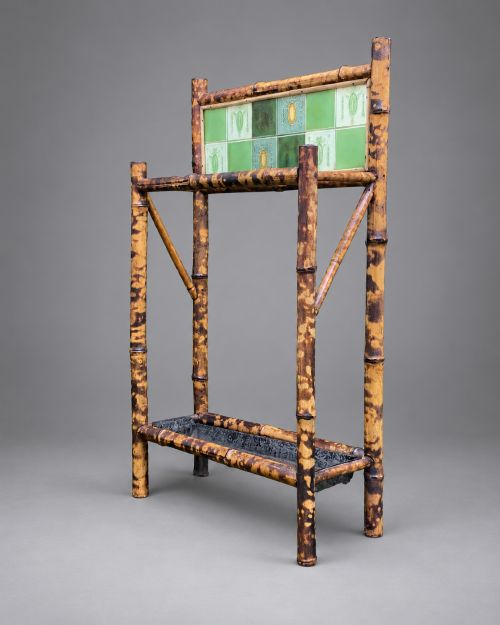
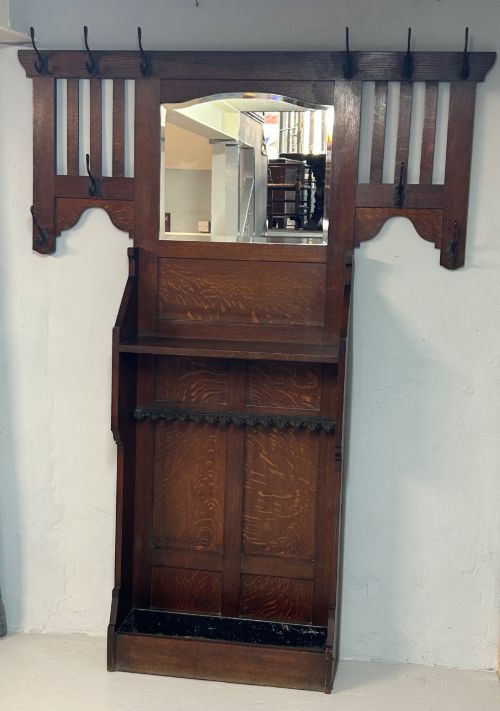
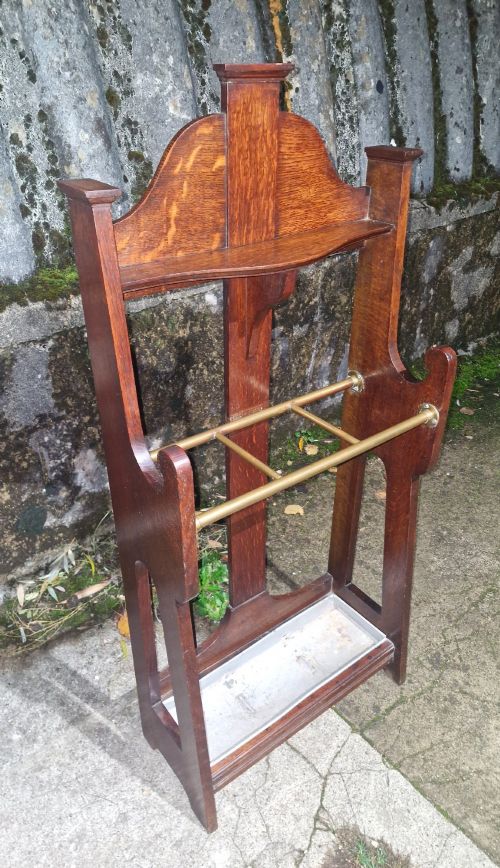
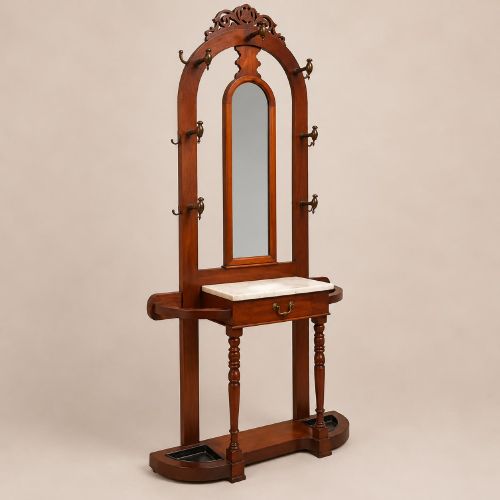
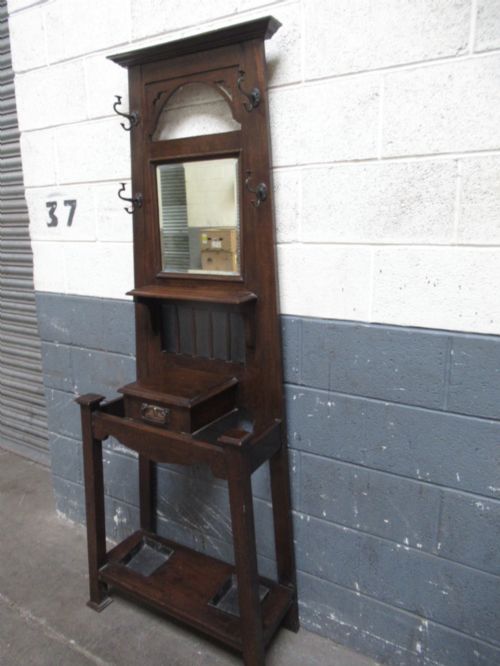
The most common form met here is the tall oak hallstand, fitted with a central mirror, coat hooks, and metal drip trays at the base. Variants range from slender bamboo and faux bamboo frames to heavy cast iron models designed for heavy country house use.
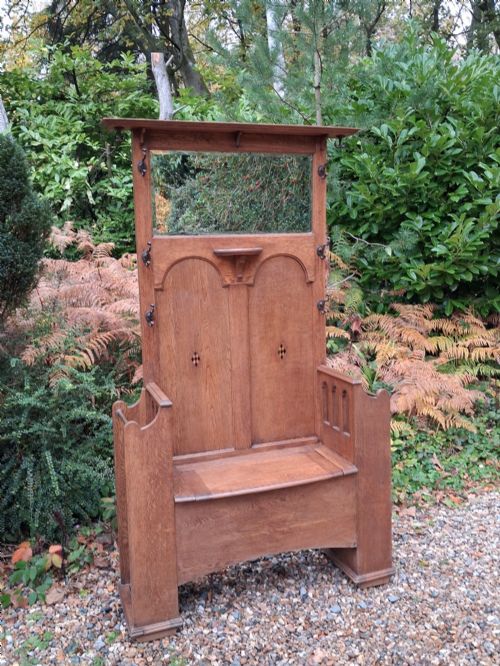
Makers and designers of these entrance furnishings drew upon diverse aesthetic currents, resulting in pieces influenced by the Aesthetic Movement, Arts and Crafts, Art Nouveau, and Victorian Gothic Revival.
How they were made
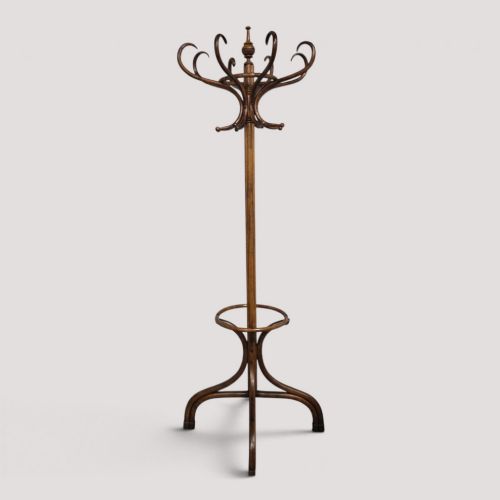
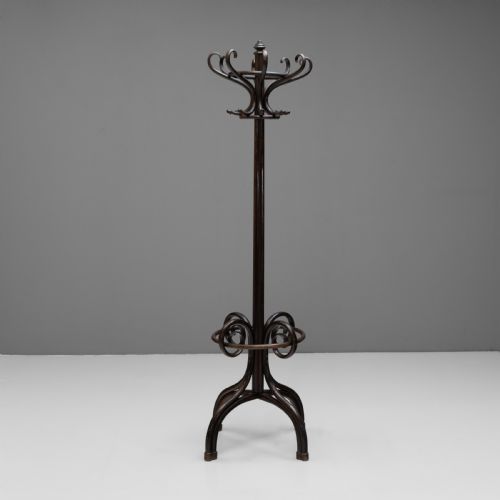
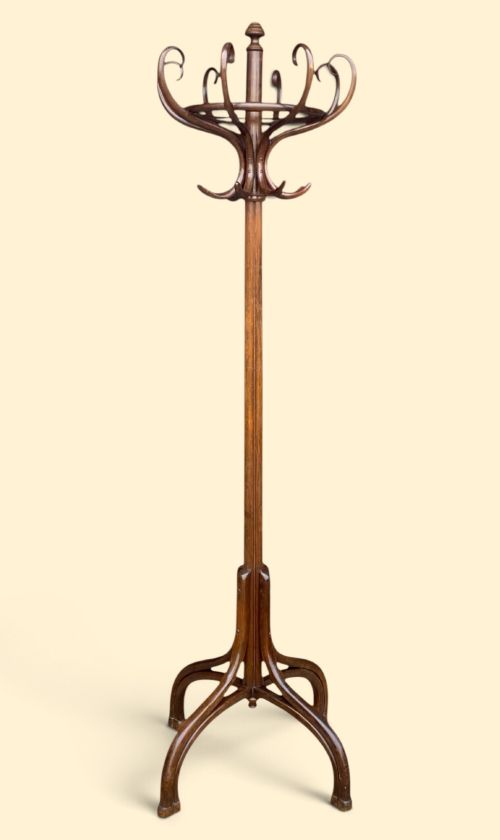
Timbers such as oak and mahogany form the primary structure for wooden hallstands, frequently shaped with hand-carved details or inlaid veneers. Bentwood techniques utilise steamed beech to create flexible, curved coat hooks and umbrella rings.
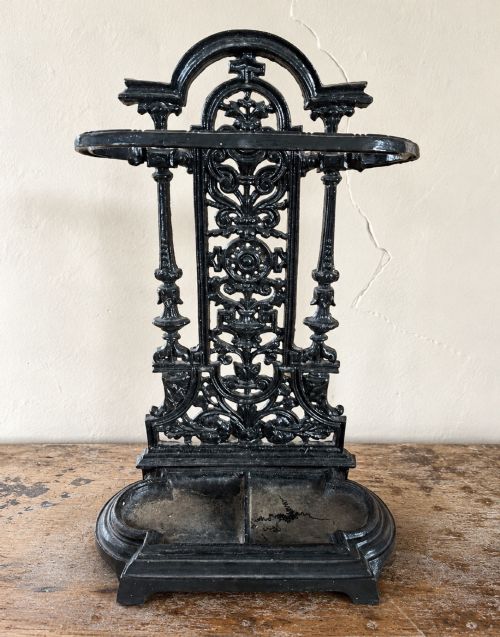
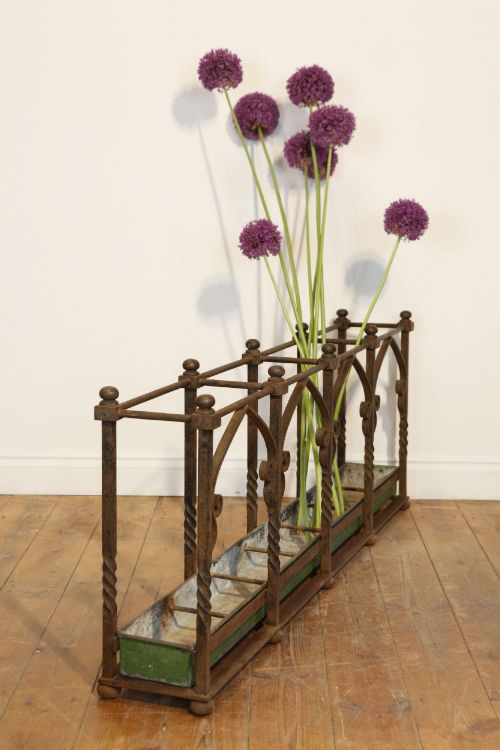
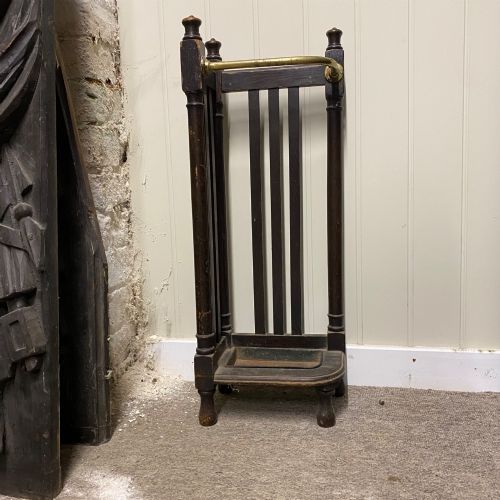
Metal components play an essential structural and functional role, incorporating cast iron frames, nickel-plated finishes, brass bun feet, and sheet metal drip trays designed to catch rainwater from sticks and umbrellas.
Hall Stand with Umbrella Rack Retail Price Guide 2026
Typical asking prices for hall stand with umbrella rack among the pieces listed under this phrase on Sellingantiques today, from the lower quarter to the upper quarter. They describe what is for sale here now, not the wider market.
Current listings feature hall stands constructed from oak, mahogany, pine, cast iron, brass, and bentwood, spanning the Victorian, Edwardian, and Art Deco periods.
What varies in quality
Construction methods determine durability, separating simpler pine or assembled frames from heavily carved solid oak or mahogany structures featuring integral bevelled mirrors and marble shelves. The presence of original fitted brass or cast iron drip trays and robust umbrella divisions distinguishes superior examples from altered or lesser pieces.
Design ambition separates basic utility stands from those bearing the stylistic hallmarks of specific artistic movements or known manufacturers, such as the fluid whiplash lines of Art Nouveau or the clean geometric restraint of Arts and Crafts design.
Thonet·Coalbrookdale·James Shoolbred
The Hall Stand with Umbrella Rack Glossary
- Drip tray
- A removable metal tray placed at the base of the umbrella rack to catch water from wet sticks and prevent floor damage. These trays are often galvanized, brass, or painted iron.
- Bentwood
- Wood softened by steam and bent into curved shapes under pressure, notably utilised by makers like Thonet for lightweight coat and hall stands.
- Faux bamboo
- Wood, often maple or another pale timber, carved and painted to imitate natural bamboo cane. This technique gained popularity during the Aesthetic Movement.
- Demi-lune
- Half-moon shape, commonly describing the footprint of wall-abutting umbrella stands and tables designed to save space in narrow hallways.
- Japonisme
- The influence of Japanese art and design on Western decorative arts, seen in the asymmetry and motifs of late nineteenth-century hall furniture.
Hall Stand with Umbrella Rack: Frequently Asked Questions
What is a hall stand with umbrella rack?
A hall stand with umbrella rack is a multifunctional hallway furnishing designed to hold outdoor wear and walking gear in one compact unit. It typically combines upright panels with coat hooks, a mirror, and integrated metal wells or ring holders for umbrellas and sticks.
These pieces served as the primary reception furniture in nineteenth and early twentieth-century homes, greeting visitors while keeping wet coats and muddy sticks out of the main living rooms.
How do I care for a wooden hall stand?
Wooden hall stands require standard maintenance using appropriate wax or polish to nourish the timber and protect the polished surfaces from dry air. Ensure that metal drip trays are emptied and dried regularly to prevent moisture damage to the surrounding wood.
Avoid placing damp umbrellas directly against unlined wooden panels or untreated baseboards to preserve the integrity of the antique finish.
How do I identify a Victorian hall stand?
Victorian hall stands are generally characterised by heavy timbers such as oak and mahogany, often featuring deep hand-carvings, turned spindles, and central mirrors. Stylistic markers range from ornate Gothic Revival motifs to simpler Aesthetic Movement designs.
Cast iron versions from this period often display crisp foundry casting and incorporate heavy drip trays to manage wet weather gear.
Where were hall stands placed in the home?
Hall stands were positioned directly in the entrance hall or vestibule of a house to manage the arrival and departure of family members and guests. Their placement near the front door allowed visitors to immediately divest themselves of hats, coats, and walking sticks upon entry.
The inclusion of a central mirror also permitted a final check of one's appearance before stepping back out through the front door.