

Hall Stand with Umbrella Drip Trays
A hall stand with umbrella drip trays takes the clutter of the front door and turns it into a piece of architecture.
Hall Stand with Umbrella Drip Trays
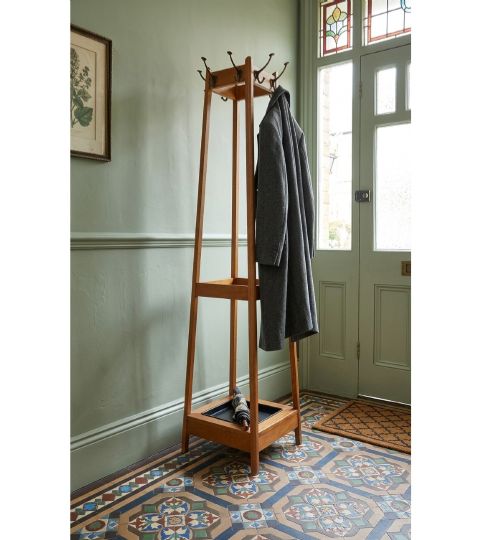
A hall stand with umbrella drip trays combines coat hooks, hat storage, and dedicated wet-weather channels into a single piece of furniture designed for an entranceway. You are looking at hardworking furniture conceived to greet visitors and hold outdoor wear in domestic or country house settings.
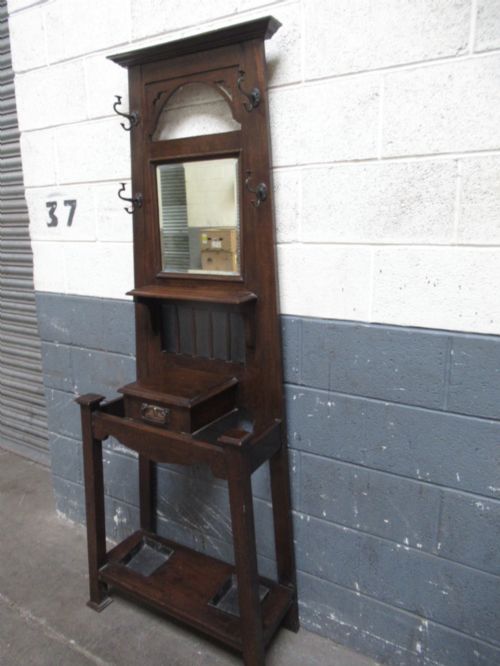
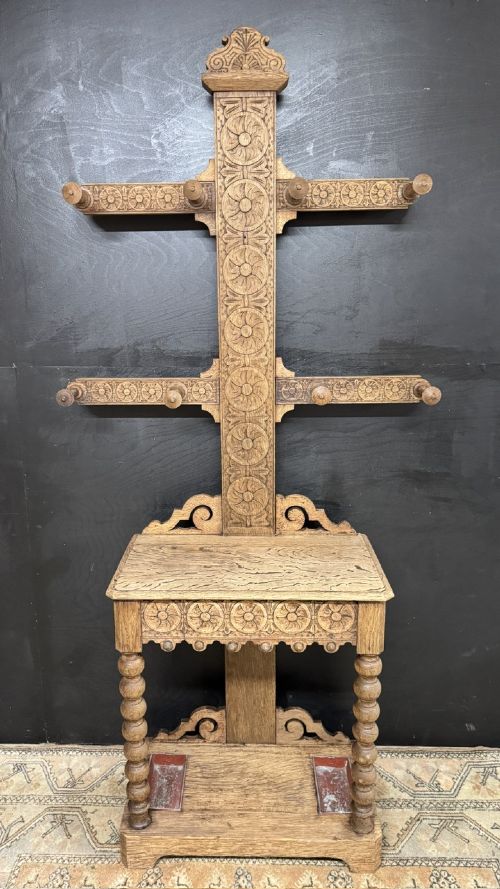
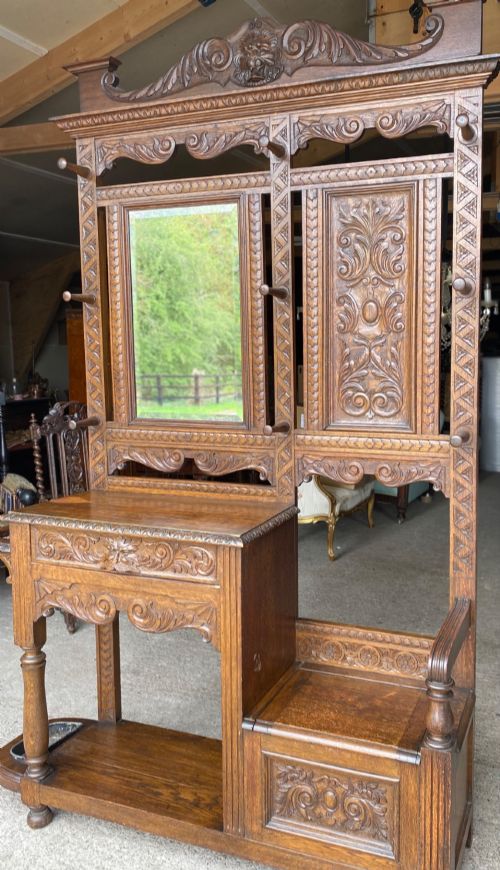
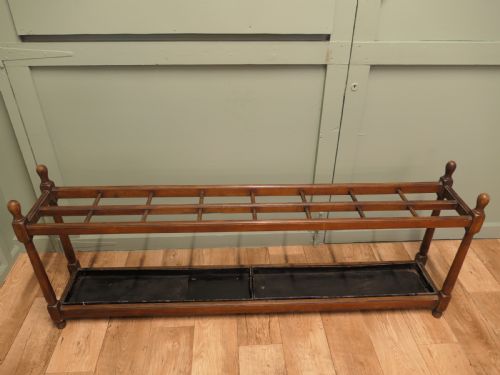
The versions you will most frequently meet on this page span the Victorian and Edwardian eras through to the mid-twentieth century. They appear primarily as substantial wooden frames, often incorporating mirrors and bench seats alongside lower metal pans for damp sticks.
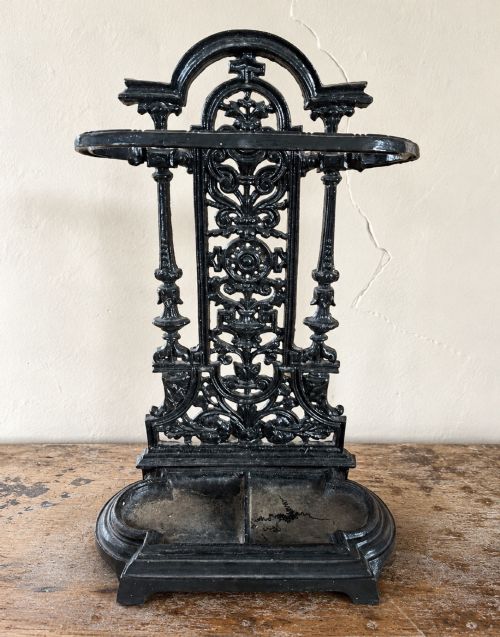
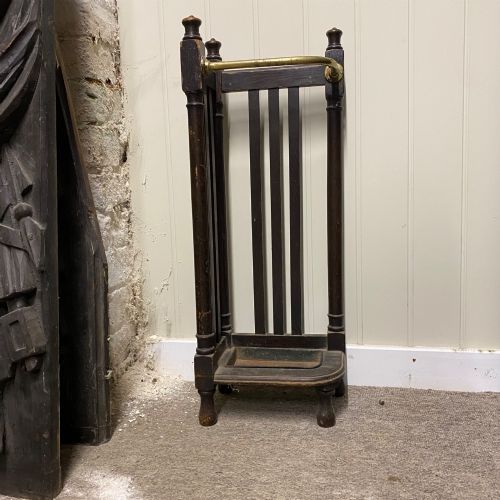
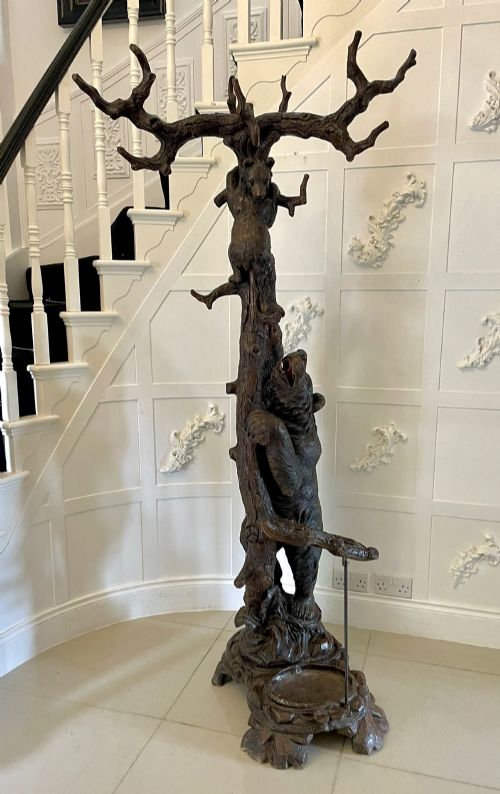
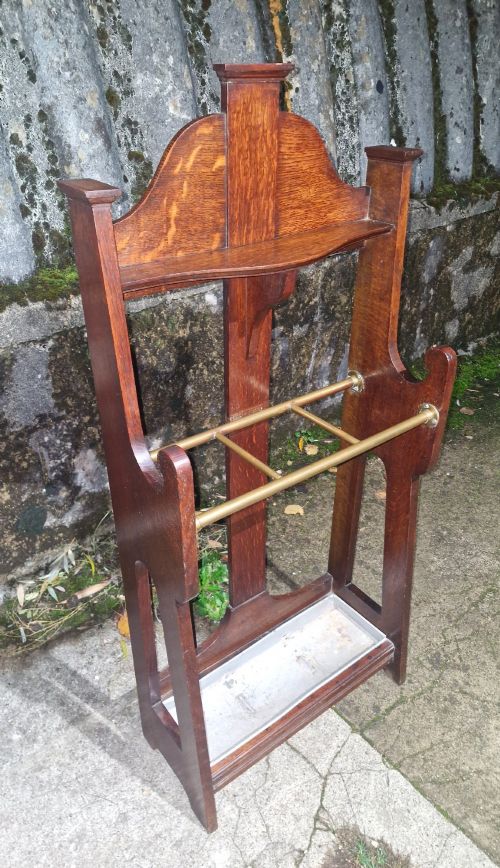
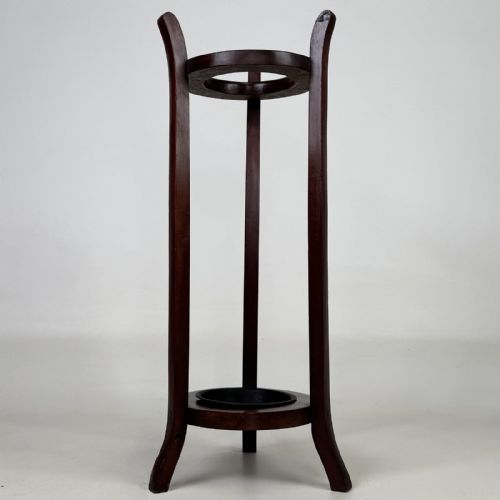
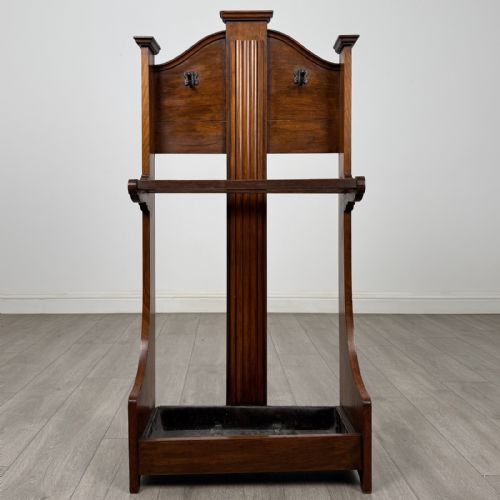
The typology stretches from tall, carved wooden hallstands with integrated seats to dedicated metal umbrella stands and industrial oak coat stands. Each variation serves the same utilitarian purpose while reflecting the prevailing design tastes of its decade.
Materials and construction
Oak dominates the construction of these pieces, appearing alongside mahogany, cast iron, brass, and glass. Cabinetmakers utilised solid timber and carved panels to give the upright frames structural rigidity and decorative weight.
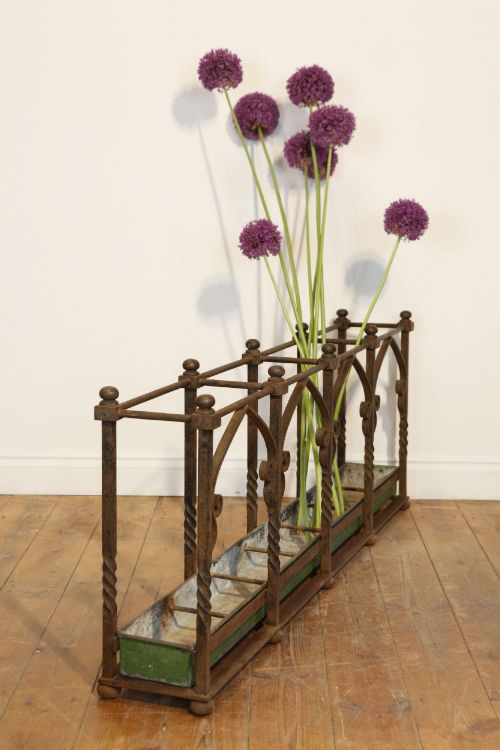
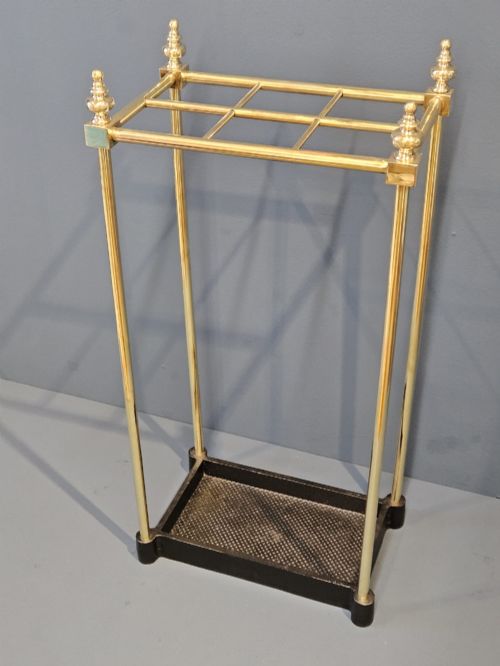
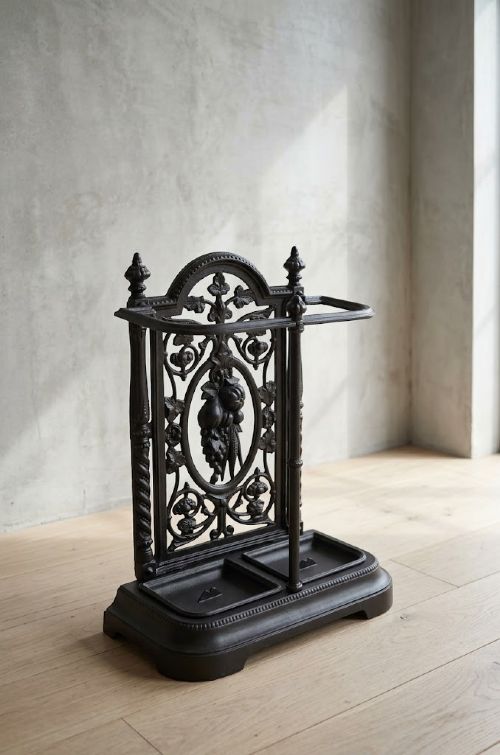
Cast iron and brass form the structural elements for umbrella sections and the practical drip trays positioned at the base. These metal components catch water from wet walking sticks and umbrellas, protecting the wooden floors of the hallway.
Mirrors and glass panels are frequently integrated into the upper wooden frameworks of Victorian and Edwardian examples. These reflective surfaces were set into carved backs above small shelves or hall seats.
Hall Stand with Umbrella Drip Trays Retail Price Guide 2026
Typical asking prices for hall stand with umbrella drip trays among the pieces listed under this phrase on Sellingantiques today, from the lower quarter to the upper quarter. They describe what is for sale here now, not the wider market.
Some Victorian sticks stands come with official patent numbers stamped into the metal, proving that nineteenth-century inventors took umbrella storage very seriously.
Distinguishing quality
The distinction between standard utility items and finer examples lies in the depth of the carving and the integration of materials. Pieces featuring detailed woodwork, substantial oak frames, and fitted brass or cast iron trays stand apart from simpler iterations.
The presence of secondary functions, such as built-in hall seats, pivoting umbrella sections, and bevelled mirror glass, marks out more ambitious commissions. Construction details like canted corners and patent hardware numbers indicate superior workshop production.
The Hall Stand with Umbrella Drip Trays Glossary
- Drip tray
- A removable metal pan placed at the base of a stand to catch water from umbrellas and walking sticks. These protect the flooring beneath.
- Hallstand
- A tall piece of entrance furniture combining coat hooks, a hat shelf, a mirror, and often a bench seat with stick holders.
- Stick stand
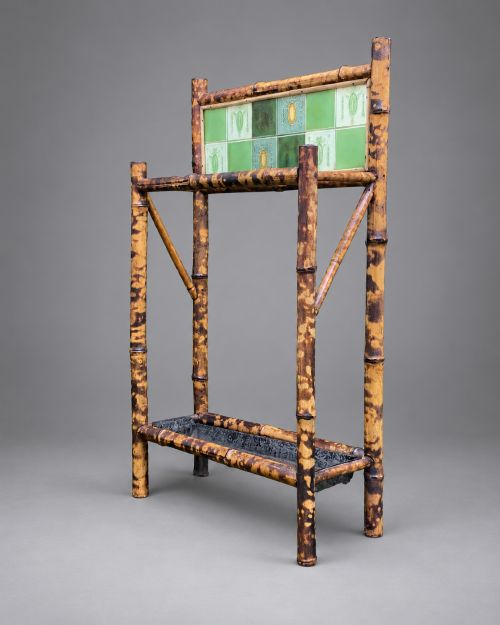
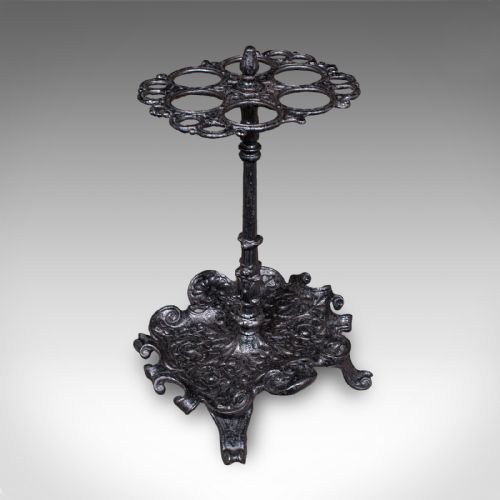
- A compact piece designed specifically to hold walking sticks and umbrellas upright, frequently constructed from cast iron or oak.
- Canted corner
- An angled corner formed by cutting away a square edge at forty-five degrees. This detail softens the profile of wooden uprights.
Hall Stand with Umbrella Drip Trays: Frequently Asked Questions
What is a hall stand with umbrella drip trays?
A hall stand with umbrella drip trays is a combined piece of entrance furniture designed to hold coats, hats, and wet walking sticks in one place.
These pieces organise the hallway by providing hooks for garments and lower metal trays to catch water from umbrellas.
How were these stands used in period homes?
In Victorian and Edwardian houses, visitors and residents used them immediately upon entering the front door to shed outer layers.
The hooks held heavy overcoats, the shelves stored hats, and the bottom pans received rain-soaked umbrellas.
How do I care for wooden hall stands?
Keep wooden frames away from direct heat sources and sudden temperature changes to prevent the timber from splitting.
Empty and dry the metal drip trays regularly to prevent moisture from damaging the surrounding wood at the base.
How do I tell Victorian from Edwardian stands?
Victorian examples often feature heavier carved oak, darker finishes, and more elaborate Gothic or Renaissance revival ornamentation.
Edwardian and later pieces tend to show lighter wood tones, cleaner lines, and influences from the Arts and Crafts or Art Nouveau movements.