





Hall Settle with Storage
A hall settle with storage is a robust timber seat with a hinged lid revealing a compartment, offering practical hallway seating.
Hall Settle with Storage
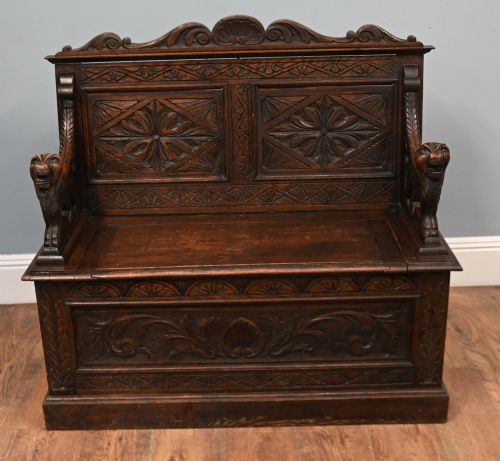
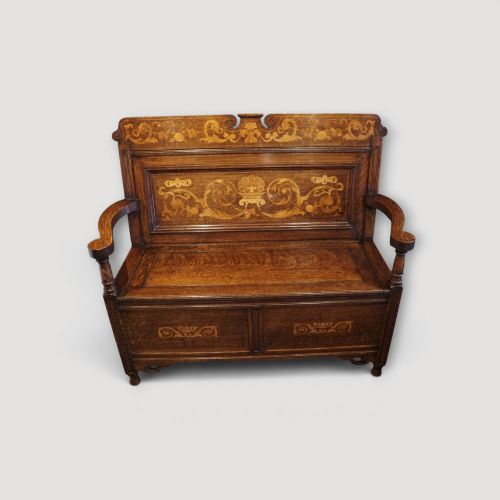
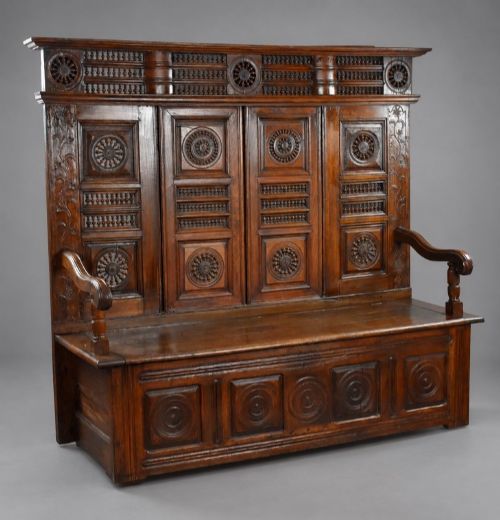
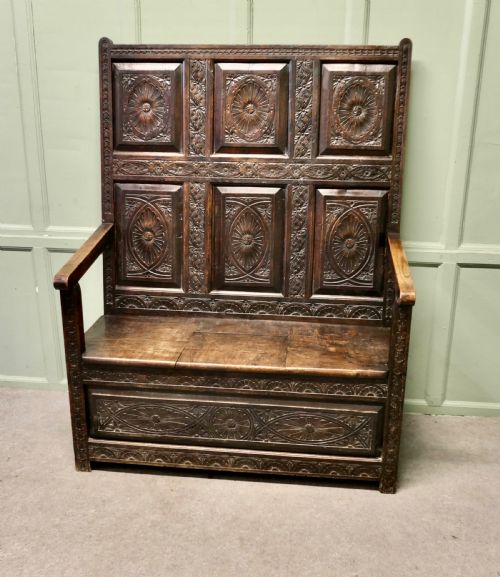
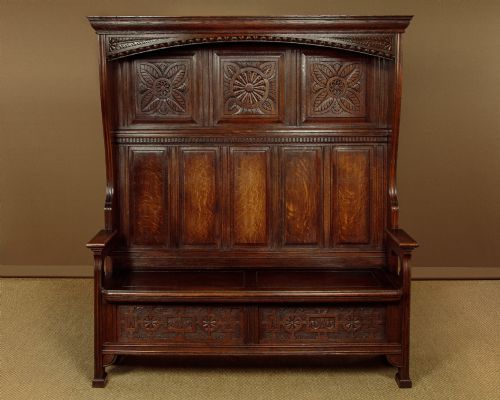
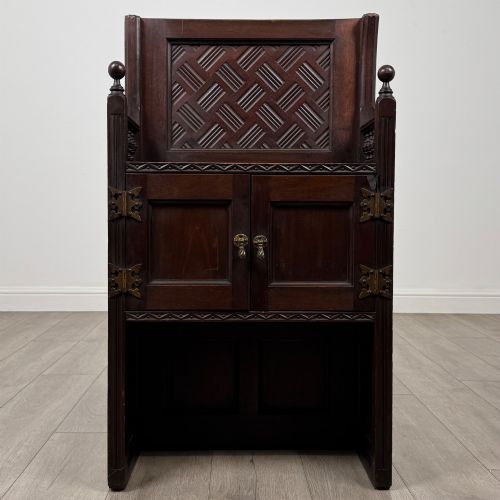
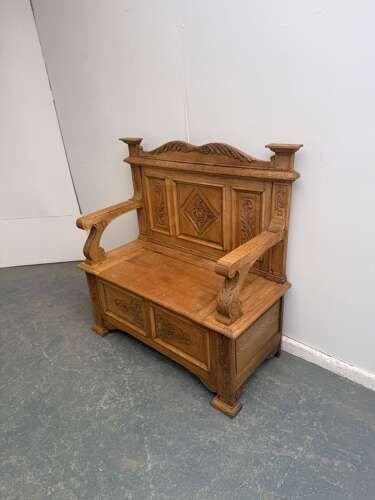
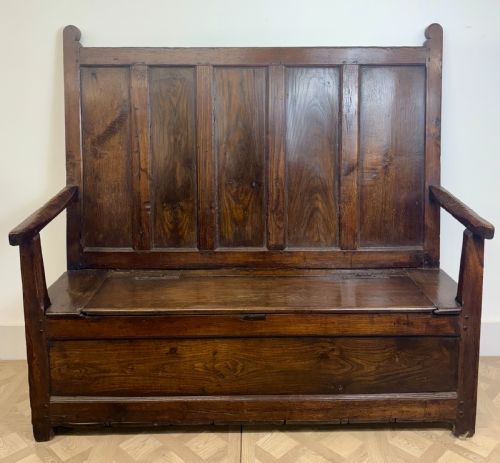
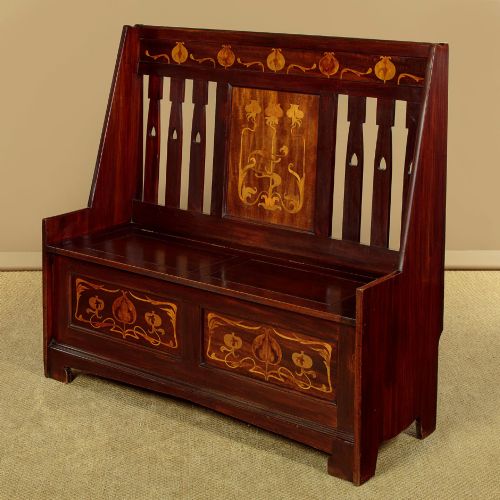
A hall settle with storage combines a high-backed wooden bench with a concealed box compartment beneath the seat, traditionally placed in entranceways to keep draughts at bay and store heavy outdoor garments. These versatile forms appear across multiple historical periods, ranging from seventeenth-century provincial workshops to grand Victorian country houses.
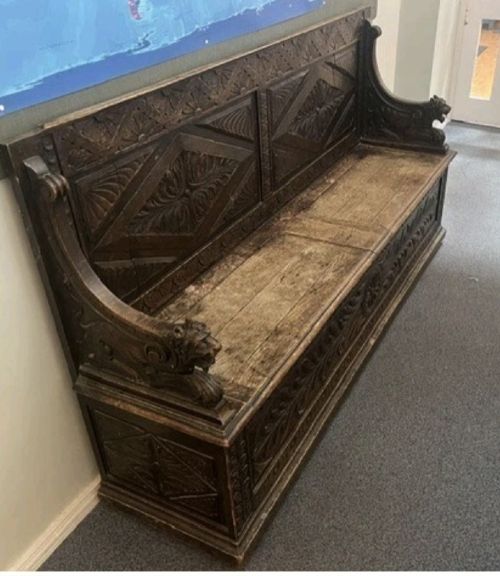
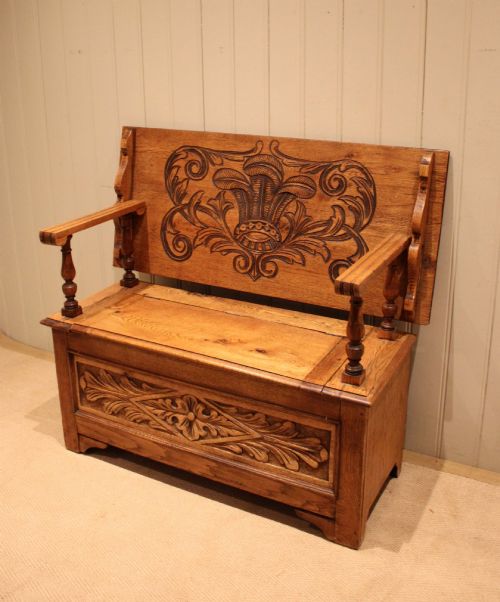
The most common examples on this page are carved from oak or constructed from pine, often featuring lift-up lids or fold-over table tops known as monks benches. Pieces range from modest Welsh and English country designs to elaborate Jacobean Revival and Gothic styles carrying detailed panel work.
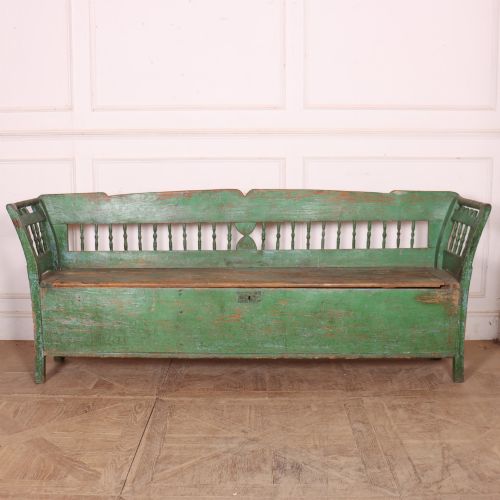
Originating as utilitarian farmhouse and cottage furniture, these settles served multiple purposes before entering formal reception rooms. Regional variations include elm bacon settles and continental pine examples finished in original paint or wax.
Materials and Construction
Cabinet makers built these sturdy benches predominantly using native hardwoods like oak and elm alongside softer pine for vernacular country pieces. Boards were joined using traditional pegged mortise and tenon framing, ensuring the structure could withstand daily domestic use.
Surface treatments varied from simple hand-waxed finishes that highlighted the natural grain to original decorative paintwork and intricate hand carving. Hardware such as iron hinges and brass fittings secured the storage compartments and added functional detail.
Hall Settle with Storage Retail Price Guide 2026
Typical asking prices for hall settle with storage among the pieces listed under this phrase on Sellingantiques today, from the lower quarter to the upper quarter. They describe what is for sale here now, not the wider market.
Listings feature oak, pine, elm and fruitwood examples spanning the seventeenth century through to the Edwardian era.
Evaluating Quality and Craftsmanship
The distinction between ordinary utility items and superior examples lies in the depth and crispness of the hand carving and the selection of timber. Dense, well-figured oak with tight growth rings indicates a higher grade of material chosen by skilled cabinet makers.
Structural integrity also separates standard workshop pieces from exceptional creations, visible in the snugness of the joints and the preservation of original backboards and timber bases. The presence of untouched original surfaces, whether old wax or early paint, elevates the standing of any piece.
James Shoolbred and Co·Shapland and Petter·Liberty
The Hall Settle with Storage Glossary
- Box settle
- A wooden bench featuring a compartment beneath the seat accessed by lifting the lid. This enclosed base kept boots, blankets and provisions safe from dampness.
- Monks bench
- A convertible seat featuring a hinged back that folded down over the arms to form a table. These dual-purpose items maximised space in smaller rooms.
- Jacobean Revival
- A nineteenth-century decorative style emulating seventeenth-century English design. Pieces in this manner display heavy proportions, geometric mouldings and deep strapwork carving.
- Bacon settle
- A regional wooden bench traditionally fitted with high panelled backs and internal racks. Farmhouses used these specific domestic items for curing and storing meat.
- Mortise and tenon
- A fundamental woodworking joint where a protruding peg fits snugly into a corresponding hole. This interlocking method provides lasting strength without relying on modern adhesives.
Hall Settle with Storage: Frequently Asked Questions
What is a hall settle with storage?
A hall settle with storage is a heavy wooden bench featuring a high back and a hollow base accessed through a hinged seat. They were designed to provide seating while keeping boots and textiles tucked away out of sight.
These pieces served as practical furniture in entrance halls and living spaces across centuries of domestic life. Their enclosed lower compartments helped prevent draughts from sweeping across cold flagstone floors.
How were these benches used historically?
Households utilised these versatile seats beside hearths and in entrance corridors for daily sitting and storage. The high panelled back protected occupants from chilly air currents circulating through old rooms.
Some variants featured fold-over tops that transformed the seating unit into a sturdy tabletop for dining or working. This multi-functional design suited smaller domestic spaces before dedicated rooms became common.
How do I care for an antique wooden settle?
Maintain antique timber surfaces by applying natural beeswax sparingly and buffing with a soft cloth to nourish the grain. Avoid placing wooden furniture near direct heat sources or in damp environments to prevent splitting.
Protect the finish from moisture by using coasters and mats on any flat surfaces. Regular gentle dusting preserves the aged patina without stripping away historic wax layers.
How can I tell the age of a settle?
Examine the construction methods, timber types and tool marks visible on the underside and interior boards. Hand-sawn boards, pegged joints and forged iron hardware generally point towards earlier manufacturing periods.
Stylistic details like linenfold panels, geometric mouldings or carved dates also offer clues to a piece's era. Comparing the patination and wear patterns across the timber helps confirm its age.