







Hall Settle Chest
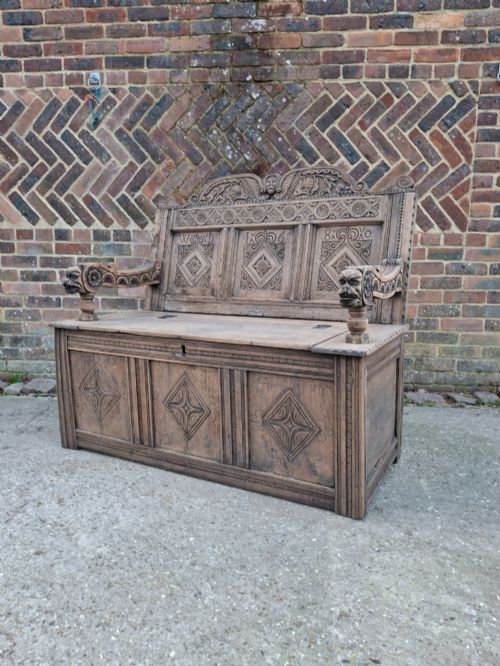
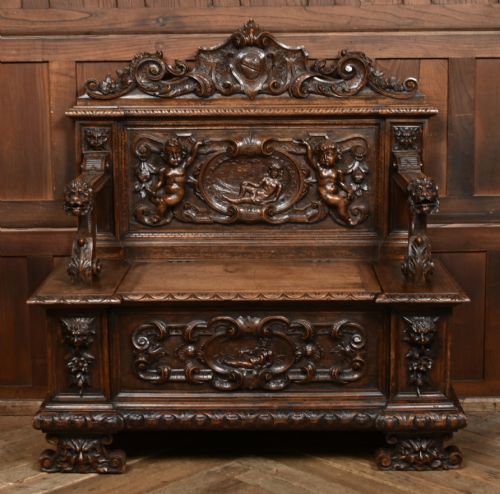
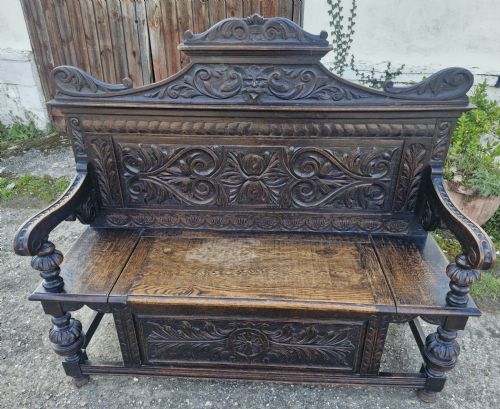
These pieces known as a hall settle chest combine seating and storage in heavy timber, offering a practical entrance seat with a concealed compartment.
Hall Settle Chest
A hall settle chest provides a dual-purpose seat and box for hallways, taking forms such as monks benches, settles, and cassapancas from the eighteenth, nineteenth, and early twentieth centuries. Oak and walnut predominate, often styled in revivalist fashions like Jacobean, Gothic, and Renaissance.
The version most commonly met on this page is the carved oak monks bench or hall settle from the Victorian era up to the 1920s. These pieces often feature hinged seats or tipping backs that transform the furniture from a seat into a table.
Origins stretch from British workshops to French, Flemish, Italian, and Colonial Indian makers, employing local hardwoods and intricate panel work. The domestic hall seat serves as both heavy furniture and practical storage for an entryway.
How they were made
Joinery relies on solid oak, walnut, and hardwood assembled with traditional panel and frame construction. Metal hardware such as iron and brass hinges secure the opening seats and lids.
Carving defines the surfaces, utilising relief techniques to render Green Man motifs, floral scrolls, and architectural tracery. Timber is selected for grain pattern and density, finished with wax or polish over solid wood.
Hall Settle Chest Retail Price Guide 2026
Typical asking prices for hall settle chest among the pieces listed under this phrase on Sellingantiques today, from the lower quarter to the upper quarter. They describe what is for sale here now, not the wider market.
Listings feature oak predominantly, alongside walnut and hardwood, spanning the eighteenth century through to the 1930s.
What varies in quality
Depth and crispness of the hand carving separate standard production from superior examples. Sharp relief work on figures and foliage indicates skilled bench work rather than shallow machine routing.
Integrity of the timber and the original mechanics of the hinges or tipping mechanisms dictate the build standard. Well-fitted joints and stable, heavy timber without excessive modern replacement parts represent the better end of the range.
The Hall Settle Chest Glossary
- Monks bench
- A convertible piece of furniture featuring a hinged top that tilts to form a table back or rests flat to create a seat over a storage box. This form remains common in oak throughout the nineteenth and early twentieth centuries.
- Cassapanca
- An Italian bench with a chest base and a backrest, often heavily carved in walnut during the Renaissance revival periods. It functions as a grand entrance seat.
- Settle
- A wooden wooden bench with a high back to block drafts, possessing solid arms and a box compartment beneath the seat. Early examples use heavy oak panels.
- Green Man
- A decorative architectural motif depicting a human face disgorging foliage, frequently carved into the woodwork of Victorian and revivalist seating. It appears prominently on oak panels.
- Renaissance Revival
- A nineteenth-century style drawing on sixteenth-century Italian and French architectural forms, characterised by heavy carving, pilasters, and panel work. Furniture in this style uses solid oak or walnut.
Hall Settle Chest: Frequently Asked Questions
What is a hall settle chest used for?
These pieces provide a seat for putting on shoes in an entrance hall while concealing storage beneath the lid for blankets or boots.
Their substantial backs also historically helped block cold drafts from entering doorways.
What woods were used for these?
Solid oak forms the majority of British and Northern European pieces, finished with rich medium to dark tones. Walnut and imported exotic hardwoods appear on continental and colonial examples.
Iron and brass provide structural support through exposed hinges and latches.
How do I date a carved oak bench?
Construction marks, hinge types, and the depth of the hand carving offer clues to the period, ranging from eighteenth-century Flemish joinery to twentieth-century revival pieces. Tool marks and timber shrinkage patterns help confirm age.
Stylistic revivals like Jacobean or Gothic Revival were popular during the Victorian era and early 1900s.
Where should I place one at home?
A hallway or large landing provides the traditional setting, allowing the chest to function as everyday seating and storage. They also anchor large reception rooms as statement furniture.
Ensure adequate clearance if choosing a convertible monks bench model that tilts into a table.