



Hall Console Mirror
A hall console mirror combines table and glass to anchor an entryway, offering both practical reflection and surface space.
Hall Console Mirror
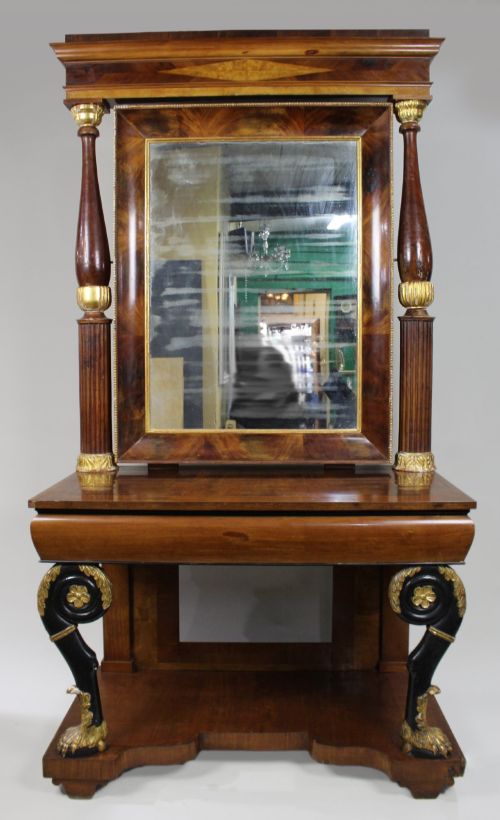
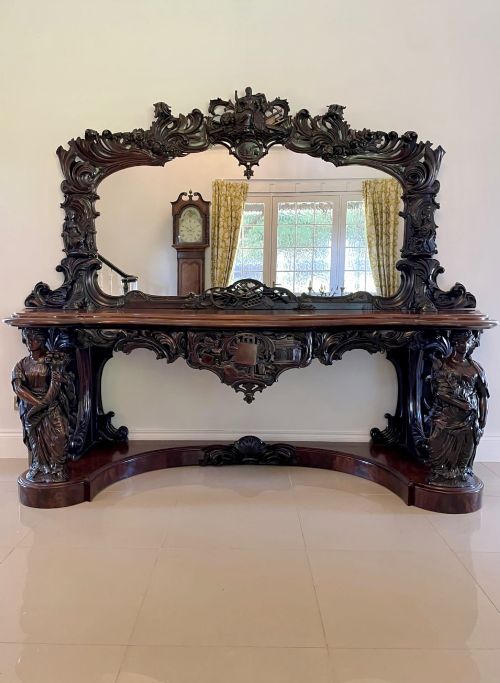
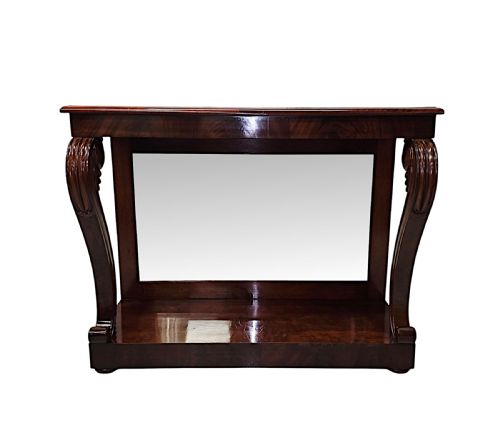
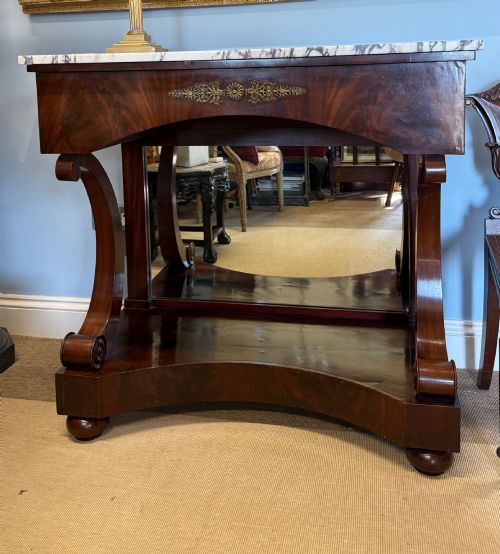
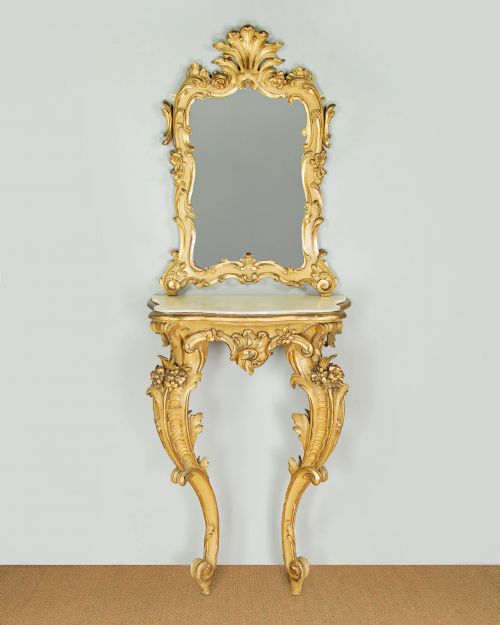
A hall console mirror brings together a fitted table and a matching or integrated looking glass designed specifically for entrance spaces and narrow corridors. The form appears most frequently as a combined console table and mirror set, often uniting marble tops with tall upright glass.
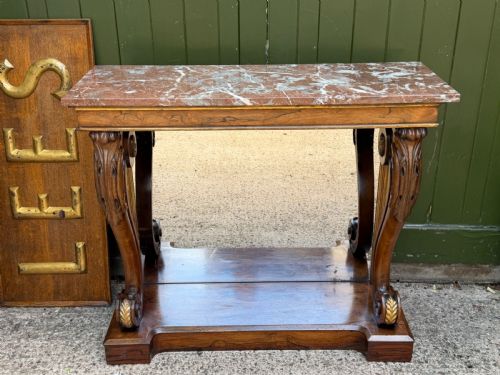
Makers shaped these pieces through the nineteenth and early twentieth centuries in styles ranging from Regency and William IV mahogany to ornate Victorian giltwood and Rococo Revival. Buyers also encounter simpler oak and mahogany hall stands incorporating shelves, umbrella racks, and plates of glass.
Origins span English workshops, French ateliers, and Italian studios, utilising regional timbers and carving traditions. The pairing serves to bounce light into darker hallways while providing a convenient surface for incoming post and keys.
How they were made
Cabinetmakers constructed the foundational tables using dense hardwoods such as mahogany, rosewood, and oak, frequently applying flame veneers and parcel gilding to enhance the grain. Heavy carcase work supported thick slabs of figured marble, carrara marble, or polished timber.
Giltwood frames and matching wall glasses relied upon layered gesso applied over carved timber substrates, then hand-gilded with metallic leaf. Backing plates consisted of silvered mirror glass, occasionally secured within heavy architectural pediments or scrollwork.
Current listings demonstrate a prevalence of nineteenth-century mahogany and Victorian giltwood constructions incorporating heavy marble surfaces.
What varies in quality
Quality rests in the crispness of hand-carved gesso, the depth of figuration within the mahogany or rosewood veneers, and the harmonious proportion between the table base and the hanging mirror. Superior examples demonstrate continuous joinery and original mercury or early silvered glass plates that retain gentle foxing without distorting the reflection.
The choice of stone elevates certain pieces, particularly where heavy slab marble remains unblemished and fits flush against the timber framing. Finer specimens also exhibit unified design schemes where the console and mirror share identical carving motifs and patination.
Gillingtons of Dublin
The Hall Console Mirror Glossary
- Console table
- A table designed to stand against a wall, frequently supported by wall brackets or front legs. These surfaces were intended for entrance halls and reception rooms.
- Pier mirror
- A tall looking glass specifically scaled to hang on the narrow section of wall between windows. They often paired directly with console or pier tables placed below.
- Gesso
- A plaster-like mixture applied to wood surfaces as a smooth base for gilding. Artisans carved intricate decorative motifs directly into this dried compound.
- Parcel gilt
- A decorative treatment where selected portions of an object receive gold leaf while the underlying wood grain remains visible elsewhere.
- Foxing
- The age-related spots and discoloration appearing within the silvered backing of antique mirror glass. Collectors view moderate foxing as a sign of authenticity.
Hall Console Mirror: Frequently Asked Questions
How do I style a hall console mirror?
Position the piece centrally in your entrance hall where natural light from adjacent rooms can strike the glass surface. Keep the marble or timber tabletop uncluttered, perhaps adding a small ceramic bowl for daily essentials.
Allow the architectural details of the frame to dictate surrounding decor rather than overcrowding the wall space with additional pictures.
Were console tables and mirrors originally sold together?
Many fine examples were commissioned as unified suites by cabinetmakers to ensure matching timbers and carving styles. These matched sets frequently combine a marble-topped base with an identically ornamented hanging glass.
Other configurations evolved when separate pier glasses and console tables of complementary periods were paired together by later owners.
How do I care for antique mirror glass?
Clean the glass surface sparingly using a soft microfiber cloth and a mild, ammonia-free solution applied to the cloth rather than directly onto the mirror. Avoid letting moisture seep behind the edges where the original silvering backing meets the frame.
Protect the surrounding giltwood or polished mahogany from direct sunlight to prevent the timber finishes from fading over time.
How do I identify a Victorian hall stand?
Victorian examples typically incorporate robust oak or mahogany frames featuring integrated umbrella wells, coat hooks, and central mirror plates. Many versions include a small marble shelf above a drawer for holding small items.
Look for heavy turnings, carved corbels, and structural proportions designed to handle daily household use in busy Victorian entranceways.