


Hall Chair Bench
These hall chair bench pieces span centuries of timber craftsmanship, offering practical seating with architectural presence for entryways and narrow spaces.
Hall Chair Bench
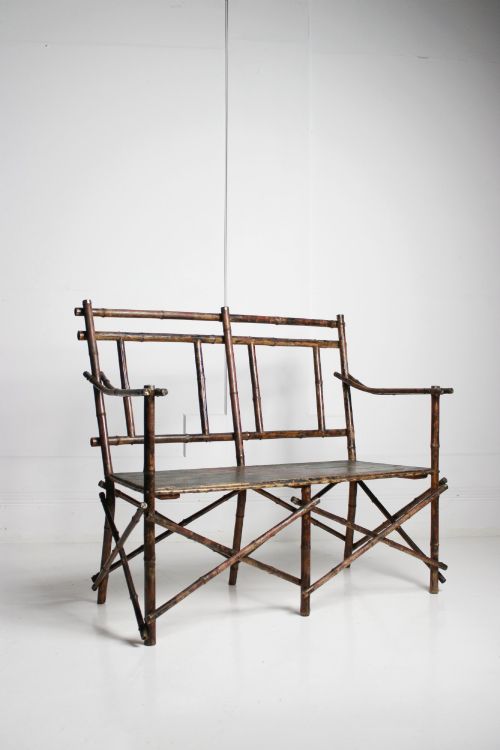
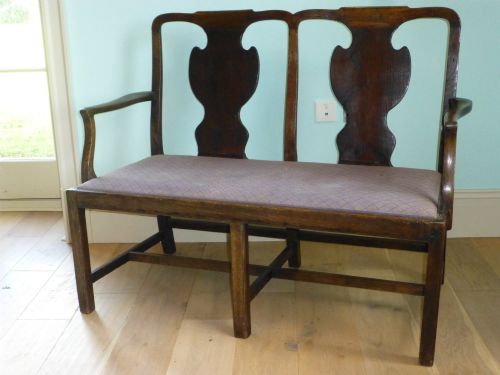
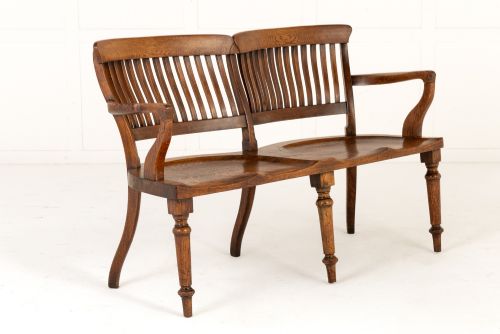
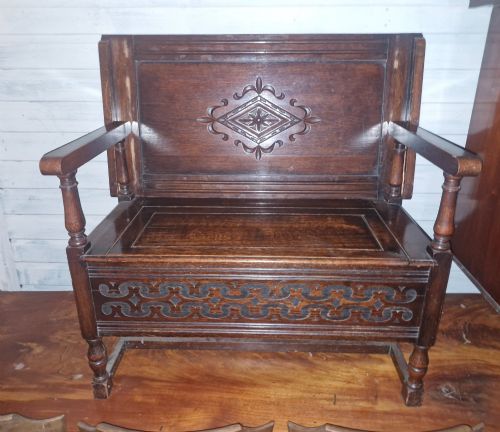
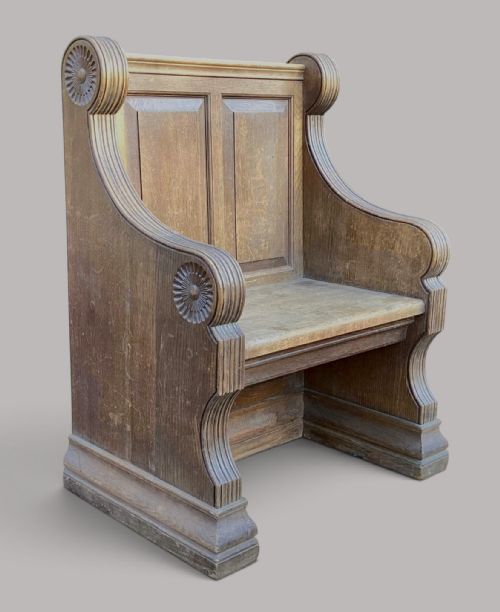
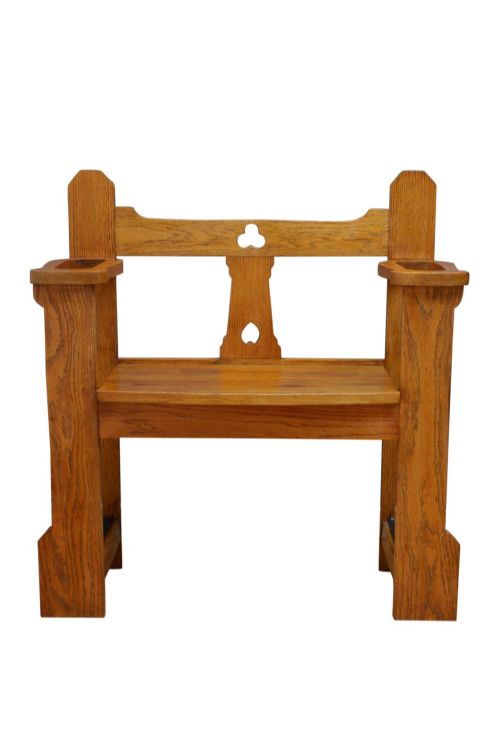
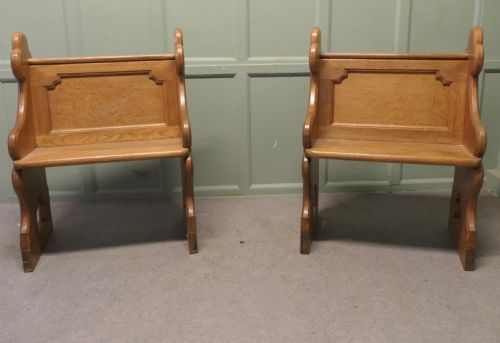
A hall chair bench brings together multiple seating forms including monks benches, settles, double chair-back settees, and narrow hall seats designed for passages and entryways. The pieces seen here emerge from various eras spanning the Georgian period, the Victorian age, and the early twentieth century.
Makers adapted these forms for specific domestic spaces, utilising narrow proportions to fit corridors while providing integrated storage through lift-up seats or fold-over table tops. English, French, Hungarian, and Chinese workshops each contributed distinct regional vernaculars to the typology.
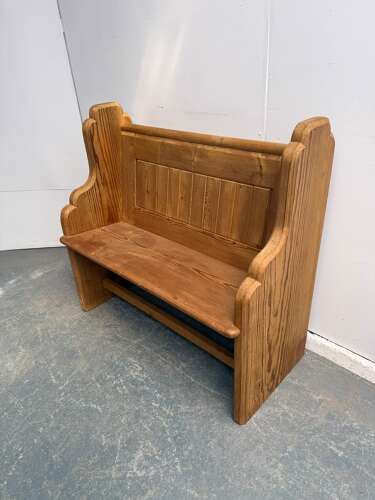
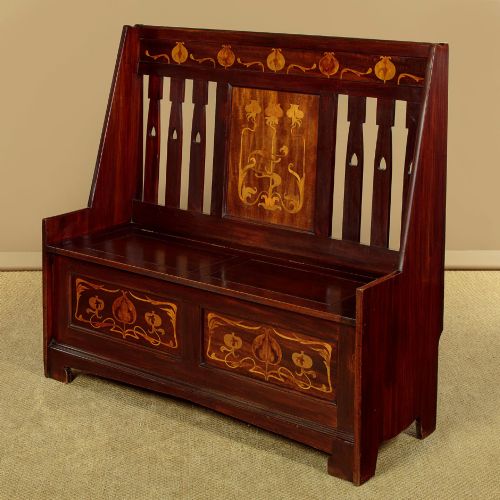
The most frequent encounters on this page involve solid oak monks benches and pine settles, alongside mahogany and walnut chair-back settees reflecting revival styles such as Jacobean and Gothic.
Materials and Construction
Carpenters relied principally on hardwoods like oak, mahogany, walnut, and rosewood, alongside softer pines used for painted vernacular country furniture. Timber selection dictated the structural capability, allowing for deep relief carving in heavy oak or smooth turning in satinwood and mahogany.
Construction techniques combined traditional joinery such as mortise and tenon frames with panelled backs, box storage compartments, and occasional rush or cane seating inserts. Surface treatments range from clear wax finishes highlighting natural grain to traditional painted pigments in grey and blue.
Specialised decorative methods include architectural mouldings, tulip motifs, and intricate oriental cinnabar lacquer work on specific imported seating forms.
Hall Chair Bench Retail Price Guide 2026
Typical asking prices for hall chair bench among the pieces listed under this phrase on Sellingantiques today, from the lower quarter to the upper quarter. They describe what is for sale here now, not the wider market.
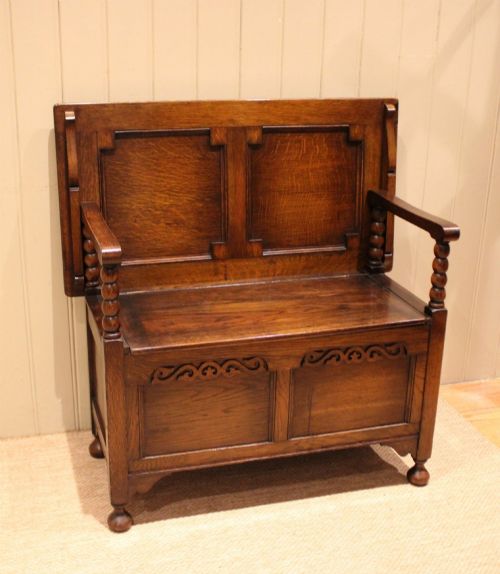
Several items double as tables when their wooden backs flip down, solving spatial dilemmas for medieval monks and busy Victorians alike.
Distinctions in Execution
Quality rests in the architectural integrity of the frame and the crispness of hand-carved details, distinguishing robust vernacular pieces from later revival items. Superior examples display thoughtful proportions, such as narrow depths suited to tight hallways, executed in dense, well-figured timber.
The execution of integrated mechanisms - such as the pivoting top of a monks bench or the hinging lid of a box settle - separates fluid, precise assembly from stiff or clumsy adaptation. Original surface patination and untouched painted finishes retain historical authenticity that over-restored pieces lack.
The handling of secondary timbers and interior construction reveals the maker's discipline, ensuring stability across wide chair-back settees and heavy timber benches.
James Shoolbred & Co.
The Hall Chair Bench Glossary
- Monks Bench
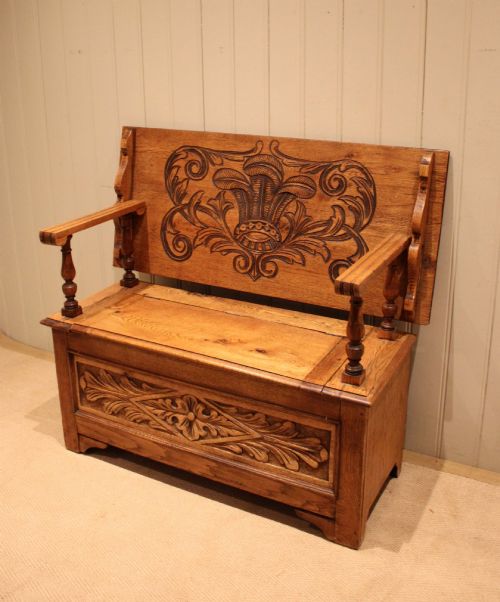
- A multifunctional furniture piece featuring a hinged top that folds down to convert a high-backed seat into a small table. These items typically include a box storage compartment beneath the seat.
- Settle
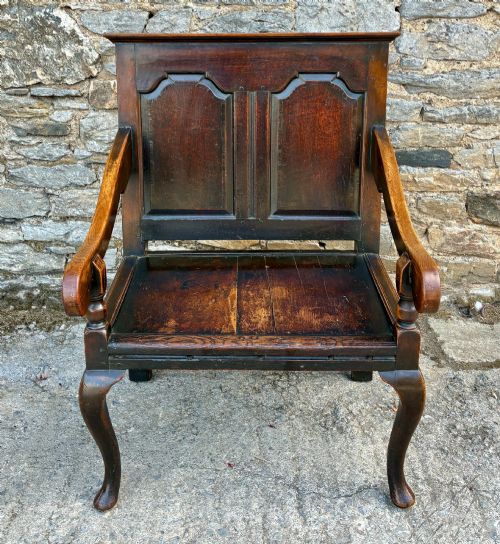
- A wooden bench with a high back designed to block draughts, often fitted with solid arms and a box base for storage. They appear frequently in vernacular pine and oak.
- Chair-Back Settee
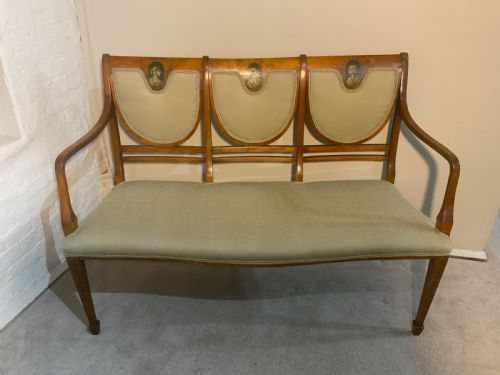
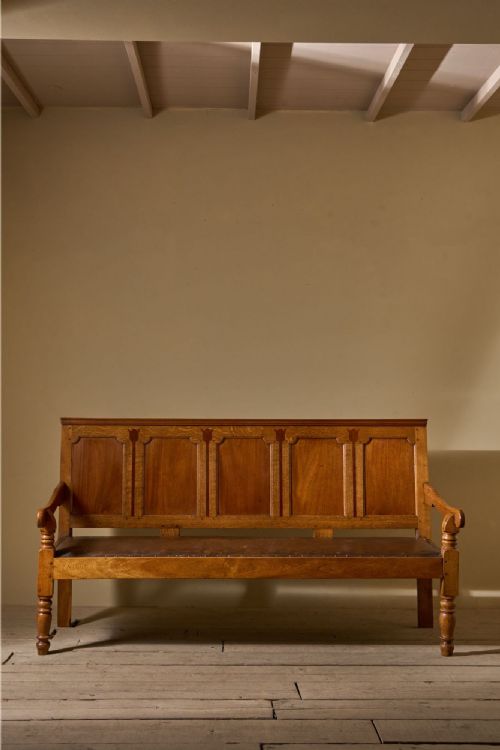
- A form resembling two or three chair backs joined together side by side to create a continuous wide seat with open arms. They frequently display stylistic revivals of Georgian or Carolean designs.
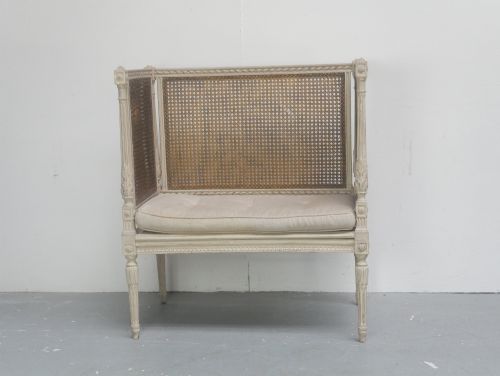
- Bergere
- An enclosed upholstered armchair or window seat featuring tight cane work on the back and sides. The wooden frame is commonly walnut or mahogany.
- Box Settle
- A bench incorporating a hinged seat lid that opens to reveal a deep storage receptacle underneath. This form was common in European country houses and rural hallways.
Hall Chair Bench: Frequently Asked Questions
What is a monks bench used for?
A monks bench served as a dual-purpose item in older homes, functioning as an enclosed seat with storage by the door and transforming into a table when the top was folded forward.
This adaptability made them useful in compact spaces where separate tables and chairs were impractical.
How do I fit a hall bench in a narrow entryway?
Many period hall benches and settles were built with deliberately shallow depths precisely to accommodate tight corridors without blocking passage.
Look for narrow proportions and pieces with lift-up seat storage that eliminate the need for extra shoe cabinets.
Are painted settles original?
Painted finishes on pine settles often reflect regional folk traditions, particularly in Hungarian and continental pieces where pigment protected the softer wood.
Original painted surfaces show natural wear and craquelure that distinguish historical decoration from modern decorative overpainting.
How do I tell a chair-back settee from a standard sofa?
A chair-back settee is constructed by uniting multiple distinct chair backs into a single unified wooden frame rather than using continuous upholstered padding.
These pieces typically showcase exposed timber backs reflecting specific stylistic periods like the Georgian era.