

Hall Box Seat
A hall box seat provides a sturdy hallway bench combined with concealed storage beneath the lid.
Hall Box Seat
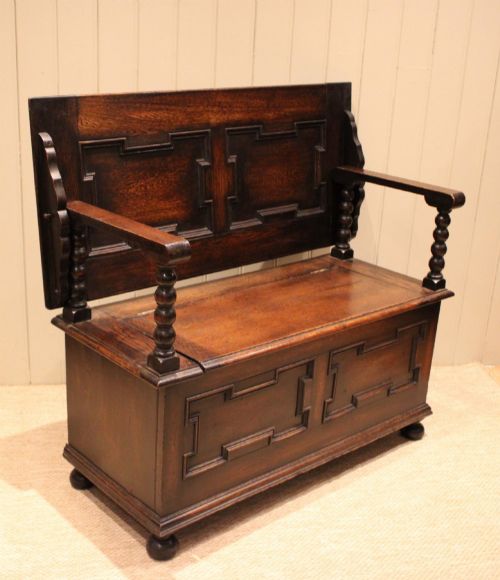
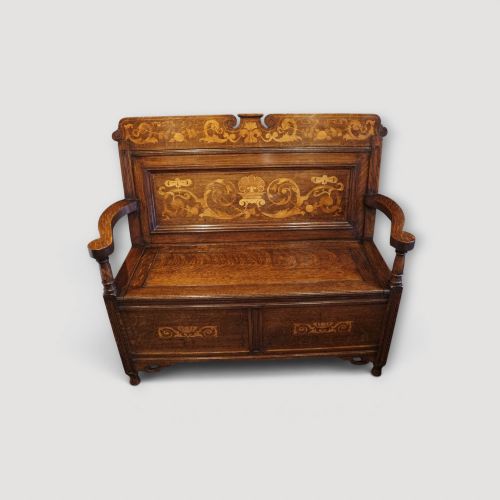
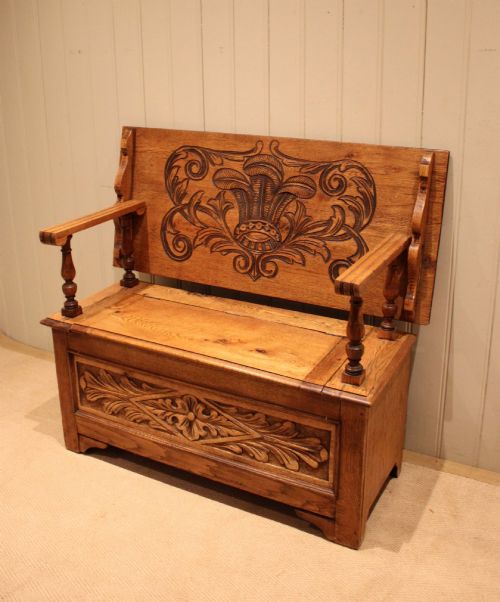
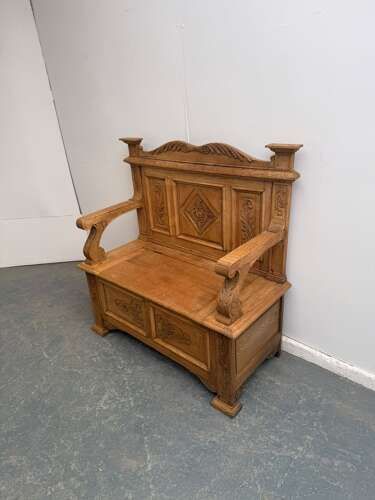
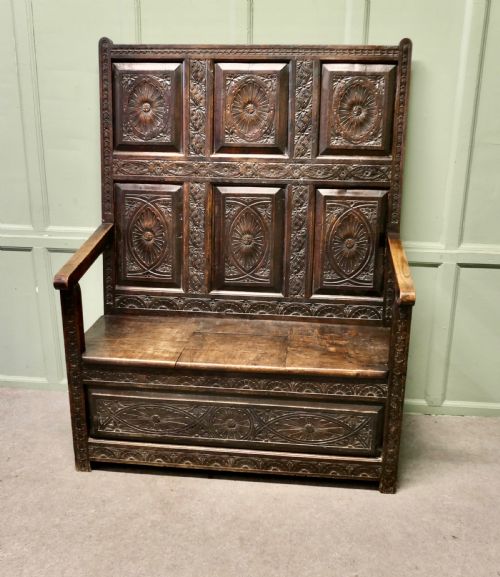
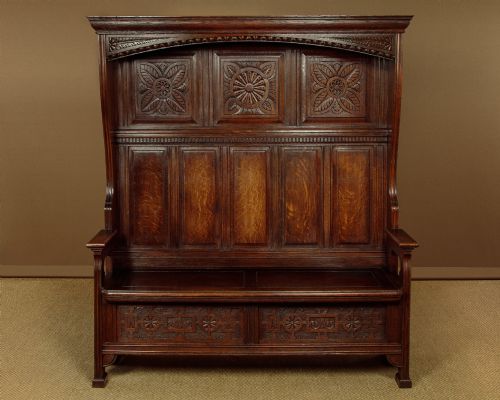
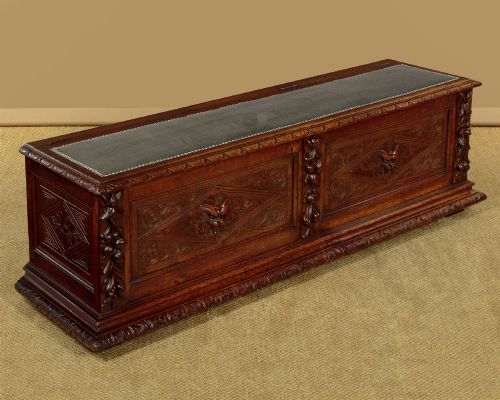
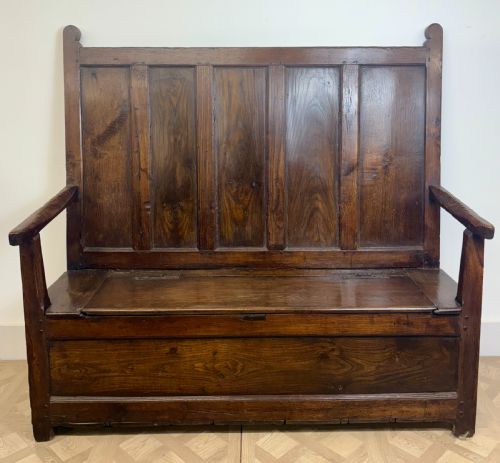
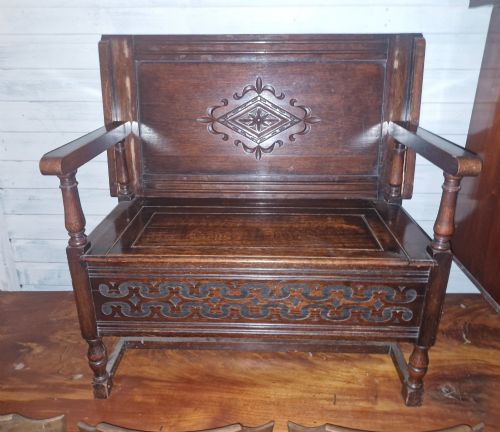
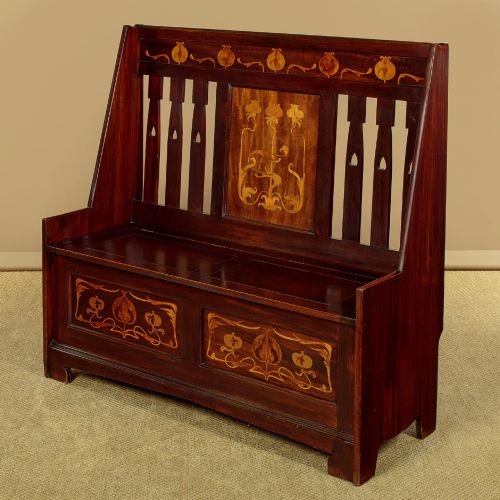
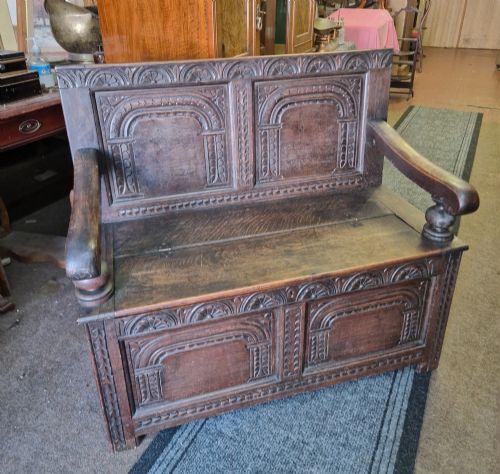
A hall box seat combines a narrow bench for hallway seating with a hinged storage compartment beneath the lift-up lid or fold-over top. When searching for a hall box seat, a buyer encounters pieces originating from the seventeenth century through to the Edwardian period and the nineteen-twenties.
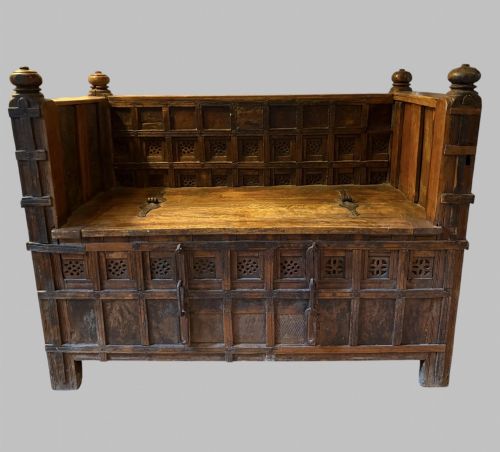
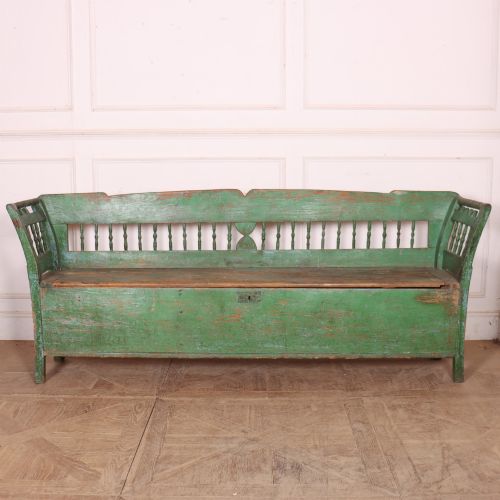
The form appears in various regional styles, including Georgian vernacular examples, rustic Scandinavian country pieces, and Hungarian folk art designs. Most examples found here are constructed from timber, predominantly oak, pine, and elm, often incorporating carved panels or painted surfaces.
How they were made
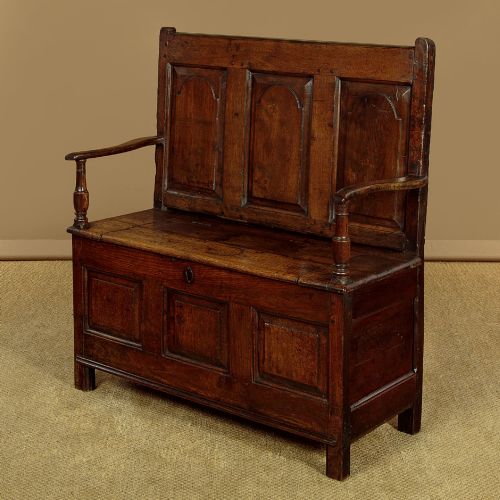
Carpenters constructed these seats using solid native timbers such as oak, elm, and pine, frequently joining panels with traditional frame and panel techniques to allow the wood to expand and contract. Secondary woods like ash appear in structural elements, while iron and brass provide hinges, brackets, and decorative fastenings.
Surfaces receive different treatments depending on the region and period, ranging from traditional wax finishes that highlight the grain of golden oak to layers of historical paint in grey, cream, green, or black on pine country pieces.
Hall Box Seat Retail Price Guide 2026
Typical asking prices for hall box seat among the pieces listed under this phrase on Sellingantiques today, from the lower quarter to the upper quarter. They describe what is for sale here now, not the wider market.
Some nineteenth-century examples feature carved wooden green men peering out from the woodwork to guard the hallway.
What varies in quality
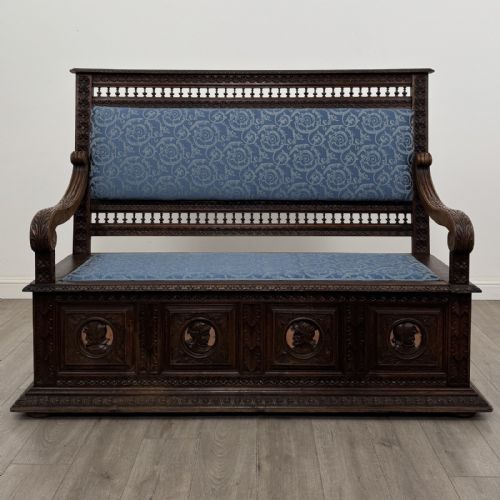
The standard of craftsmanship depends on the depth and crispness of the carved ornamentation, such as figurative motifs, linenfold panels, or marquetry inlay, compared to plain utilitarian boards. Structural integrity relies on the retention of original timber in the seat box, base, and hinges rather than extensive modern replacements.
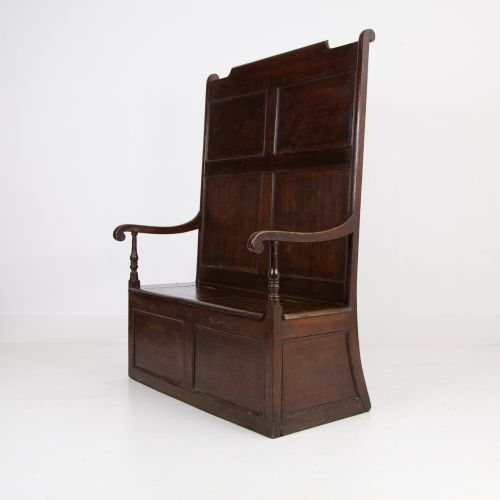
Provenance and regional character separate standard workshop output from exceptional vernacular pieces, such as documented high-back North Country forms or specific European painted examples with undisturbed original surfaces.
James Shoolbred and Co
The Hall Box Seat Glossary
- Box settle
- A wooden bench featuring a high back to block draughts and a box base with a hinged lid for storage. This form served domestic halls and farmhouses for centuries.
- Cassapanca
- An Italian wooden chest with a back and arms, functioning as both a seat and a storage container. These examples often display elaborate walnut carving.
- Bacon settle
- A specific regional form of high-back wooden bench, often in elm, traditionally associated with curing and storing meat in the high back cavity. It combines seating with deep enclosed storage.
- Marquetry
- The art of applying pieces of veneer to a structure to form decorative patterns. This technique appears on select walnut and oak pieces from the nineteenth century.
Hall Box Seat: Frequently Asked Questions
What is a hall box seat?
A hall box seat is a wooden bench designed for an entranceway that incorporates a concealed storage compartment beneath the seat. The design typically includes a high back to block draughts and a hinged lid for access to the interior.
Historically placed in hallways and farmhouses, these pieces provided a place to sit while putting on boots and a secure space to store outdoor garments or blankets.
How do I date an antique box seat?
Dating relies on examining the timber species, construction methods, and tool marks visible on the underside and interior of the piece. Seventeenth and eighteenth-century examples usually feature pegged oak joinery and hand-riven panels, while nineteenth-century pieces often utilise pine, mahogany, or walnut with machine-cut components.
Stylistic indicators such as Jacobean revival carvings, Art Nouveau marquetry, or painted folk art finishes further help place a piece within a specific century or decade.
Where were box seats used?
These seats were primarily positioned in the main entrance halls of country houses, farmhouses, and cottages to serve arriving visitors and residents. Their high backs helped shield inhabitants from cold draughts blowing through front doors.
They also appeared in domestic living spaces and rural homesteads across Britain, Scandinavia, and central Europe where multi-functional furniture maximised small floor areas.
Are painted finishes original?
Many pine and country pieces retain historical painted surfaces, ranging from Hungarian folk art schemes in grey, cream, and green to plain black finishes. Assessing originality involves looking for wear patterns, craquelure, and older layers beneath losses in the top coat.
Unpainted oak and walnut examples generally rely on waxed or polished finishes that develop a natural patina over centuries of handling.