





Haberdashery Counter Drawers
Haberdashery counter drawers are commercial shop fittings designed for sorting small dry goods, offering practical storage with distinct multi-drawer fronts for modern interiors.
Haberdashery Counter Drawers
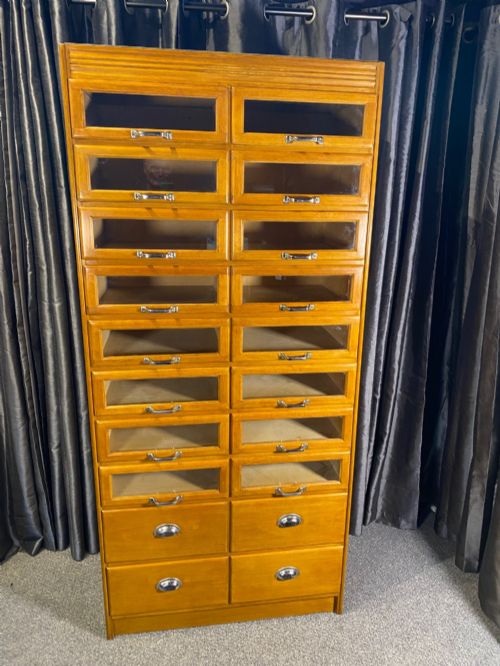
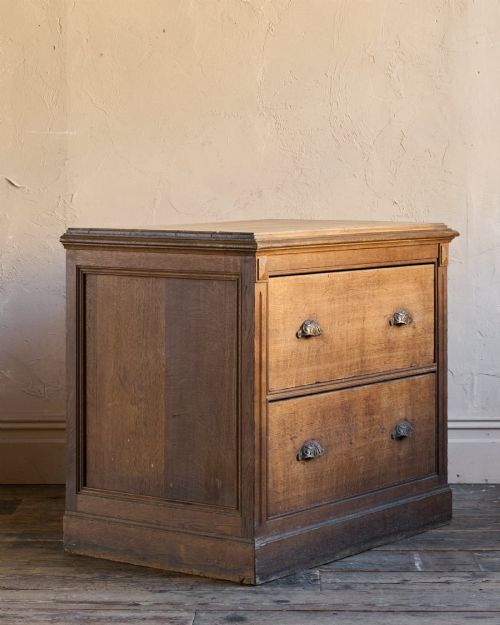
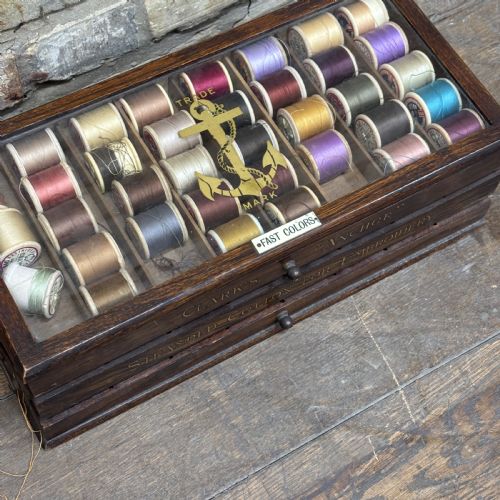
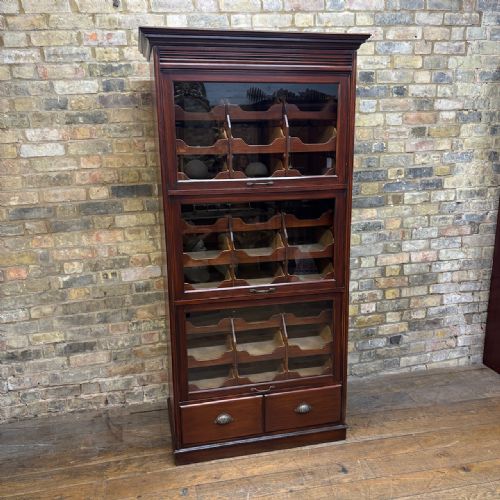
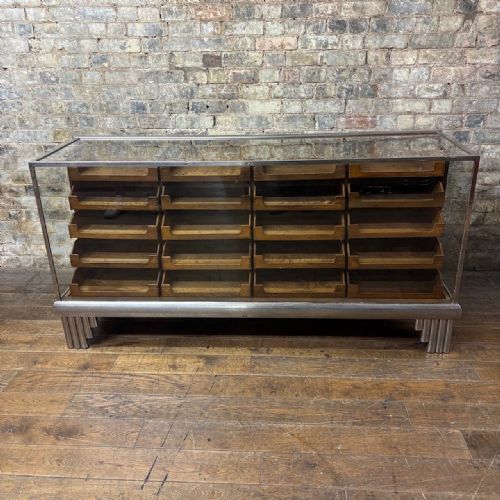
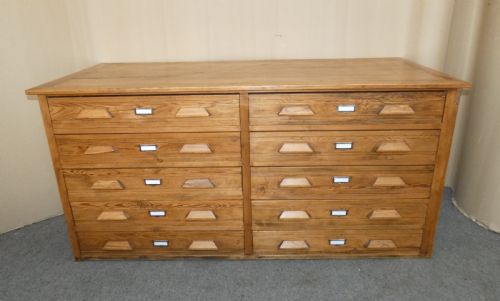
Haberdashery counter drawers represent functional shop fittings originally built to organise ribbons, threads, and sewing supplies in retail environments. Buyers searching for haberdashery counter drawers encounter tall banks of multi-drawer chests, shop counters, and drapers tables originating from various periods.
The inventory on this page spans the Victorian, Edwardian, and 1930s eras, alongside pieces catalogued broadly under the nineteenth century. Common forms include banks of old shop drawers, seed chests, and large shop fittings with numerous small drawers.
Origins vary across English, French, and Hungarian workshops, reflecting the widespread commercial use of these timber cabinets. Whether configured as a twenty-five drawer shop fitting or a compact four-drawer chest, each piece retains its utilitarian character.
Materials and construction methods
Makers built these commercial cabinets predominantly using solid timber frames of pine, oak, walnut, and mahogany. Pine units frequently feature original painted finishes in white, cream, light green, or other colours, while oak and walnut examples display polished or natural grain.
Metal hardware plays an essential role in the construction, incorporating brass and iron pulls, handles, and card frames on the drawer fronts. Certain twentieth-century pieces incorporate chrome elements, aligning with Art Deco and mid-century commercial design trends.
Haberdashery Counter Drawers Retail Price Guide 2026
Typical asking prices for haberdashery counter drawers among the pieces listed under this phrase on Sellingantiques today, from the lower quarter to the upper quarter. They describe what is for sale here now, not the wider market.
The inventory records French, English, and Hungarian origins, encompassing styles from Victorian and Edwardian to Art Deco and industrial.
Distinctions in construction and finish
Quality in these commercial pieces rests on the integrity of the timber framing and the preservation of original factory or shop surfaces. Cabinets retaining their original painted wood finishes or polished hardwood surfaces command particular attention from collectors.
The scale of the cabinetry and the complexity of the drawer configurations also influence the character of each piece. Larger fifty-drawer shop fittings demonstrate substantial commercial ambition compared to smaller domestic conversions.
Dudley & Co
The Haberdashery Counter Drawers Glossary
- Bank of drawers
- A multi-drawer cabinetry unit designed to house large quantities of small items in rows and columns. These assemblies formed the backbone of nineteenth and twentieth-century retail storage.
- Drapers table
- A long counter or table surface used in textile shops for measuring and cutting cloth. They often incorporate banks of drawers beneath the main timber top.
- Shop fitting
- Fixtures and furniture built specifically for commercial retail spaces rather than domestic rooms. They prioritise robust construction and maximum storage efficiency.
- Seed chest
- A specialised small drawer cabinet originally utilised by florists and merchants to sort seeds. These pieces share similar multi-drawer proportions with haberdashery cabinets.
Haberdashery Counter Drawers: Frequently Asked Questions
What were haberdashery counter drawers used for?
These multi-drawer units served as functional storage behind retail counters in drapers and haberdashery shops. Merchants used them to keep spools of thread, buttons, ribbons, and sewing notions sorted and accessible to shop assistants.
Over time, the numerous small compartments proved equally useful for organising dry goods and small wares in busy commercial environments before transitioning into domestic spaces.
How do I identify a Victorian piece?
Victorian examples frequently utilise solid pine construction paired with original painted finishes in colours like cream, white, or light green. They often present as substantial shop fittings with numerous small drawers designed for heavy daily use.
Checking the construction details, timber ageing, and hardware styles helps distinguish nineteenth-century pieces from later Edwardian or 1930s equivalents.
Are these cabinets suitable for modern kitchens?
The substantial depth and multi-drawer configuration make these cabinets practical additions to contemporary kitchen spaces for cutlery, spices, and utensils. Their sturdy timber construction handles everyday domestic storage demands with ease.
Placing a counter-height bank of drawers into a modern room bridges historical utility with current interior design preferences.
What timber types should I expect?
The listed pieces feature a variety of woods including pine, oak, walnut, and mahogany. Pine is common in painted Hungarian and French shop fittings, whilst oak and mahogany appear frequently in English cabinets.
Metal elements such as brass, iron, and chrome frequently accent the drawer fronts, complementing the primary timber structure.