


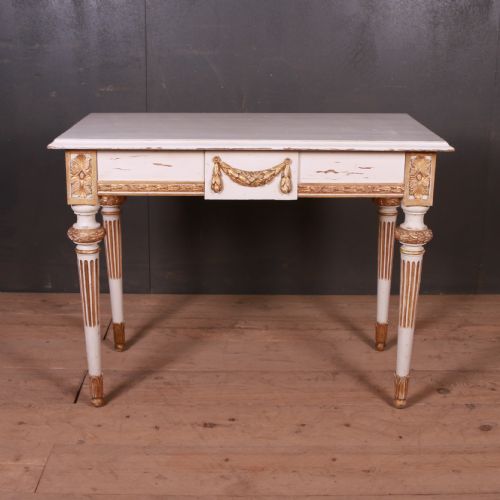


Gustavian Writing Desk
A gustavian writing desk offers understated Scandinavian elegance, combining practical workspace with the quiet charm of painted pine.
Gustavian Writing Desk
A gustavian writing desk brings functional Scandinavian design into a room, serving as a dedicated workspace with historical character. These pieces range from simple writing tables to more elaborate bureau bookcases and escritoires, each reflecting Northern European craftsmanship.
The versions most commonly met on this page date from the nineteenth century, often showing traditional painted surfaces in muted tones. Alongside dedicated writing desks and tables, the selection includes related forms like side tables and occasional tables built with the same regional aesthetic.
Construction and materials
Makers relied primarily on pine and softwood timbers to build these desks and tables, shaping the wood to suit straightforward country workshops as well as more formal urban commissions. Surfaces received layered applications of paint, creating a protective coating that has aged with distinct character.
Hardware details typically involve brass and iron components, used for key escutcheons, drawer pulls, and structural reinforcement. Occasional additions like marble inserts appear on select pieces, adding a contrasting textural element to the timber frames.
Gustavian Writing Desk Retail Price Guide 2026
Typical asking prices for gustavian writing desk among the pieces listed under this phrase on Sellingantiques today, from the lower quarter to the upper quarter. They describe what is for sale here now, not the wider market.
Listings feature pieces spanning from the eighteenth century to the early twentieth century, predominantly constructed from pine and painted softwood.
Assessing quality and craftsmanship
The distinction between ordinary and exceptional pieces lies in the handling of the painted surface and the crispness of the joinery. Original layered finishes that show natural wear possess greater integrity than later repainting efforts.
Proportion and structural balance also separate simpler provincial items from more refined examples. Finer desks maintain harmonious dimensions across drawers and legs, while simpler rustic pieces prioritize sturdy utility over ornamental detail.
The Gustavian Writing Desk Glossary
- Escritoire
- A writing cabinet featuring a sloping lid that opens to reveal a fitted interior with small compartments and drawers. This form combines storage with a stable writing surface.
- Bureau bookcase
- A dual-purpose piece comprising a lower writing desk section beneath an upper shelving unit enclosed by doors. It provides substantial storage for books and stationery.
- Pine
- A softwood timber commonly used throughout Scandinavian furniture making for its workability and availability. It accepts paint finishes readily and forms the structural core of many regional pieces.
- Scraped pine
- Wood surfaces that have been stripped back or scraped to reveal the underlying grain and traces of earlier painted layers. This treatment highlights the natural texture of the timber.
Gustavian Writing Desk: Frequently Asked Questions
What defines a gustavian writing desk?
A gustavian writing desk is characterised by its Scandinavian origins, restrained neoclassical lines, and typically painted wooden surfaces. These pieces draw from eighteenth-century Swedish royal style translated into practical domestic furniture.
They offer a compact workspace with subtle carved details or fluted legs, making them adaptable to modern interiors while retaining a distinct historical presence.
How were these writing desks used?
These desks served as private spaces for correspondence, household accounts, and letter writing before the era of modern office furniture. Their drawers and fitted interiors held paper, ink, and sealing wax.
In period homes, they functioned as personal writing stations kept in parlours, bedrooms, or private studies rather than heavy administrative desks.
How do I care for a painted pine desk?
Painted pine surfaces require gentle maintenance using a dry or barely damp cloth to remove dust without harming the historic finish. Avoid harsh chemical cleaners and direct sunlight, which can cause old paint layers to fade or crack.
Maintaining stable room humidity protects the underlying softwood from shrinking or expanding, preserving the overall structural integrity of the piece.
How can I tell the age of a Swedish desk?
Differentiating nineteenth-century pieces from later interpretations involves examining the construction methods, nail types, and wear patterns on the painted surfaces. Hand-cut joinery and signs of genuine age in the timber indicate earlier manufacture.
Examining the layers of paint under magnification often reveals the natural ageing process of traditional pigments and binders used in regional workshops.