


Guilloche Enamel Powder Pot
These guilloche enamel powder pot items bring bright dressing table colour and fine metalwork from the early twentieth century.
Guilloche Enamel Powder Pot
A guilloche enamel powder pot provides a decorative container for dressing table use, frequently taking the form of a lidded jar, trinket box, or dressing table bowl. The pieces found here span the Edwardian era, the George V period, the Art Deco style, and the Mid-Century Modern era.
Most examples combine precious metal fittings with glass or cut glass bodies, often finished with coloured enamel lids. Makers placed these accessories on dressing tables alongside other matching accessories to hold cosmetics, pins, or small personal items.
Materials and construction
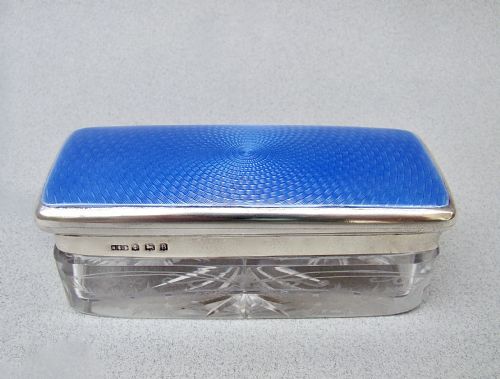
Makers fashioned the bodies of these vessels from clear glass or heavy cut glass, pairing them with sterling silver mounts and lids. The metal components bear hallmarks indicating assay offices such as Birmingham and London alongside various production dates.
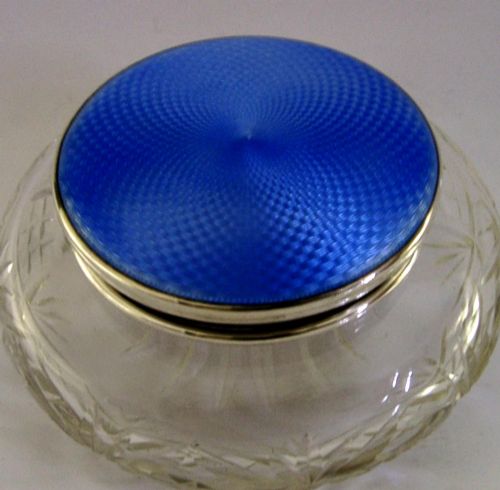
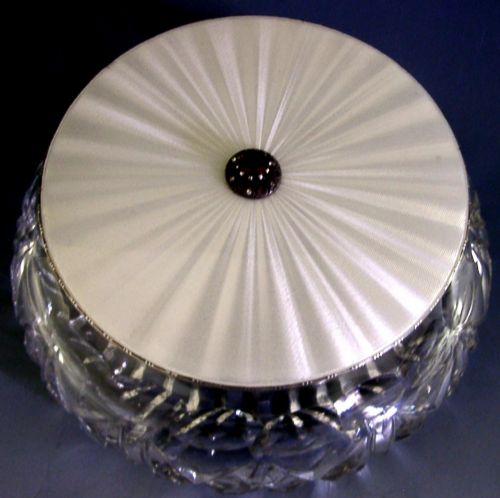
The lids feature guilloche enamel work, where a precise mechanical pattern is engraved into the metal beneath a translucent layer of coloured enamel. This technique allows light to reflect through the pigment to reveal the geometric turning underneath.
Some of these little jars started life holding rouge for a discreet nineteenth-century flush before graduating to full powder pots.
Judging quality
Quality rests upon the crispness of the engine-turned engraving beneath the translucent enamel and the weight of the sterling silver mount. Finer items display deep, even patterning that catches the light clearly through the coloured glaze.
The clarity and depth of the cut glass bodies also distinguish finer examples from standard production pieces. Heavier glass bases with sharp, clean facets indicate careful manufacture during the early twentieth century.
Henry Clifford Davis
The Guilloche Enamel Powder Pot Glossary
- Guilloche enamel
- A decorative technique where metal is engine-turned with a precise geometric pattern before being covered in translucent enamel. This lets the underlying pattern show through the coloured surface.
- Sterling silver
- An alloy of silver containing ninety-two point five percent pure silver and seven point five percent other metals, usually copper. It serves as the primary metal for the mounts and lids on these pots.
- Cut glass
- Glass decorated by cutting facets into the surface using a rotating wheel. This technique creates sparkling patterns that catch light on dressing tables.
- Dressing table jar
- A small lidded container designed to hold cosmetics, pins, or powder. These items formed part of matching sets used in bedrooms throughout the twentieth century.
- Art Deco
- A design style popular during the nineteen-twenties and nineteen-thirties characterised by sleek geometric shapes and stylised motifs. Pieces from this era often feature bold enamel colours.
Guilloche Enamel Powder Pot: Frequently Asked Questions
What were these pots used for?
These jars held face powder, rouge, pins, or small trinkets on Edwardian and Art Deco dressing tables. They kept cosmetics neat while adding decorative colour to the bedroom.
Ladies used them daily during routine grooming sessions before matching mirrors and brushes.
How do I date an enamel pot?
Assay office hallmarks stamped onto the sterling silver mounts provide exact dates and manufacturing locations. Letters and symbols on the metal indicate the specific year of creation.
Stylistic cues like Art Deco geometry also help narrow down the production period.
How should I clean the enamel?
Wipe the surface gently with a soft, damp cloth and dry it immediately with a lint-free towel. Avoid harsh chemical cleaners or abrasive polishes that can scratch the delicate glass or enamel.
Keep silver polish away from the enamel sections to prevent discolouration.
Are all the lids made of silver?
The listings show sterling silver mounts and lids paired with glass or cut glass bodies. Hallmarks confirm the metal content and the towns where the pieces were assayed.
Enamel is applied directly over the metal surfaces of these lids.