

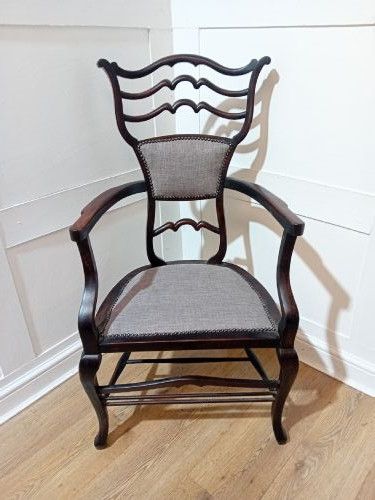
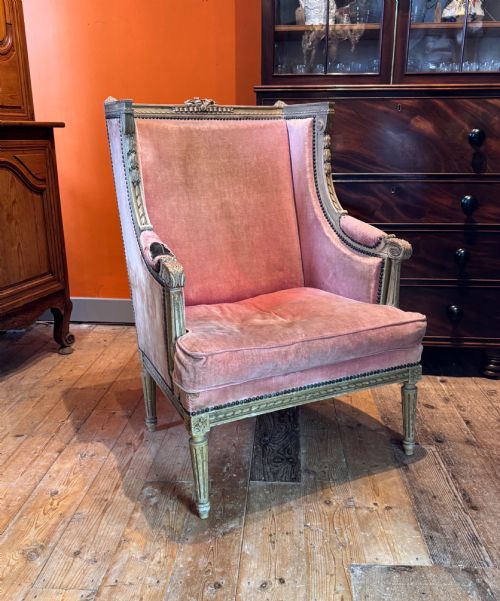
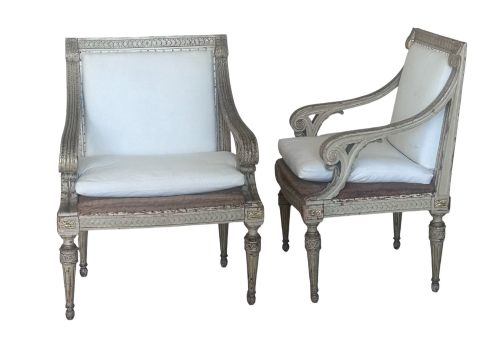


Grey Wooden Armchair
A grey wooden armchair brings character and practical comfort to a room, offering historic form paired with painted or natural timber finishes.
Grey Wooden Armchair
A grey wooden armchair encompasses a variety of period seating, from Victorian walnut salon chairs to Edwardian mahogany styles and French painted fauteuils. Buyers searching for a grey wooden armchair encounter diverse regional designs spanning the nineteenth and early twentieth centuries.
The selections on this page lean heavily towards French painted armchairs in the Louis XV and Louis XVI styles, alongside English Victorian and Edwardian examples. These pieces frequently feature exposed wooden frames treated with historic or later paint, often paired with upholstered seats or cane panels.
Beyond standard armchairs, related seating forms such as settees, bergere chairs and salon chairs appear within the selection. Each piece combines structural timber work with supportive seating designed for formal or domestic interiors.
Materials and Construction
The structural framework relies on traditional hardwoods including beech, beechwood, mahogany, walnut, teak and Chinese hardwood. These timbers provide the necessary strength for carved frames, curved cabriole legs and supportive armrests.
Surfaces are finished with applied paint, gesso, or left in polished wood, sometimes accompanied by decorative brass elements. Upholstery techniques incorporate fabric panels, needlepoint, button-backed padding, tweed and woven cane inserts.
Grey Wooden Armchair Retail Price Guide 2026
Typical asking prices for grey wooden armchair among the pieces listed under this phrase on Sellingantiques today, from the lower quarter to the upper quarter. They describe what is for sale here now, not the wider market.
One notable Victorian armchair takes on a thoroughly modern personality by being upholstered entirely to resemble a tailored tweed jacket.
Assessing Quality and Execution
Quality reveals itself in the crispness of the wood carving and the integrity of the joinery within the frame. Superior examples demonstrate balanced proportions, harmonious curves and stable construction across the arms and legs.
The nature of the finish and upholstery also dictates the character of the piece, whether through well-preserved original paint, finely woven cane, or expertly executed needlepoint panels. Cohesion between the frame and the chosen textile finish separates standard seating from finer specimens.
The Grey Wooden Armchair Glossary
- Fauteuil
- An open-armed upholstered armchair with an exposed wooden frame originating in France. These seats typically feature padded armrests and carved woodwork.
- Bergere
- A closed armchair with upholstered sides and back, often incorporating cane work. The seat usually consists of a loose cushion resting on a rail.
- Gesso
- A plaster-like mixture applied to wood surfaces to prepare them for painting or gilding. It provides a smooth base for decorative finishes.
- Cane
- Woven rattan material used for chair seats and backs. It offers lightweight flexibility and decorative visual texture.
- Needlepoint
- Stitched embroidery worked on canvas mesh, frequently utilised for historic chair seat and back panels. It introduces intricate patterns and varied colour palettes.
Grey Wooden Armchair: Frequently Asked Questions
What is a fauteuil?
A fauteuil is an open-arm wooden armchair of French origin, typically featuring an exposed carved frame and upholstered armrests.
These chairs were designed for formal reception rooms and combine decorative woodwork with comfortable padded seating.
How do I clean cane seats?
Cane panels benefit from gentle dusting with a soft brush and occasional wiping with a damp sponge to maintain moisture in the fibres.
Avoiding harsh chemical cleaners ensures the natural rattan remains flexible and strong over time.
Are these chairs comfortable?
Most period armchairs provide supportive upright seating, though padding levels vary according to the original style and intended use.
Adding appropriate cushions can adapt formal salon or parlor chairs for everyday relaxation.
How to date a wooden armchair?
Dating relies on examining the wood species, joinery methods, carved stylistic motifs and the nature of any surface paint.
Comparing these physical characteristics with established nineteenth and early twentieth-century design periods clarifies the era of manufacture.