



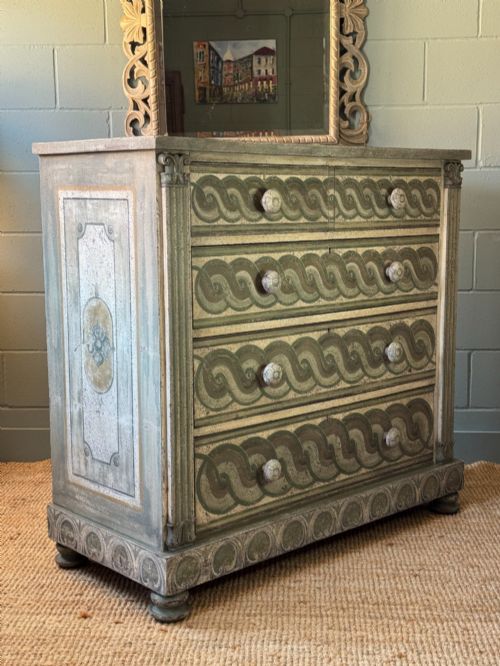


Grey Wood Chest of Drawers
A grey wood chest of drawers brings muted continental elegance and practical storage into a room.
Grey Wood Chest of Drawers
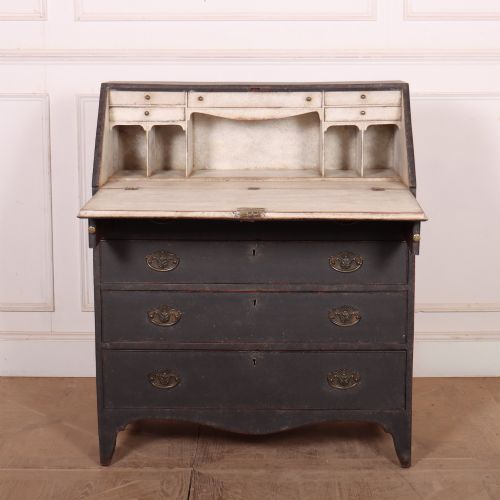
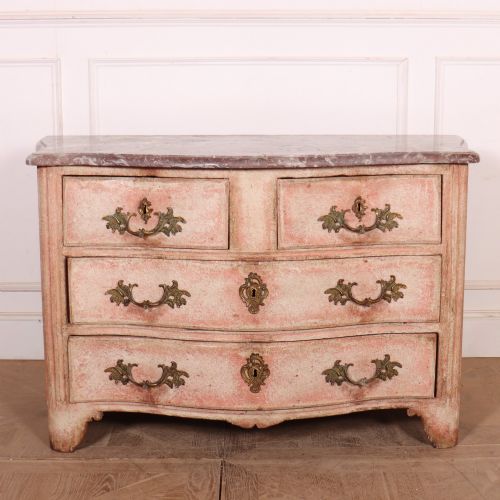
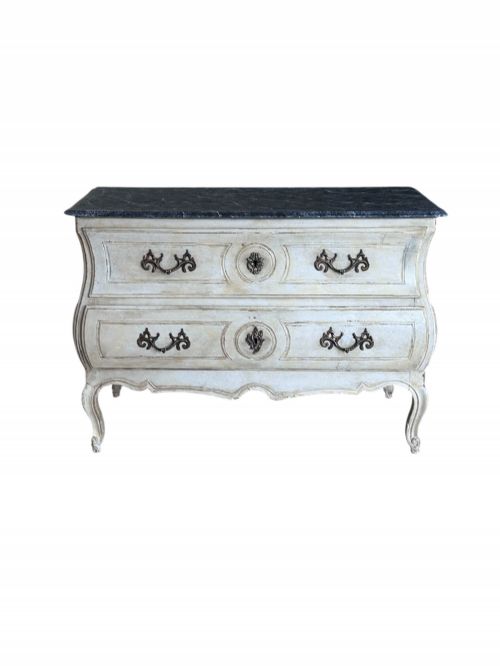
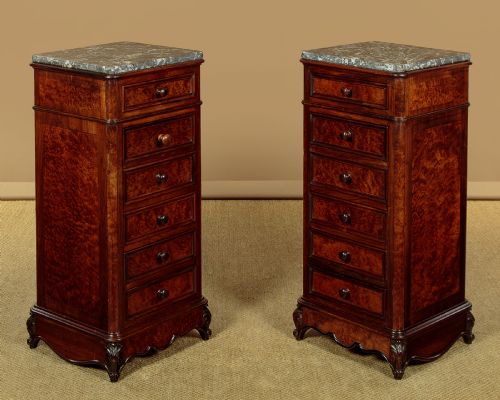
A grey wood chest of drawers encompasses painted commodes, bedside pedestals, and tall semainiers originating from continental Europe and Britain. These pieces span the eighteenth century, nineteenth century, and the year 1900, reflecting regional designs such as Gustavian, French Chateau, Louis XVI, French Empire, Louis XV, and Dutch Rococo.
The version most commonly met on this page is the nineteenth century painted Swedish chest of drawers or French commode, often featuring multiple stacked drawers and occasional pairs. These items frequently incorporate decorative surfaces, painted finishes, and pale timber aesthetics.
Forms vary from serpentine fronts and bow fronts to bombe shapes and compact bedside tables. Materials extend beyond plain timber to include pine, rosewood, amboyna, burr elm, and cherry, paired regularly with marble or faux marble tops and brass hardware.
How they were made
Construction relies upon traditional timber framing techniques, utilising solid woods like pine, cherry, and exotic veneers such as rosewood and amboyna. Carcases are joined carefully to house drawers securely, while serpentine and bombe profiles require skilled shaping of the solid wood.
Surfaces receive decorative treatments including layered paint finishes, gilding, and the application of marble or faux marble slabs to the tops. Brass handles, escutcheons, and mounts are fitted to complete the exterior appearance of each commode.
Grey Wood Chest of Drawers Retail Price Guide 2026
Typical asking prices for grey wood chest of drawers among the pieces listed under this phrase on Sellingantiques today, from the lower quarter to the upper quarter. They describe what is for sale here now, not the wider market.
Listings feature items from the eighteenth century, nineteenth century, and 1900, incorporating pine, rosewood, amboyna, marble, and painted wood.
What varies in quality
The finesse of the painted decoration and the integrity of the underlying timber carcase dictate the distinction between standard examples and finer pieces. Original painted surfaces and authentic period gilding hold greater aesthetic weight than later repainting efforts.
The selection of materials, such as the inclusion of genuine marble tops or scarce timbers like amboyna and burr elm, elevates the standing of a commode. Furthermore, the crispness of serpentine or bombe shaping demonstrates superior cabinet-making skill.
The Grey Wood Chest of Drawers Glossary
- Commode
- A low chest of drawers, typically of French or continental European origin. These pieces often feature decorative painted surfaces and marble tops.
- Gustavian
- A Swedish neoclassical style popular during the late eighteenth century and influential later. It is characterised by restrained carved detail and pale painted finishes.
- Bombe
- A swelling, convex outward curve found on the front and sides of certain commodes. This baroque form requires advanced woodworking skill to construct.
- Serpentine
- A furniture front shape curving inward centrally and outward at the ends. It appears frequently on eighteenth and nineteenth century commodes.
- Semainier
- A tall, slender chest of drawers traditionally designed with seven drawers, one for each day of the week. They often incorporate cherry wood and marble tops.
Grey Wood Chest of Drawers: Frequently Asked Questions
What is a grey wood chest of drawers?
A grey wood chest of drawers is a storage item featuring painted or weathered wood finishes, commonly found in continental styles like Gustavian and French Empire. These pieces range from compact bedside tables to serpentine commodes.
They combine practical drawer storage with decorative surfaces, frequently incorporating marble tops and brass mounts.
Where were these chests made?
These chests originate predominantly from continental Europe, with strong representation from Sweden, France, and the Netherlands. Makers in these regions applied local stylistic traits such as Louis XVI curves or Dutch bombe shaping.
British examples and nineteenth-century interpretations also appear within this selection.
How do I style a painted commode?
A painted commode works effectively in bedrooms as a bedside pedestal or in living spaces as a focal storage unit. The muted grey tones complement both neutral and bold interior colour schemes.
Pairing the piece with simple lamps or mirrors highlights the historic painted surfaces and marble tops.
What periods do these pieces span?
The listings span from the eighteenth century through the Victorian era up to 1900. Earlier examples often showcase Dutch Rococo or French Provençal designs.
Nineteenth-century pieces frequently display Swedish Gustavian influences and decorative painted finishes.