



Grey Upholstered Footstool
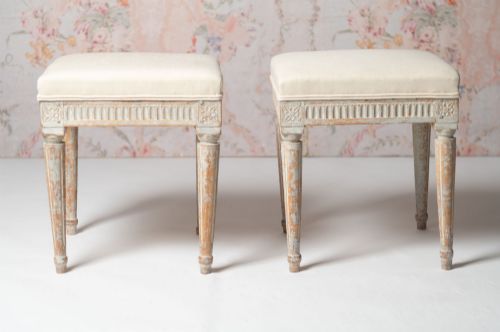
A grey upholstered footstool brings calm tone and practical comfort to a room, ranging from Gustavian frames to robust Victorian mahogany.
Grey Upholstered Footstool
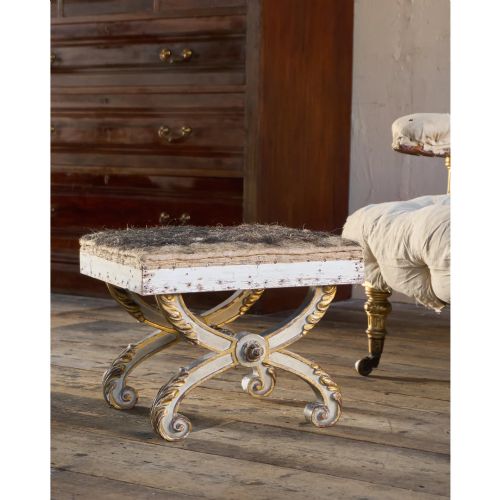
When you search for a grey upholstered footstool, you encounter diverse seating forms designed for resting feet or low seating, spanning the eighteenth, nineteenth, and early twentieth centuries. These pieces appear as compact stools, long ottomans, and X-frame curule designs originating from English, French, and Swedish traditions.
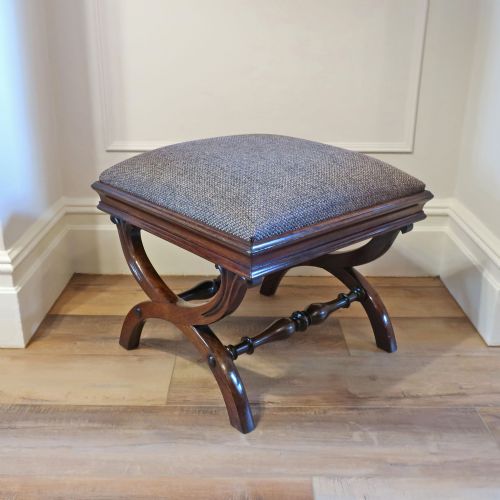
The version you are most likely to meet on this page combines traditional timber frames in mahogany, walnut, or painted wood with contemporary or period fabric upholstery in neutral grey tones. Common forms include dressing table stools, music stools, and substantial ottomans featuring carved or cabriole legs.
Materials and construction
Cabinetmakers constructed these frames using dense timbers such as mahogany, walnut, and painted wood, often applying hand-carved details and gilding to French provincial and neoclassical models. Wood selection governed the structural strength of cabriole legs, X-frames, and lions paw feet.
Upholstery techniques applied to these pieces involved durable fabric coverings, including linen, stretched over padded interior frames. Artisans integrated structural woodwork with textile arts to create functional furniture capable of daily domestic use.
Grey Upholstered Footstool Retail Price Guide 2026
Typical asking prices for grey upholstered footstool among the pieces listed under this phrase on Sellingantiques today, from the lower quarter to the upper quarter. They describe what is for sale here now, not the wider market.
Lions paw feet give steadfast dignity to otherwise polite sitting arrangements.
Distinctions in quality
The distinction between standard domestic seating and finer examples rests in the crispness of the hand-carved woodwork and the integrity of the timber frame. Superior pieces display refined proportions, sophisticated leg forms such as cabriole or lions paw, and meticulous attention to decorative carving.
Makers such as Miles & Edwards demonstrate the level of specialist joinery found in higher-tier workshops, where frame architecture and textile application align seamlessly. Lesser examples rely on simpler turned supports and plain painted surfaces without bespoke joinery details.
Miles & Edwards
The Grey Upholstered Footstool Glossary
- Gustavian
- A Swedish neoclassical style characterised by restrained, elegant proportions and pale painted wood finishes. It emerged during the late eighteenth century under King Gustav III.
- Curule
- An ancient chair or stool form featuring intersecting curved legs that resemble an X shape. This classic shape was revived during the Regency and nineteenth-century periods.
- Cabriole
- A furniture leg that curves out and then narrows downward to a graceful foot. This design was popular across Victorian and earlier decorative seating.
- Ottoman
- A low, upholstered seat or footstool without a back or arms, often built on a large scale. These pieces serve multiple functions for seating or resting feet.
Grey Upholstered Footstool: Frequently Asked Questions
What periods do these footstools come from?
The listings span from the eighteenth century through the nineteenth century and into the early twentieth century. You find pieces representing Gustavian, Regency, and Victorian eras.
Each period imparts distinct stylistic traits, from Swedish painted woodwork to heavy Victorian mahogany frames and French decorative carving.
How were these stools used historically?
These pieces functioned primarily as footstools paired with armchairs, or as low seating for dressing tables and music rooms. Larger ottomans provided versatile seating options in reception rooms.
Their sturdy timber construction and upholstered tops offered practical comfort alongside decorative utility in period interiors.
How do I style a grey footstool at home?
A neutral grey upholstery tone allows these traditional stools to anchor modern and classic living spaces alike. Pair a carved French or Gustavian model with minimalist furniture to highlight its age and texture.
Longer ottomans work effectively at the foot of a bed or beneath a window, combining decorative presence with everyday utility.
How do I distinguish a French stool from a Victorian one?
French provincial and neoclassical stools often feature lighter painted or gilded wood finishes, hand-carved decorative motifs, and elegant cabriole legs. Victorian examples frequently utilise darker native timbers like mahogany and walnut.
English Victorian pieces tend toward heavier proportions, sometimes incorporating robust elements like lions paw feet or X-frame structures.