







Grey Painted Vanity
A grey painted vanity brings together soft, muted colour and period craftsmanship, offering a practical yet decorative centrepiece for the bedroom.
Grey Painted Vanity
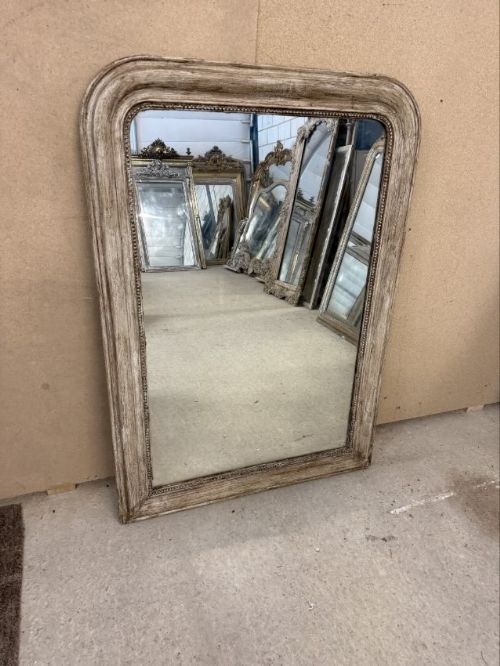
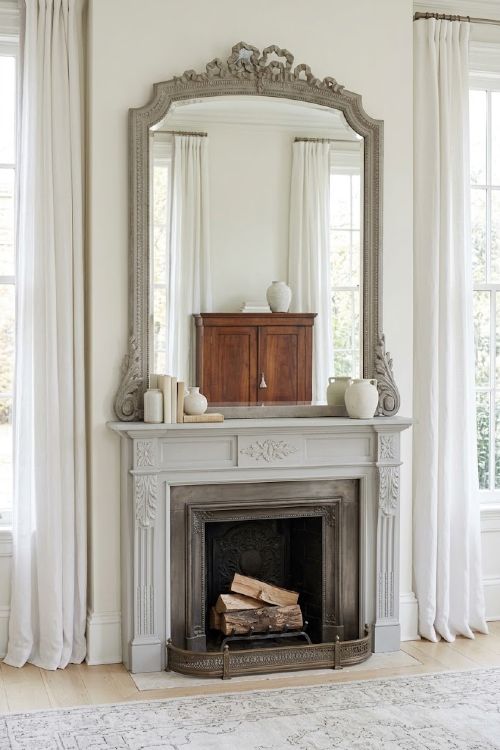
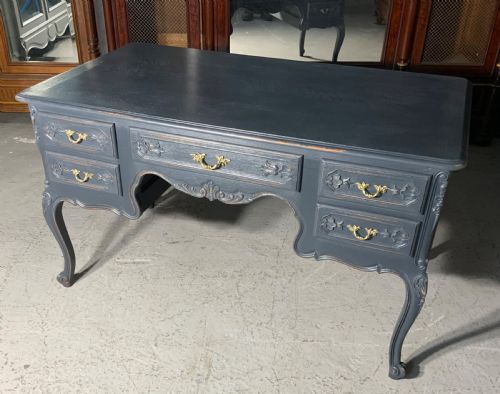
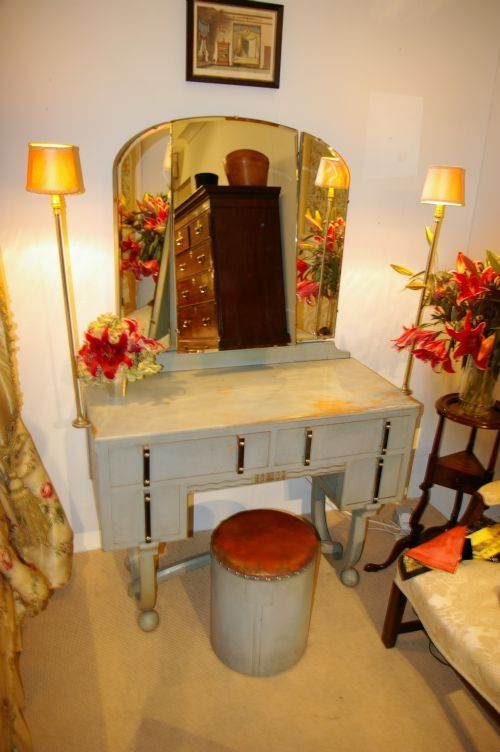
When you search for a grey painted vanity, you are exploring a selection of dressing tables, chests, and mirrors finished in understated paint tones. These items range from nineteenth-century walnut dressing chests to twentieth-century French decorative dressing tables.
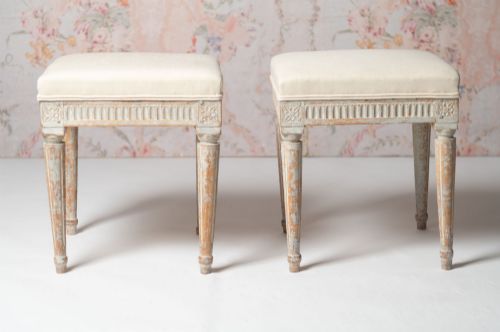
The pieces often feature painted wood surfaces, sometimes paired with glass, brass, or cane, reflecting styles such as French Provincial, Victorian, and Art Deco. Gustavian and Swedish Gustavian examples also appear, bringing lighter, Scandi-inspired forms to the collection.
Buyers will most frequently encounter dressing tables, mirrors, and complementary seating like stools and armchairs. Each object contributes a distinct period silhouette, from eighteenth-century Swedish pieces to Edwardian dressing mirrors.
Materials and construction methods
The construction relies heavily on solid woods such as walnut, oak, and beech, which are then finished with paint, often in muted shades like plummet grey. Artisans shaped these materials using traditional joinery, integrating carved details and swing mirrors.
Metalwork details, particularly brass embellishments, appear alongside glass for mirrors and occasional fabric upholstery on seating. The application of paint varies from simple decorative coats to more elaborate French decorative finishes.
Grey Painted Vanity Retail Price Guide 2026
Typical asking prices for grey painted vanity among the pieces listed under this phrase on Sellingantiques today, from the lower quarter to the upper quarter. They describe what is for sale here now, not the wider market.
Some dressing room suites even come ready for a silent film star's morning routine.
Assessing craftsmanship and finish
Quality in these pieces is dictated by the integrity of the woodwork and the subtlety of the painted finish. Hand-carved elements and original brass hardware elevate a piece above simpler, later adaptations.
The balance of proportions between the dressing table and its associated mirror or stool also defines the standard of the item. Pieces that retain integrated design elements and cohesive period styling command greater interest from collectors.
The Grey Painted Vanity Glossary
- Gustavian
- A Swedish neoclassical style characterised by restrained carvings, light colour palettes, and elegant, simplified forms. It emerged in the late eighteenth century under King Gustav III.
- Dressing chest
- A combination of a chest of drawers and a dressing table, frequently fitted with an attached or swing mirror. These pieces became common in nineteenth-century bedrooms.
- Bergere
- An enclosed upholstered armchair with wooden framing, often featuring cane panels on the sides and back. This seating style originates from eighteenth-century France.
- Swing mirror
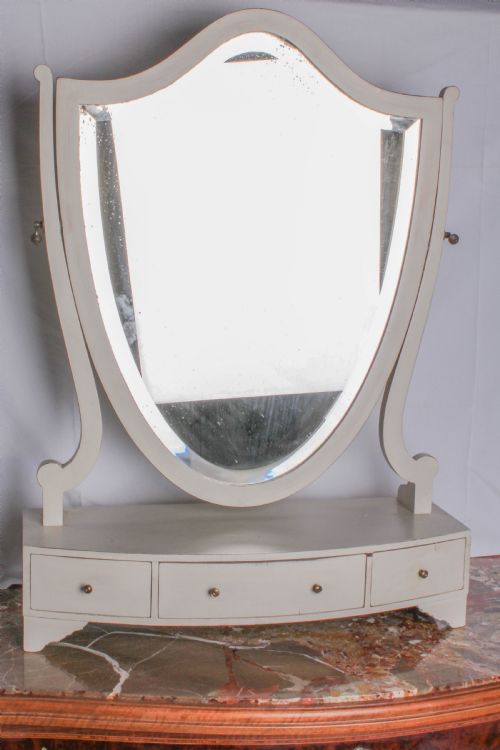
- A tabletop or chest-mounted looking glass hung on pivots, allowing the user to tilt the angle. They formed a standard component of period dressing tables.
Grey Painted Vanity: Frequently Asked Questions
What periods do these pieces span?
The items range from the eighteenth century through the Victorian era and Edwardian period, extending into early twentieth-century Art Deco and Gustavian designs.
This broad timeline means buyers can find both rustic eighteenth-century Swedish forms and more polished twentieth-century French decorative suites.
Are these vanities sold with mirrors?
Many dressing tables include swing mirrors or standing dressing mirrors, though some pieces appear as standalone desks or tables.
Mirrors are sometimes attached directly to the wooden structure or presented as independent tabletop accessories.
What wood types are used?
Construction materials primarily feature painted wood, oak, walnut, and beech, often finished with decorative paint layers.
Additional elements like cane, brass, and glass frequently complement the wooden frames across different styles.
How do French and Swedish styles differ?
French pieces often display ornate carvings and Rococo influences, while Swedish Gustavian designs favour lighter, more restrained neoclassical lines.
Both traditions utilise painted finishes, but the overall silhouettes reflect distinct regional interpretations of period elegance.