





Grey Horse Art
Grey horse art captures the enduring fascination of equine subjects through oil paintings, watercolours, pastels, and carved wooden forms spanning several centuries.
Grey Horse Art
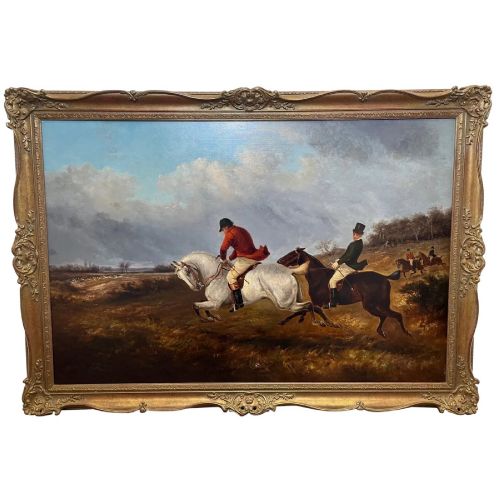
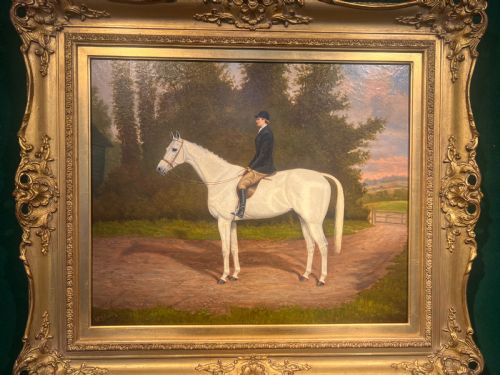
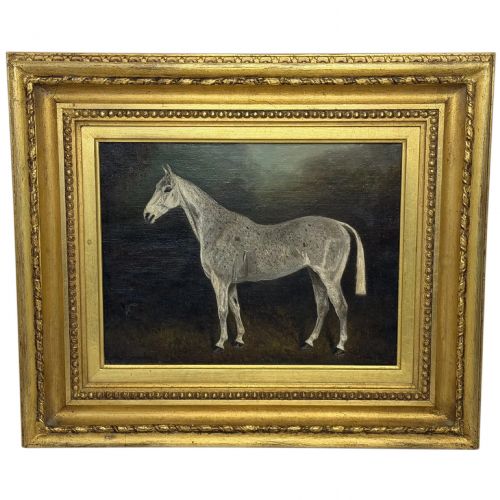
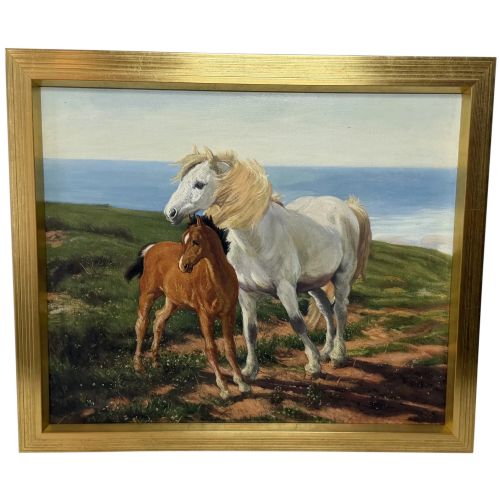
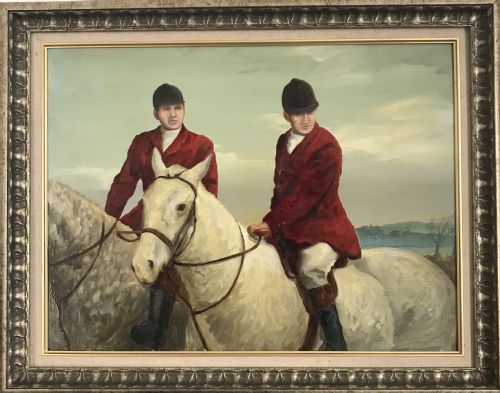
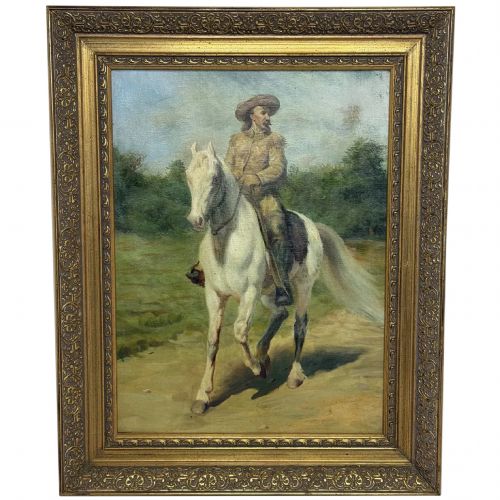
Grey horse art spans traditional oil paintings, delicate watercolours, pastels, and substantial carved wooden rocking horses and sculptures. These works range from rural and agricultural scenes to formal sporting portraits and dynamic hunting depictions.
Examples emerge primarily from the nineteenth and twentieth centuries, featuring British, French, and German origins. Subjects include working shires, racing thoroughbreds, arab stallions, and historic carousel figures.
The selection balances intimate landscape studies with grand equestrian portraits, offering diverse representations of equine subjects in both flat media and three dimensions.
Materials and construction methods
Flat works utilise oil paint on canvas or board, alongside watercolour, pastel, and ink on paper. Artists apply these mediums to capture the complex tones of dapples and roan coats.
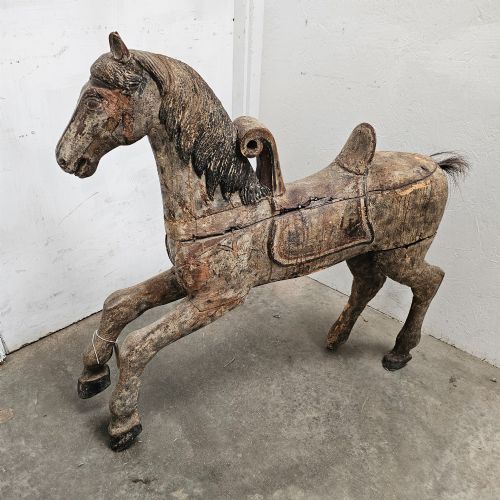
Three-dimensional pieces rely on carved wood, sometimes incorporating original paint surfaces, marble dust relief, or textile embroidery in ceremonial saddle covers. These carved forms reflect traditional joinery and sculpting techniques from the nineteenth and early twentieth centuries.
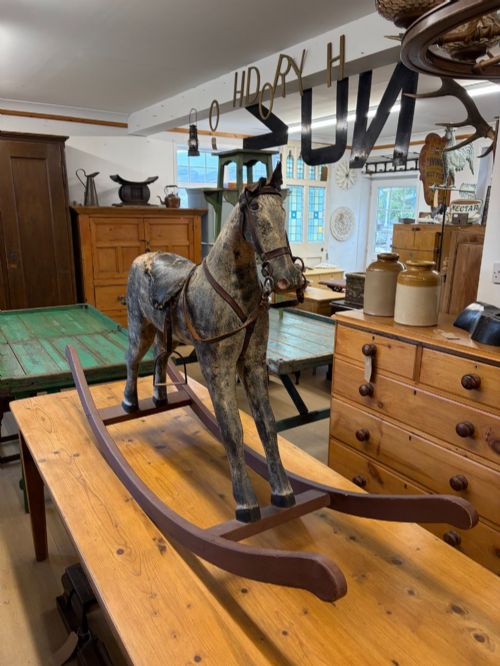
One cheerful carving captures a carousel horse that once spun through French fairgrounds before finding a quiet retirement.
Factors influencing quality
Quality rests upon the artist's ability to render equine anatomy accurately and convey movement within the composition. Masterful brushwork or carving brings vitality to the subject, distinguishing refined portraits from standard decorative pieces.
The integrity of the original surface, whether preserved paint on a carved wooden horse or untouched pigment on canvas, determines the visual impact and historical authenticity of the piece.
Thomas Smythe·John Rattenbury Skeaping·Basil Nightingale·Clifton Tomson·Johan Noah Bemmel
The Grey Horse Art Glossary
- Equine portrait
- A painting or drawing dedicated specifically to the depiction of a single horse or a named pair. These works often record prized animals for their owners.
- Rocking horse
- A carved wooden toy or decorative figure mounted on swing arcs. Antique examples frequently display layered gesso and hand-painted dapple coats.
- Grisette
- A term used in historical sporting art to identify specific equine subjects, often referring to a grey mare. It appears in regional hunt and coaching records.
- Pastel
- A medium composed of powdered pigment and a binder, applied to paper or board. It produces soft, blended tones particularly suited for capturing the texture of horse coats.
Grey Horse Art: Frequently Asked Questions
How do I date an antique rocking horse?
Dating relies on the construction of the body, the type of wood utilised, and the remnants of the original paint layer. Earlier nineteenth-century examples often feature pinned joints and simpler swing stands.
Nail types, tack materials, and glass eyes also provide clear indicators of the period of manufacture.
What is the difference between an oil painting and a watercolour of a horse?
Oil paintings utilise pigment suspended in drying oils on canvas or panel, offering rich colour depth and a robust surface. Watercolours employ water-soluble pigments on paper, creating translucent, lighter effects.
Oils generally hang in formal reception rooms, while historic watercolours require protective framing behind glass away from direct sunlight.
How should I care for a carved wooden horse sculpture?
Preserve wooden sculptures and rocking horses by maintaining stable room temperatures and avoiding direct sunlight or heat sources. Sudden humidity changes cause wood to expand and crack.
Dust gently with a soft, dry cloth and avoid applying modern chemical polishes to historic painted surfaces.
Are nineteenth-century equine portraits accurate to the breeds?
Artists working in the nineteenth century often balanced anatomical observation with contemporary aesthetic preferences for rounded forms and expressive stances. Sporting artists frequently worked directly from life or from owner specifications.
Examining the bone structure, muscle definition, and tack depicted helps identify whether the subject is a hunter, a draught horse, or a thoroughbred.