
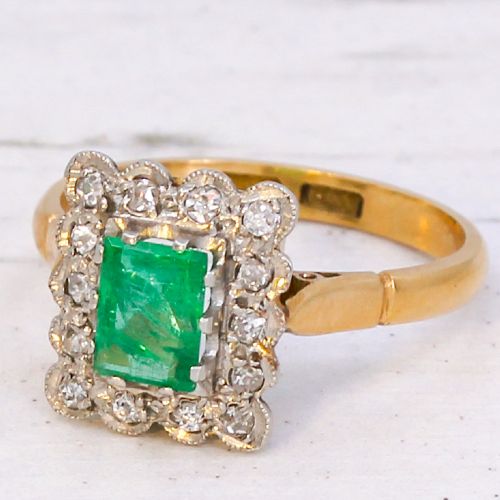
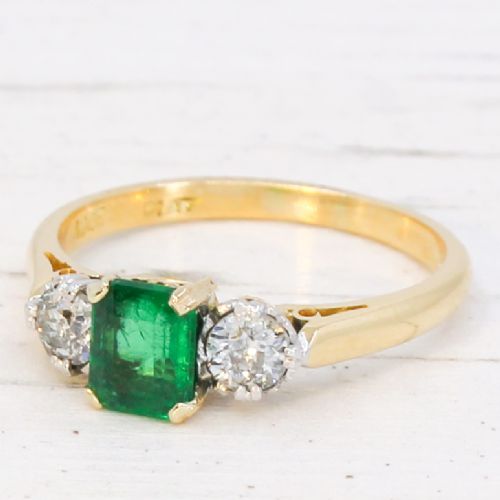
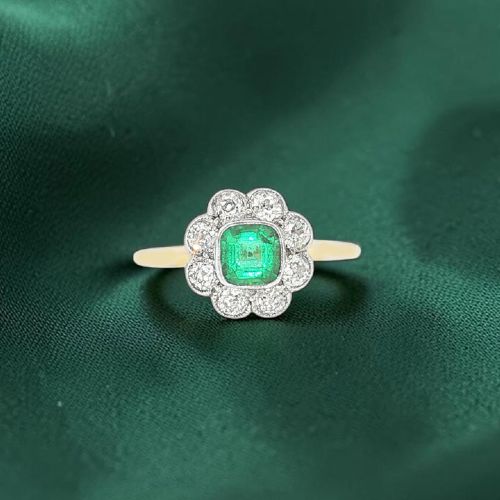
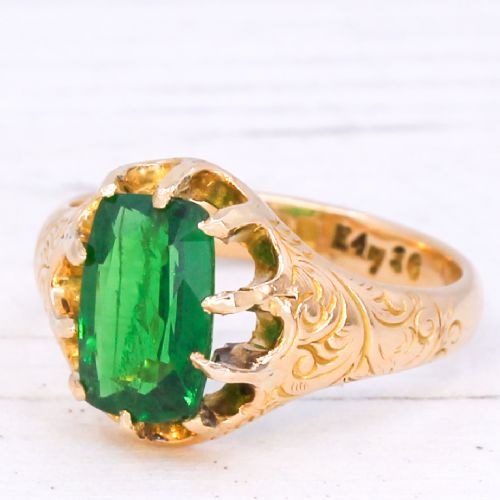
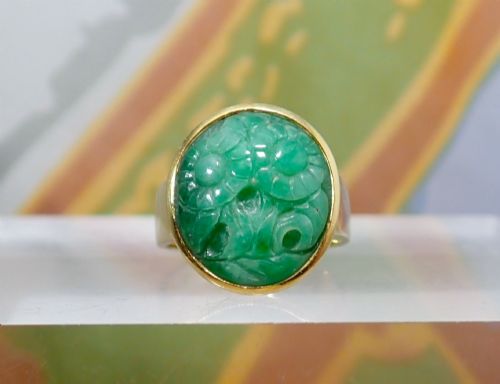
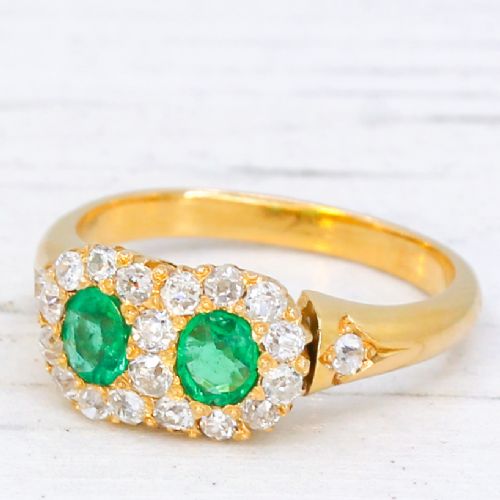
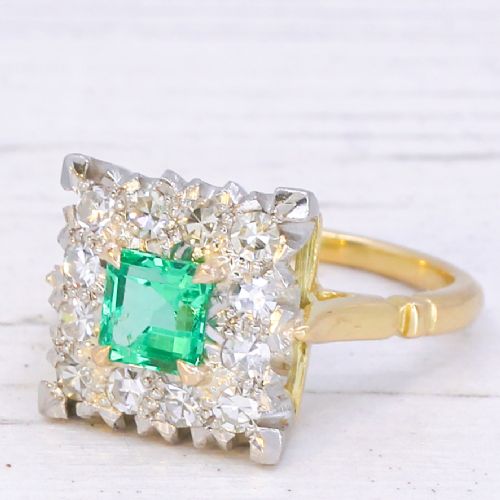
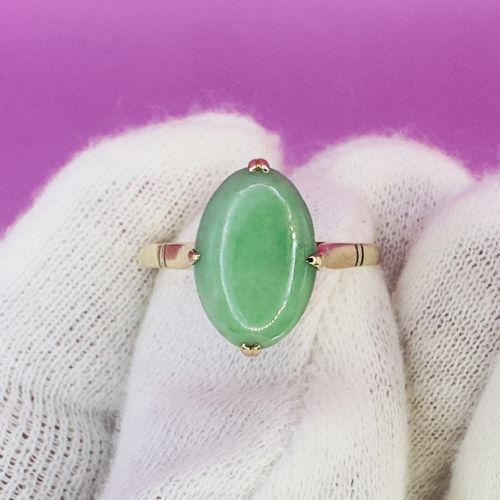
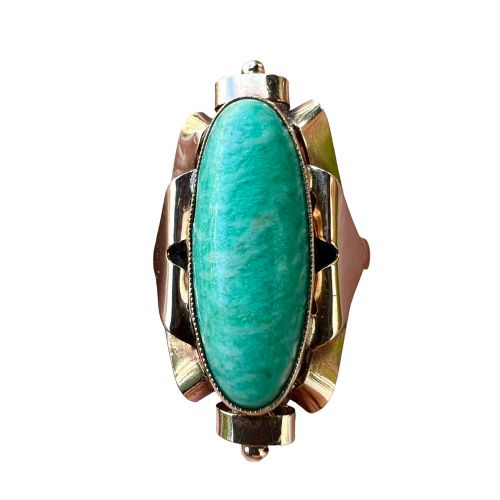
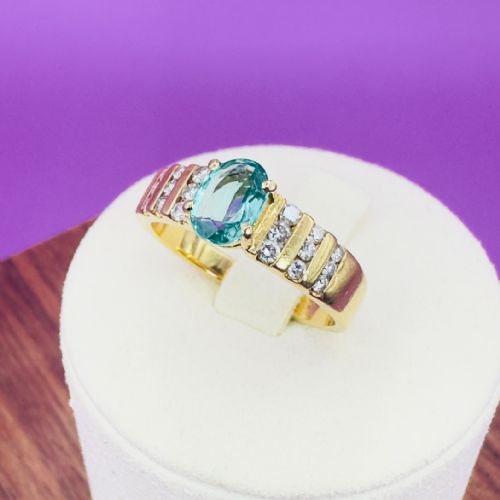


Green Yellow Gemstone Ring
A green yellow gemstone ring brings together bright botanical green and rich warm gold in striking antique and vintage cluster, solitaire, and cocktail designs.
Green Yellow Gemstone Ring
A green yellow gemstone ring encompasses a variety of antique and vintage finger ornaments centred around green stones paired with yellow gold, white gold, platinum, and diamonds. Buyers searching this phrase encounter pieces spanning from Victorian and Edwardian periods through Art Deco, Retro, and Mid-Century designs up to the later twentieth century.
Cluster rings and three-stone arrangements dominate the selections, alongside bold cocktail rings, delicate band configurations, and sculptural modernist pieces. Emeralds appear most frequently, accompanied by jadeite jade, tsavorite, demantoid garnet, peridot, green tourmaline, and chrysoberyl.
Originating largely from the early to mid-twentieth century, these rings reflect distinct historical shifts in gemstone preference and precious metal mounting. From delicate Edwardian emerald and diamond clusters to chunky Mid-Century ballerina and Brutalist settings, each piece displays the distinct craftsmanship of its decade.
How they were made
Master jewellers constructed these mounts primarily in 18ct yellow gold, white gold, 14ct gold, 9ct gold, and platinum, often combining yellow and white metals to highlight specific gemstones. Stones were secured using claw settings, bezel mounts, and pavé arrangements that required meticulous hand-cutting and placement.
Green gemstones such as emeralds, jade, and garnets were shaped into oval cuts, cabochons, marquis cuts, princess cuts, and old mine cuts. Diamonds were frequently integrated as accents in cluster borders, shoulder details, or multi-stone rows to enhance the central green hue.
Listings feature pieces across eight distinct periods, from Victorian and Edwardian origins through Art Deco and Mid-Century modernism to the late twentieth century.
What varies in quality
The standard of materials and stone treatment dictates the upper tier of these pieces, particularly seen in Colombian emeralds with minimal oil enhancement and natural jadeite jade. Superior examples demonstrate exceptional clarity, rich saturation, and precise gemstone matching within complex cluster or multi-stone layouts.
Structural integrity and the refinement of the metalwork separate simpler commercial productions from exceptional jeweller output. Heavier gold weight, sophisticated gallery work, and balanced proportions between central stones and diamond halos define the finer pieces.
Gilbert Albert
The Green Yellow Gemstone Ring Glossary
- Cluster ring
- A ring featuring a central prominent gemstone surrounded by a geometric arrangement of smaller accent stones, typically diamonds.
- Cabochon
- A gemstone shaped and polished with a smooth, rounded convex surface rather than faceted edges.
- Ballerina ring
- A Mid-Century cocktail ring style featuring a central stone encircled by a fluted radiating halo of tapered baguettes or diamonds, resembling a dancer's tutu.
- Toi et moi
- French for you and me, describing a ring design featuring two main gemstones set closely side by side to symbolise two souls entwined.
- Tsavorite
- A vibrant green grossular garnet discovered in East Africa during the twentieth century, prized for its high brilliance and vivid colour.
Green Yellow Gemstone Ring: Frequently Asked Questions
What stones are in a green yellow gemstone ring?
These rings showcase a wide array of green stones including emerald, jadeite jade, tsavorite, demantoid garnet, green tourmaline, peridot, and chrysoberyl. They are typically set in yellow gold, white gold, platinum, or combined metal mounts.
Diamonds frequently accompany the green centre stones as supporting accents, creating high contrast within cluster, multi-stone, and cocktail configurations.
How do I date an antique green yellow gemstone ring?
Dating relies on stylistic clues, metal types, and gemstone cut characteristics specific to eras such as the Edwardian period, Art Deco, and Mid-Century. Edwardian pieces often feature intricate platinum-topped yellow gold work with old cut diamonds.
Mid-Century designs introduce bolder silhouettes, heavier gold usage, and distinct settings like the ballerina style. Hallmark stamps and professional appraisals provide further chronological confirmation.
How were antique emerald rings treated?
Many antique emeralds received traditional light oil or resin treatments to improve surface clarity, a standard practice documented in gemological reports as minor or negligible oil. Untreated stones, often described as no oil, are exceptionally scarce.
Understanding oil enhancement helps collectors evaluate the natural state and historical preservation of emeralds found in Edwardian and Art Deco mountings.
Are these rings suitable for everyday wear?
Many of these pieces function well for daily wear when selected and maintained properly, though harder stones like diamonds and garnets withstand daily knocks better than softer materials like jade or emerald.
Working with a jeweller to check claw security and metal thickness ensures vintage and antique rings remain protected through regular use.