

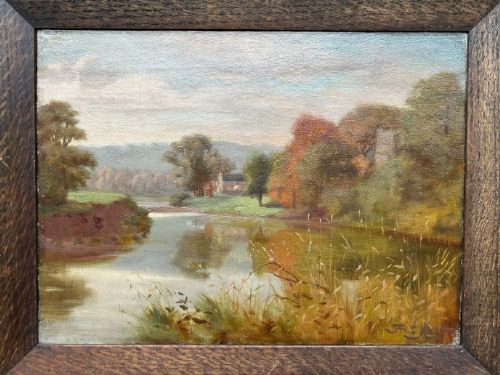
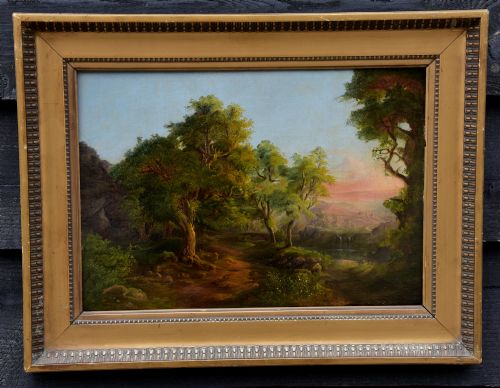
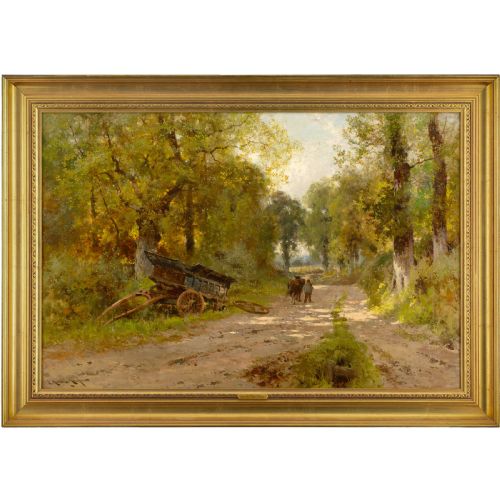
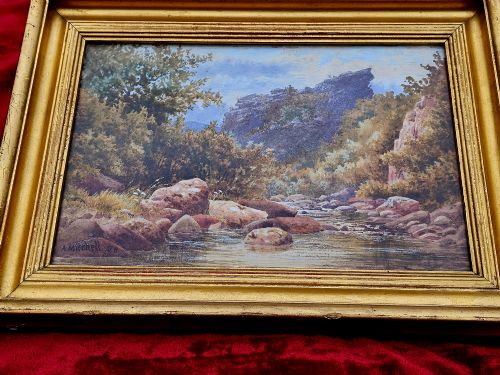

Green Victorian Landscape Painting
When you search for a green victorian landscape painting, you seek framed artwork capturing rural scenery from the nineteenth century.
Green Victorian Landscape Painting
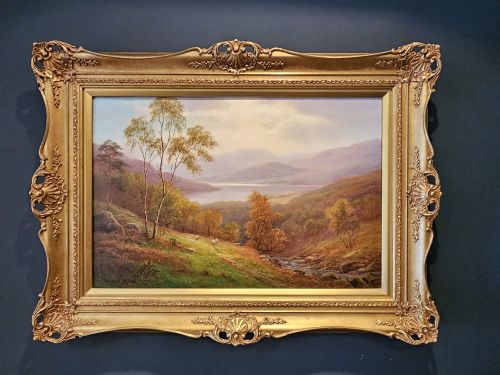
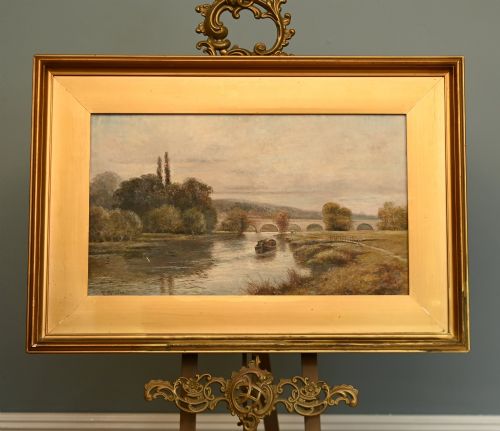
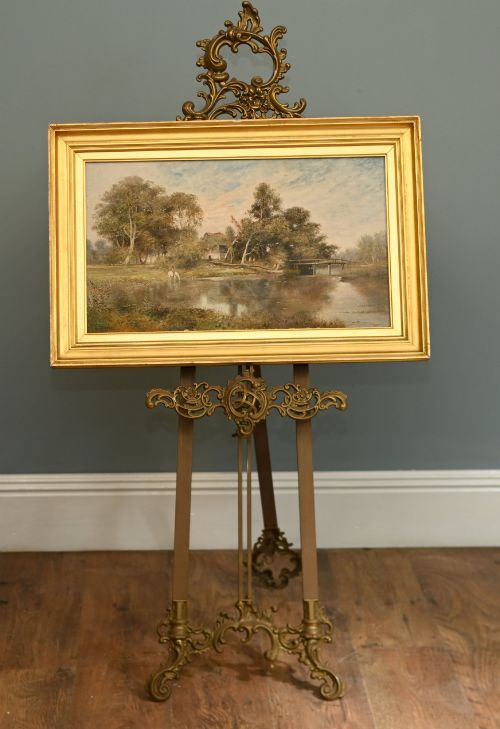
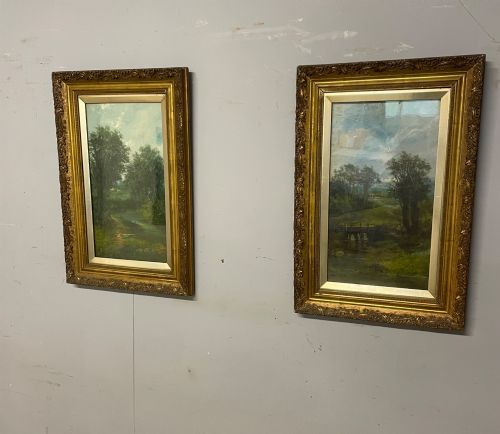
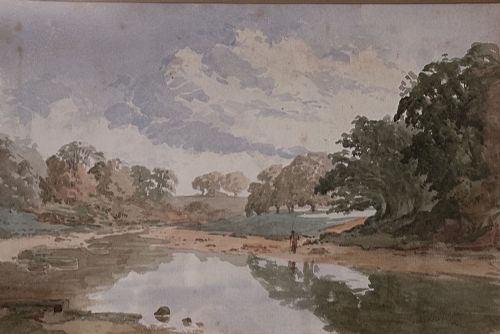
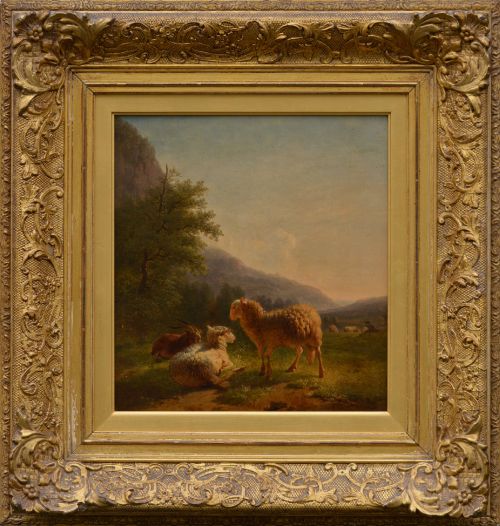
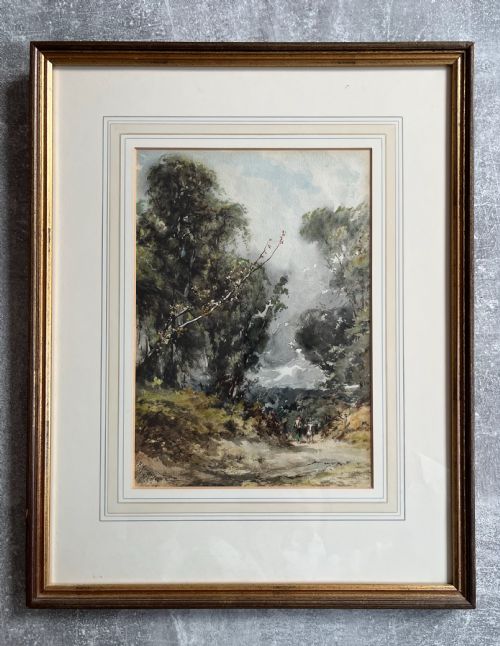
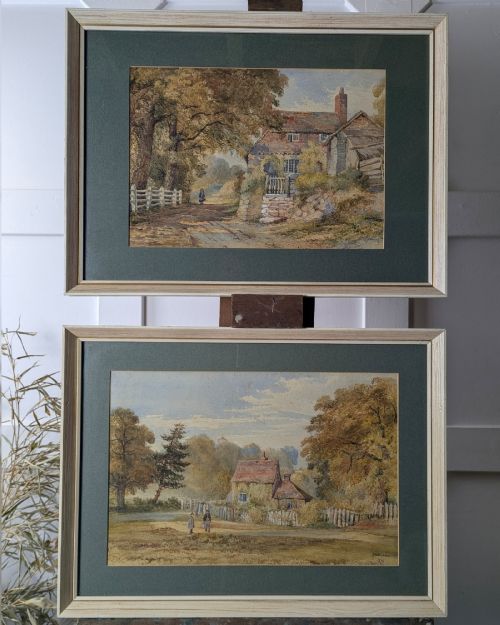
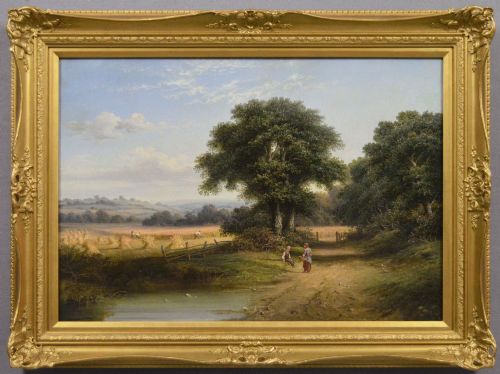
A green victorian landscape painting depicts rural scenery, woodlands, rivers, and pastoral views created during the nineteenth century. These works capture the natural British countryside through the artistic lenses of Victorian, Edwardian, and nineteenth-century romanticism movements.
Most pieces encountered on this page take the form of oil on canvas or watercolour paintings housed within traditional wooden and giltwood frames. Artists utilised these mediums to record specific locations, ranging from Welsh valleys to Scottish highlands and Thames riverbanks.
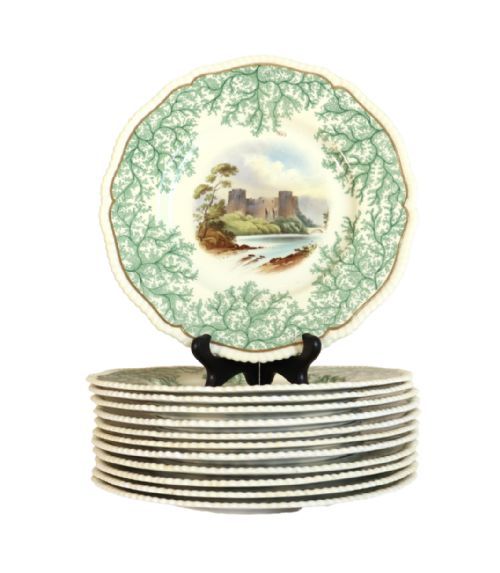
The selection includes framed artwork ranging from expansive oil paintings on board to delicate watercolours and decorative pottery plaques bearing topographical scenes. Buyers find both signed works by known academicians and evocative pieces from the British school.
Materials and construction
These works rely primarily on oil on canvas or watercolour applied to paper, supported by wooden stretchers and boards. Painters built depth through layered pigments, capturing woodland foliage, harvest fields, and river views with varied brushwork.
Framing forms an integral part of the physical object, utilising carved wood and giltwood to enclose the canvas or paper under glass. Gilt frames provide a reflective border that complements the natural greens and earthy tones of the painted scenes.
The listings span the nineteenth and early twentieth centuries, featuring oil on canvas, watercolour, and giltwood frames.
Assessing the works
Quality rests upon the artist's command of light, atmospheric perspective, and pigment handling within the landscape. Master works achieve a convincing sense of depth and naturalism in foliage and water, whereas lesser pieces rely on formulaic compositions.
The preservation of the original canvas, paper, and giltwood frame influences the integrity of the piece. Untouched surfaces and clear signatures elevate certain paintings by establishing a direct link to the period and its makers.
Eugène Verboeckhoven·Richard Sebastian Bond·William Beattie-Brown·George Fotherly Hargitt·Alfred Young Nutt·Frederick Marriott·John Horace Hooper·Thomas W Lascelles·Robert A Nottingham·David Bates·Walter Heath Williams·Ernest Arthur Rowe·Frederick Walker·Richard Redgrave·Frederick James Kerr·Henry H Parker·Robert Watson·Edward Priestley·Johann Friedrich Voltz·Bonomi Edward Warren·Henry Yeen King·William Yale·William Greaves·Henry Barlow Carter·Joseph Knight
The Green Victorian Landscape Painting Glossary
- Oil on Canvas
- Pigment mixed with drying oil applied to a woven fabric stretched across a wooden frame. This primary medium allows for rich blending and textured application.
- Watercolour
- Paint consisting of water-soluble pigments applied to paper. It creates luminous, translucent washes often utilised for river and sky views.
- Giltwood
- Wood carved and covered with a thin layer of gold leaf or gilt. It provides the traditional ornate border for nineteenth-century framed artwork.
- Victorian Realism
- An artistic approach focusing on the truthful, unidealised depiction of everyday subjects and natural scenery. It reflects the period's interest in direct observation of nature.
- Provenance
- The documented history of ownership surrounding an artwork. It traces the journey of a painting from its creation to the present collection.
Green Victorian Landscape Painting: Frequently Asked Questions
What defines a nineteenth century landscape?
A nineteenth century landscape depicts natural scenery, rivers, and woodlands created during the Victorian and Edwardian eras. These artworks reflect contemporary romantic and realist interpretations of the British countryside.
Artists focused on recording specific geographical locations, rural labour, and pastoral tranquility using oil paints or watercolours.
How should I hang these framed paintings?
Hang these works at eye level on walls protected from direct sunlight and excessive humidity. Adequate spacing allows the ornate giltwood frame to complement the surrounding interior.
Ensure wall fixings safely support the weight of the wooden stretcher and glass where applicable.
Are watercolours different from oil paintings?
Watercolours use water-soluble pigments on paper, requiring protective glass framing to prevent moisture damage. They offer a lighter, translucent quality suited for atmospheric skies and water.
Oil paintings utilise canvas or board surfaces that accept heavier layers of pigment, creating rich textures and deeper tonal contrasts.
How do I identify the period of a landscape?
Period identification relies on stylistic cues, artist signatures, framing materials, and stretcher construction. Nineteenth-century works often bear traditional signatures and historical provenance.
Examining the back of the canvas or board frequently reveals period labels, titles, and dealer stamps.