

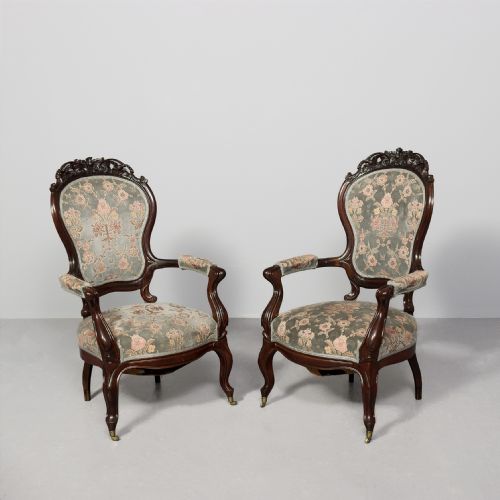


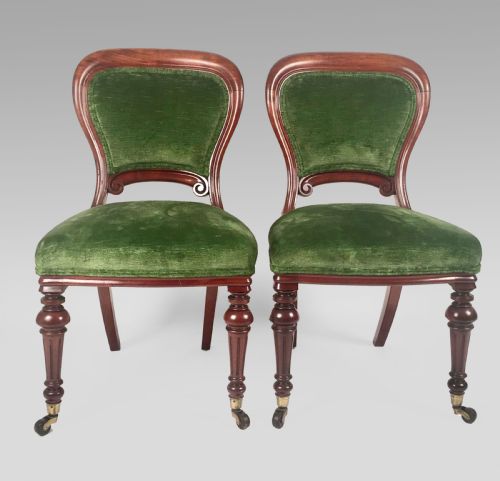


Green Velvet Salon Chair
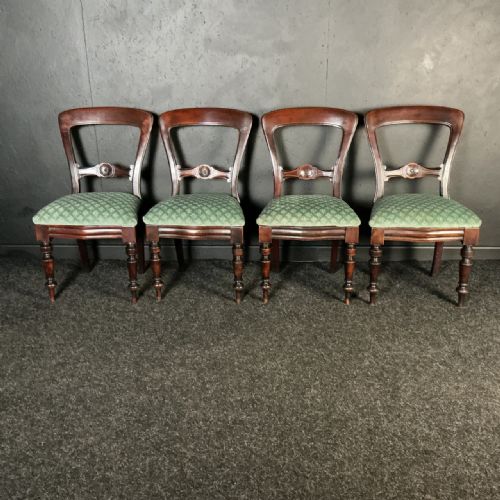
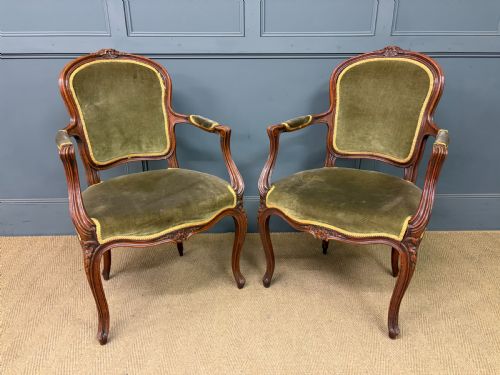
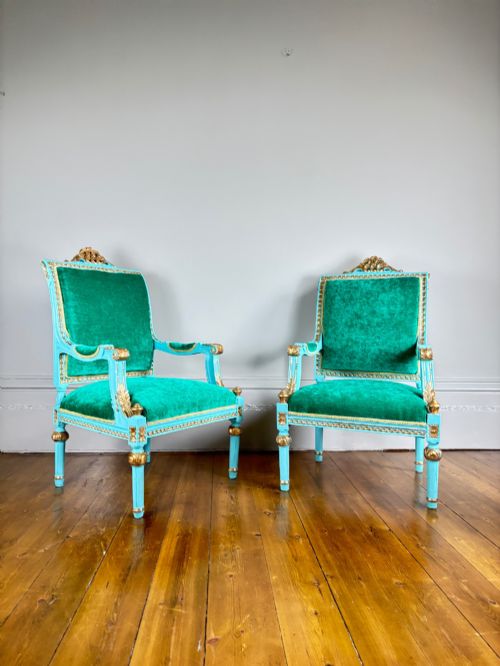
These green velvet salon chair examples bring rich Victorian and French revival seating to a room, offering tactile warmth and period character.
Green Velvet Salon Chair
A green velvet salon chair encompasses various seating forms from the Victorian era up to nineteen thirty, including armchairs, side chairs, and suites. The listings show pieces spanning from eighteen fifty to nineteen hundred, reflecting diverse revival aesthetics.
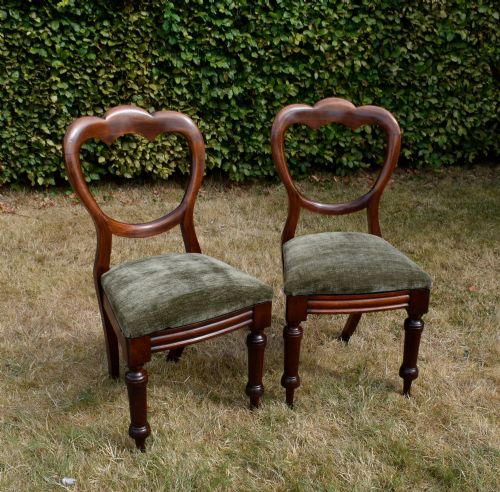
Buyers frequently encounter Victorian walnut and mahogany frames, often featuring cabriole legs, spoon backs, or balloon backs. French influences like Louis XV Revival and Napoleon III also appear alongside English Victorian pieces.
Armchairs and open armchairs dominate the selection, though dining chairs and larger drawing room suites are also present. These items served formal reception rooms and parlours, combining structural timber frames with upholstered comfort.
Construction and materials
Timbers such as mahogany, walnut, rosewood, and ebonised wood form the structural framework for these seats. Craftsmen shaped these hardwoods into curved cabriole legs, carved backs, and open arm configurations.
Velvet and various fabric upholsteries cover the padded seats and backs, sometimes complemented by brass details. Frames exhibit period joinery techniques typical of nineteenth and early twentieth century cabinet making.
Listings feature pieces spanning the Victorian period, eighteen fifty, eighteen sixty, eighteen eighty, nineteen hundred, nineteen ten, and nineteen thirty.
Assessing quality
Quality rests in the crispness of the timber carving and the robustness of the underlying hardwood frame. Finer pieces demonstrate superior joinery, balanced proportions, and substantial rosewood, walnut, or mahogany sections.
The sophistication of the revival style influences desirability, particularly where French or Victorian Rococo ornamentation is executed with depth and precision. Original frame integrity separates well-preserved examples from those requiring extensive restoration.
C. Hindley & Sons·Hewetson & Milner·Jas / James Shoolbred
The Green Velvet Salon Chair Glossary
- Cabriole leg
- A furniture leg that curves outward and tapers downward to a small foot, common in eighteenth century and revival designs. This shape mimics animal legs and provides sturdy support without heavy stretchers.
- Spoonback
- An upholstered chair back shaped like the bowl of a spoon, designed to fit the human spine. It is a defining characteristic of mid nineteenth century Victorian seating.
- Balloon back
- A rounded, oval-shaped chair back resembling a balloon, popular in Victorian dining and side chairs. This outline lightens the visual weight of mahogany and walnut frames.
- Napoleon III
- A French design period spanning the mid to late nineteenth century, known for eclectic revivals and luxurious upholstery. Pieces from this era often incorporate ebonised finishes and rich fabrics.
- Aesthetic Period
- A late nineteenth century artistic movement emphasising art for art's sake, often featuring ebonised wood and Asian influences. It produced striking contrast against earlier Victorian styles.
Green Velvet Salon Chair: Frequently Asked Questions
How do I date a Victorian salon chair?
Dating relies on timber choices, such as rosewood and early mahogany in mid nineteenth century pieces, shifting to walnut and ebonised finishes later on. Stylistic cues like spoon backs and balloon backs also point to specific decades within the Victorian era.
Construction methods further help narrow the period, as machine sawn components gradually replaced hand cut joinery towards the end of the nineteenth century.
Where were salon chairs used?
These chairs were placed in formal drawing rooms, parlours, and reception spaces for entertaining guests and quiet relaxation. Open armchairs and salon suites provided versatile seating arrangements for conversation.
Smaller side chairs and balloon back chairs were easily moved around a room to accommodate gatherings, serving both decorative and practical functions in a Victorian home.
Are these chairs suitable for daily use?
Most antique frames remain robust, though internal webbing and padding may require professional reupholstering to support regular sitting. Checking the structural stability of the joints ensures safe everyday enjoyment.
Pairing historic seating with careful daily care preserves the antique hardwood frames and fabric upholstery for years to come.
What is the difference between Victorian and French revival styles?
Victorian pieces often feature heavy walnut, mahogany, or rosewood with robust carving and enclosed or open arms tailored for English parlours. French revival styles like Louis XV or Napoleon III tend to display more exuberant curves, gilt accents, or ebonised surfaces.
Both traditions intersect in the listings, showing how nineteenth century makers reinterpreted continental motifs for British homes.