


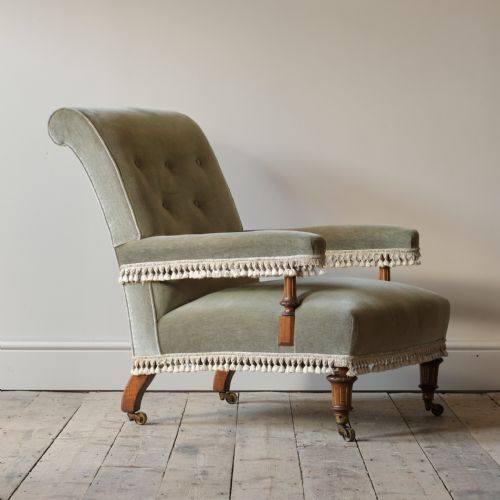
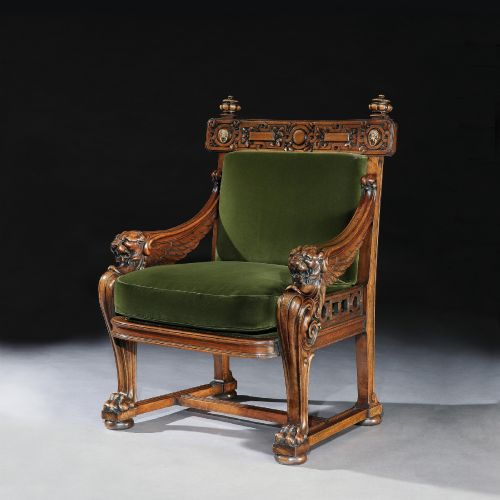
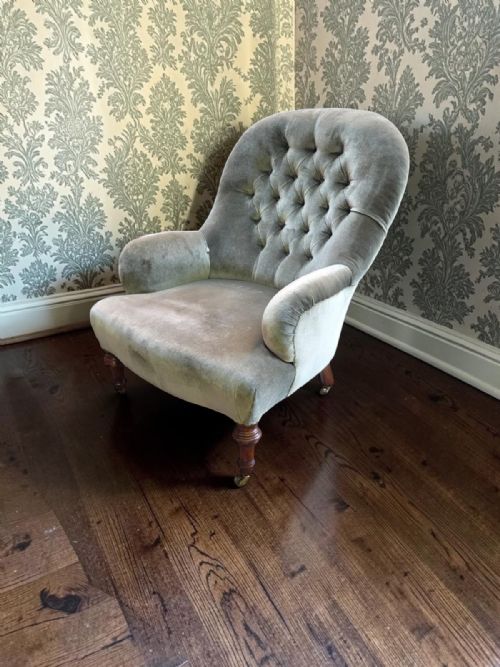
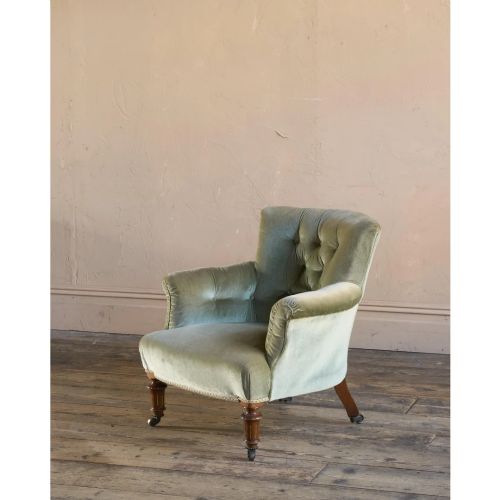
Green Velvet Armchairs
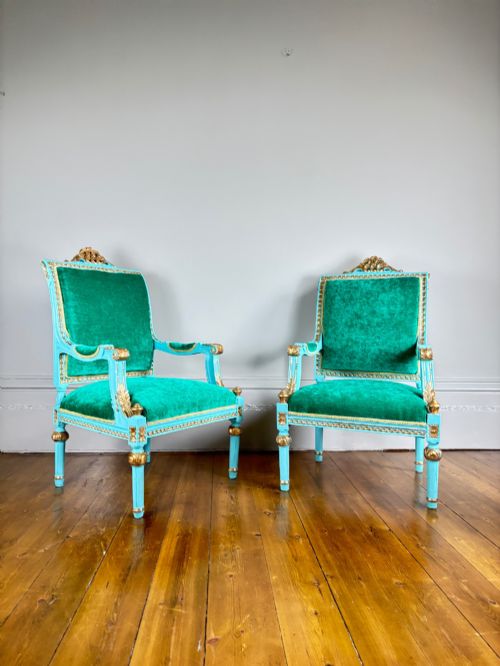
Green velvet armchairs bring deep colour and tactile luxury to a room, offering both historic character and striking presence.
What Green Velvet Armchairs Are
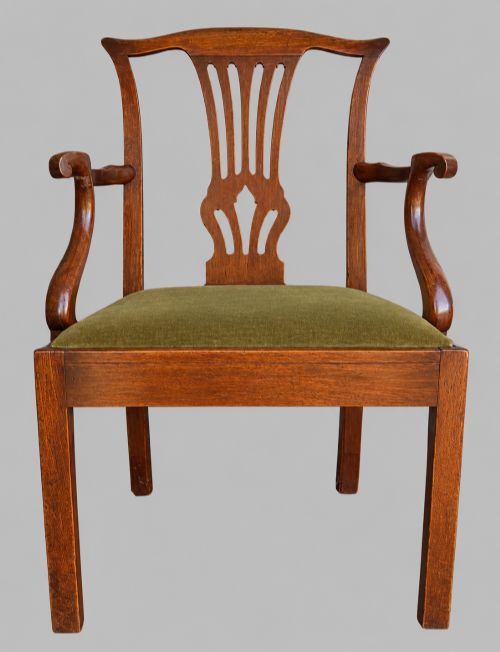
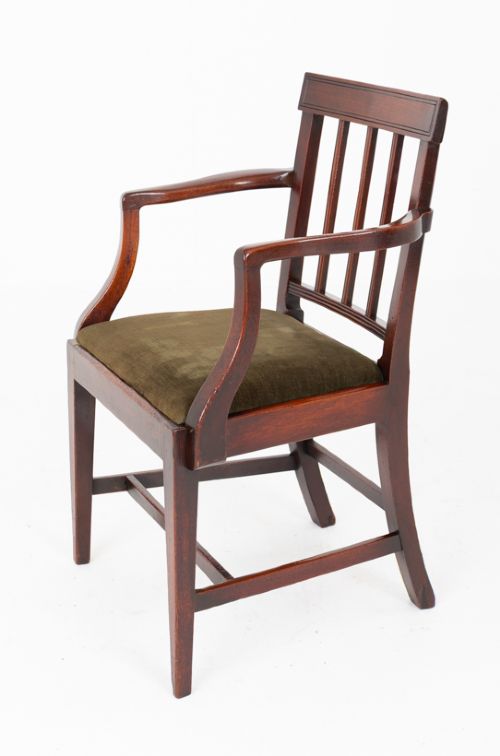
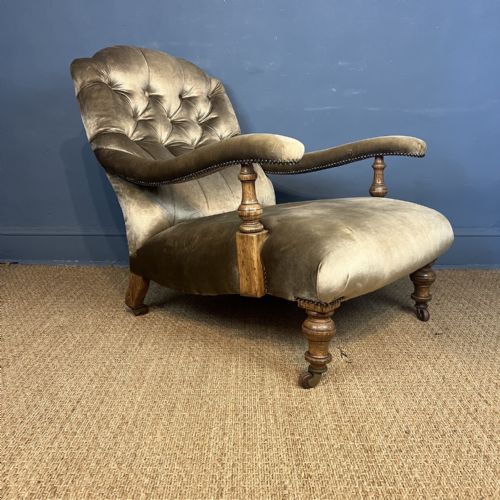
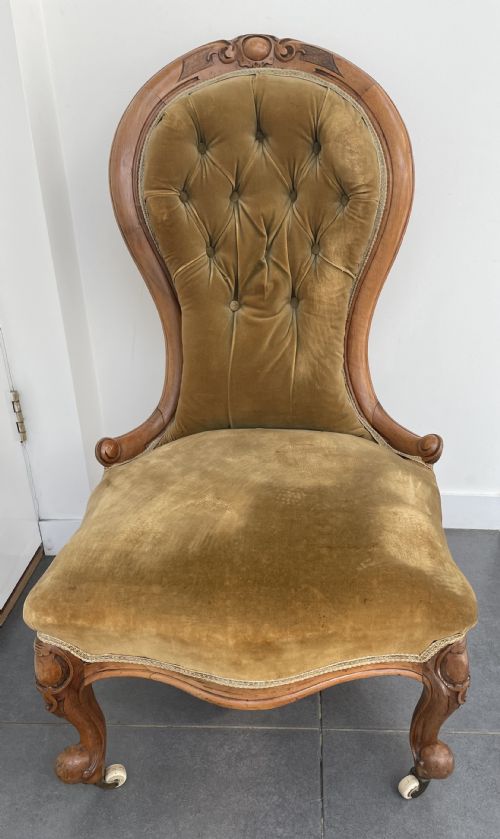
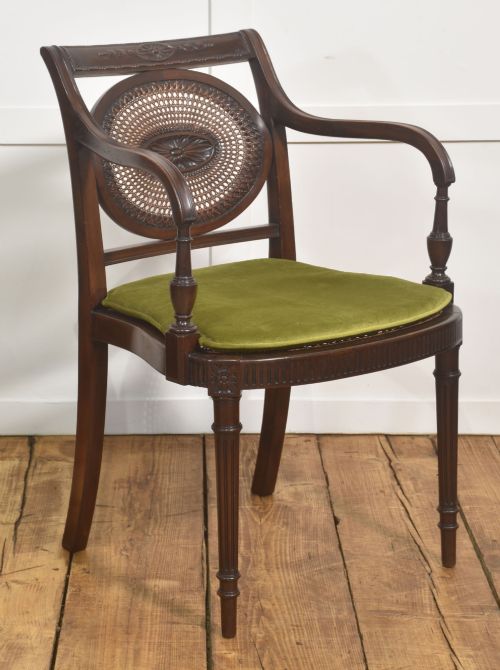
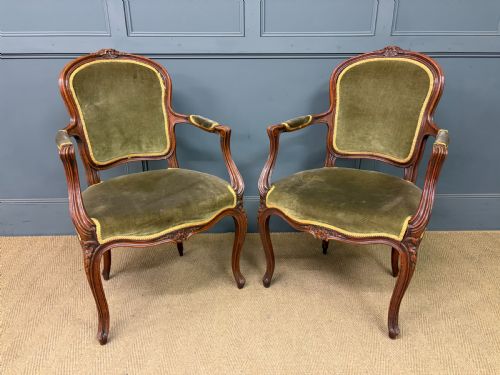
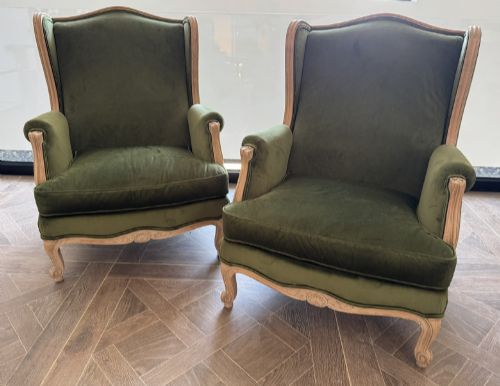
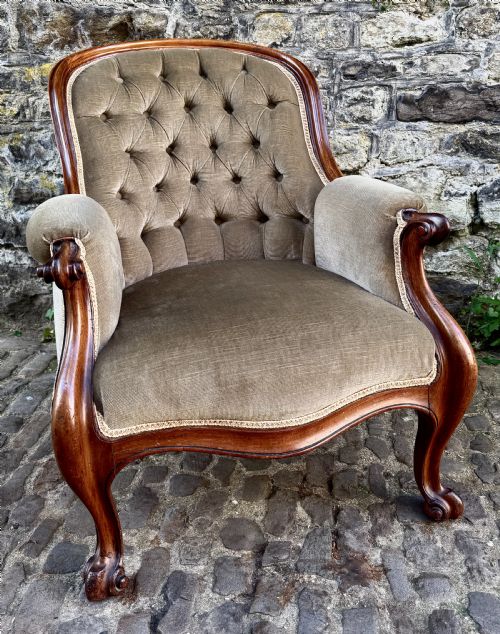
Green velvet armchairs encompass a rich variety of historic seating forms ranging from nineteenth century French arm chairs to Regency elbow chairs. When buyers search for green velvet armchairs, they encounter diverse historic revivals, including Swedish Empire Revival and Victorian Revival pieces.
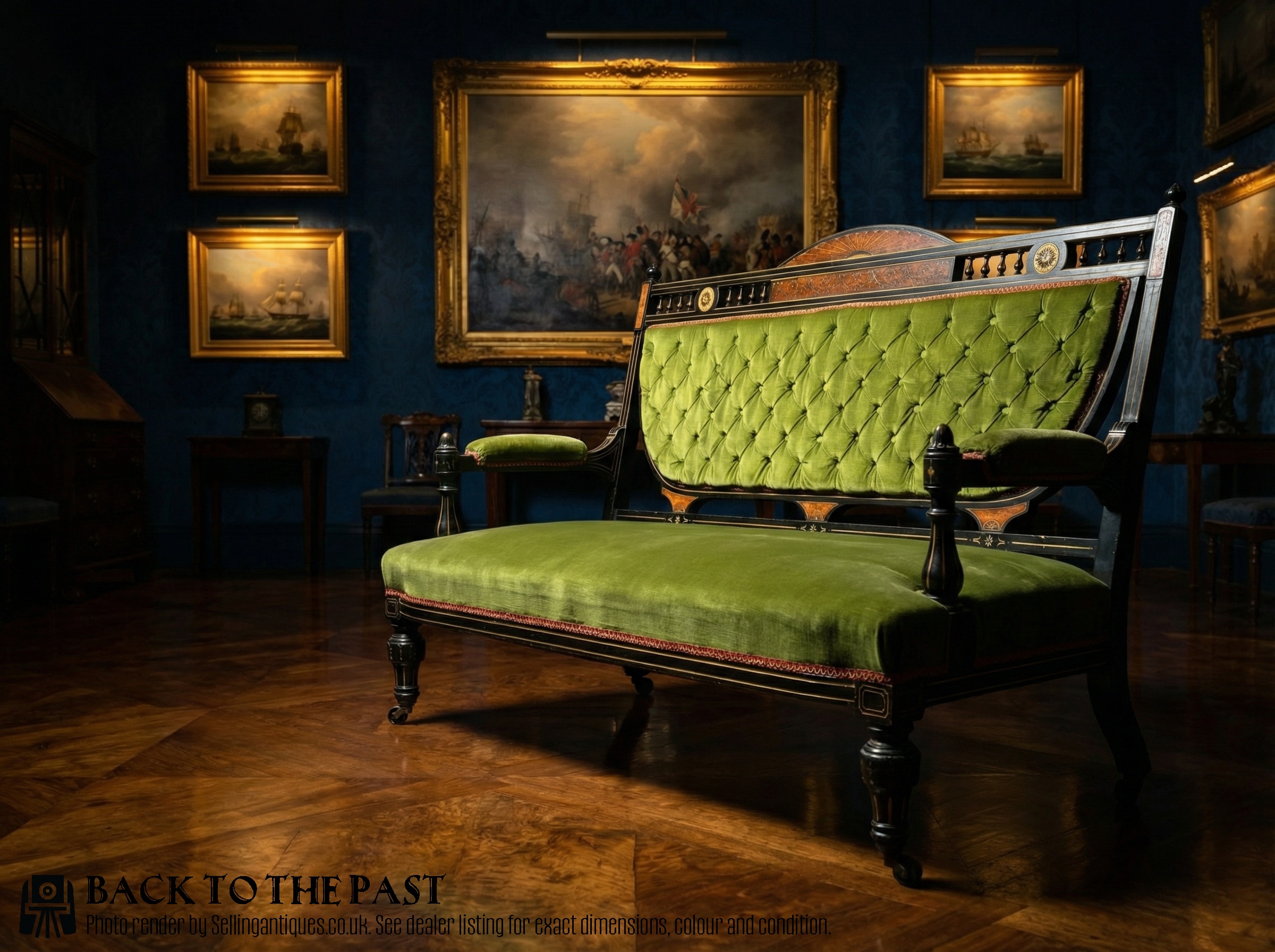
The selections available on this page lean heavily towards nineteenth century examples, featuring Aesthetic Movement salon suites and walnut armchairs. These pieces combine traditional woodwork with opulent upholstery to create functional seating with a distinct period aesthetic.
Forms vary from pairs of armchairs to complete lounge and salon suites comprising sofas and matching chairs. Each item reflects the specific design vocabulary of its era, from the geometric linearity of the Aesthetic Movement to the classical proportions of the Regency period.
How They Were Made
These armchairs and salon suites rely on traditional timber framing using solid woods such as mahogany, beech, walnut, and ebonised wood. Cabinet makers shaped structural elements through joinery techniques appropriate to each period, often incorporating fine details like inlay and ormolu mounts.
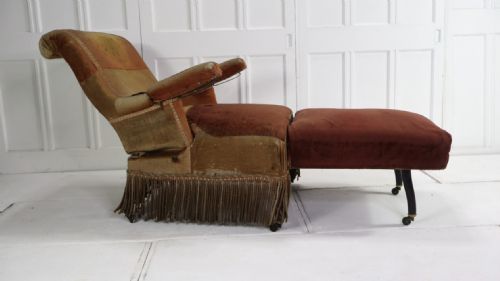
Upholstery historically involved durable textiles including plush velvet and complementary fabrics, secured over sprung or stuffed foundations. Brass accents and hardware frequently appear as finishing touches on frames, castors, and decorative mounts.
Retail Price Guide 2026
Typical UK retail prices for green velvet armchairs, calculated from the Sellingantiques database of over a million retail prices indexed since 2003. This retail price guide relies exclusively on Sellingantiques data; no external sources or auction records are used, so the figures do not describe the wider market.
Even nineteenth century cabinet makers appreciated a coordinated lounge, as proven by surviving salon suites that keep matching chairs happily united after a century and a half.
What Varies in Quality
Quality in these armchairs rests upon the integrity of the underlying timber frame and the precision of its period stylistic details. Pieces exhibiting refined ormolu mounts, crisp inlay work, and genuine ebonised surfaces stand apart from simpler vernacular production.
The execution of the upholstery and the fidelity of the period revival style dictate the upper tier of the range. Original frames paired with sympathetic upholstery materials demonstrate a higher level of historical preservation than heavily altered examples.
Jas James Shoolbred
The Green Velvet Armchairs Glossary
- Ebonised wood
- Timber treated to resemble ebony, frequently utilised in Aesthetic Movement furniture to create stark, dark contrasts against rich upholstery.
- Ormolu
- Gilt bronze mounted onto furniture frames as decorative ornament, common in high-status neoclassical and revival pieces.
- Aesthetic Movement
- A late nineteenth century design style emphasising art for art's sake, often featuring ebonised finishes and disciplined geometric forms.
- Regency
- The British design period spanning the early nineteenth century, characterised by classical restraint, mahogany construction, and inspired Greco-Roman motifs.
- Salon suite
- A matched set of seating furniture designed for formal reception rooms, typically including a sofa and paired armchairs.
Frequently Asked Questions
What periods do these green velvet armchairs represent?
The pieces span several distinct historical eras, including the Regency period, the nineteenth century broadly, and specific moments like eighteen eighty and nineteen thirty.
Revival styles also feature prominently, drawing inspiration from French Louis XVI design and Swedish Empire aesthetics.
How do I identify an Aesthetic Movement armchair?
Aesthetic Movement chairs from around eighteen eighty typically utilise ebonised wood finishes to achieve a dark, sophisticated surface appearance.
They often form part of a larger salon suite alongside matching chairs and sofas.
What woods were used in these frames?
Cabinet makers utilised a range of timbers including mahogany, beech, and walnut depending on the prevailing style and manufacturing period.
Selected pieces also incorporate decorative elements like inlaid surfaces and ormolu mounts.
Are pairs and full suites available?
Inventory includes matching pairs of armchairs as well as larger multi-piece lounge suites consisting of sofas and chairs.
These coordinated sets provide a unified decorative scheme for period interiors.