



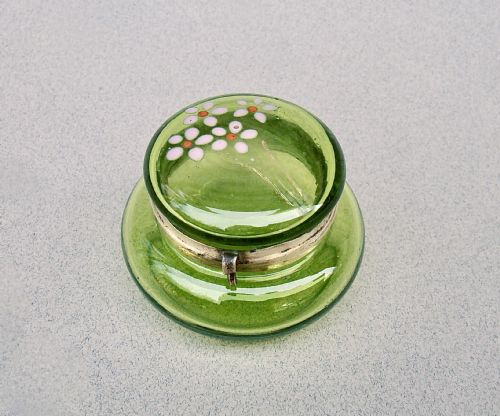


Green Vanity Jar
A green vanity jar brings dressing table elegance into your home, combining functional storage with decorative coloured glass and precious metal details.
Green Vanity Jar
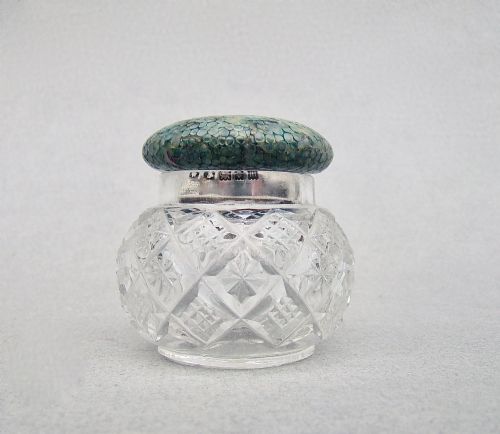
When you search for a green vanity jar, you encounter dressing table accessories primarily from the Victorian, Edwardian, and Art Deco periods. These containers range from glass and enamel trinket boxes to porcelain powder jars and scent bottles.
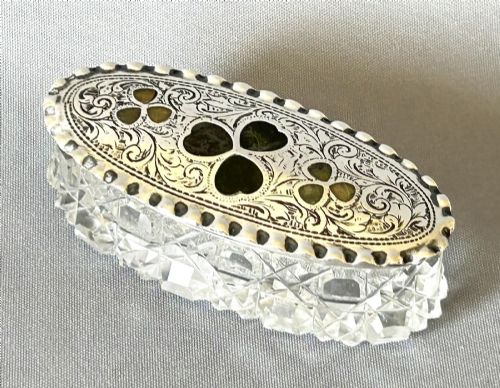
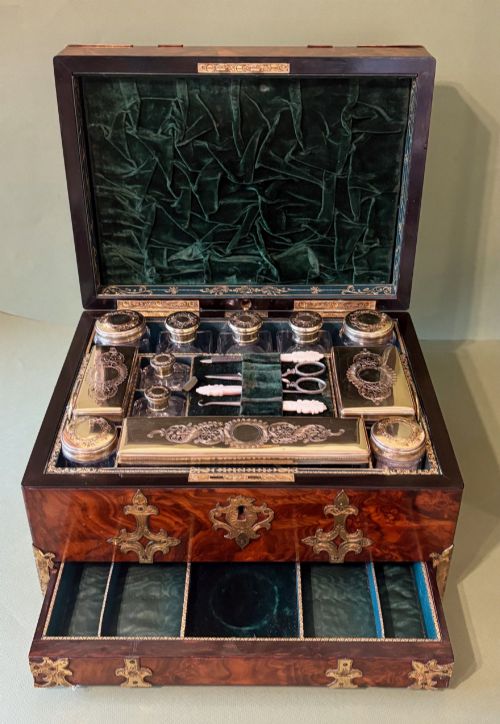
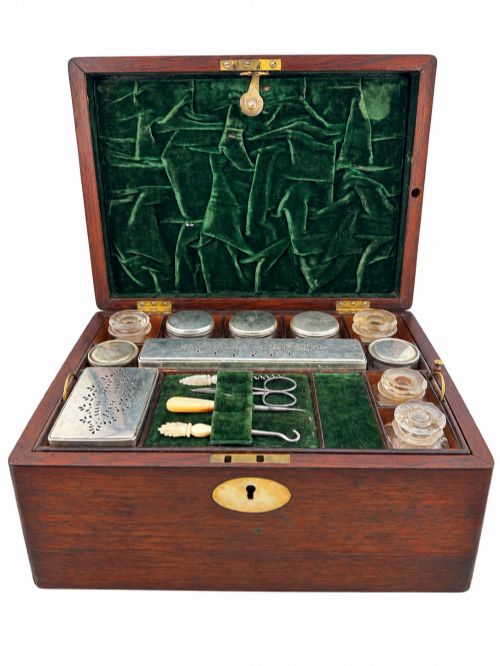
The pieces appearing on this page showcase a mix of materials including sterling silver, brass, velvet, and ceramic alongside characteristic green glass. Forms vary from simple lidded jars to elaborate dressing cases and fitted vanity sets.
Nineteenth-century examples often feature ornate brass mounts and hand-painted enamel details, whilst later twentieth-century items embrace the geometric lines of the Art Deco movement. Most selections serve as decorative containers for small personal items like jewellery and powder.
Materials and construction
Makers combined moulded or blown green glass with sterling silver and brass mounts, utilising hinged lids and secure closures for daily use. Glass bodies frequently received surface decoration such as etching, enamel painting, or guilloché work.
Ceramic and porcelain variants relied on traditional firing techniques, sometimes paired with textile linings like velvet inside wooden or leather cases. Metalwork components involved silversmithing and casting, with hallmarks often stamped directly onto the silver collars or lids.
Green Vanity Jar Retail Price Guide 2026
Typical asking prices for green vanity jar among the pieces listed under this phrase on Sellingantiques today, from the lower quarter to the upper quarter. They describe what is for sale here now, not the wider market.
Materials recorded across current items include velvet, brass, enamel, and ceramic, taking the form of powder boxes, scent bottles, and dressing cases.
Factors of quality
Quality reveals itself in the weight and clarity of the green glass, the precision of silver hallmarks, and the crispness of enamel decoration. Superior items display careful hand-finishing on metal mounts and tight alignment on hinged lids.
Deterioration of velvet linings, cracks in porcelain, and wear to delicate guilloché enamel distinguish lesser examples from well-preserved survivals. The reputation of makers like A. J. Pepper & Co, Henry Perkins, or Fasold & Stuach also elevates certain pieces.
A. J. Pepper & Co·Henry Perkins·Fasold & Stuach
The Green Vanity Jar Glossary
- Guilloché enamel
- A decorative technique involving precise mechanical patterns engraved beneath translucent enamel layers. This method creates a shimmering surface frequently found on Art Deco silver and glass items.
- Sterling silver
- An alloy consisting of silver and other metals, predominantly copper, standardising at a purity proportion. Silver lids and collars on glass jars usually bear hallmarks indicating this standard.
- Mary Gregory
- A style of white enamel painting on coloured glass, typically depicting Victorian children in pastoral settings. Pieces featuring this technique date back to the nineteenth century.
- Trinket box
- A small lidded container designed for holding rings, brooches, and other personal ornaments. These vessels appear in glass, porcelain, and metal across multiple historical eras.
Green Vanity Jar: Frequently Asked Questions
What are green vanity jars used for?
These containers served historically on dressing tables to hold loose powder, hairpins, trinkets, and precious jewellery out of sight.
Today, they function as decorative storage on modern dressing tables or mantelpieces, keeping small everyday items organised.
How can I tell Art Deco from Victorian?
Victorian items tend to feature organic motifs, ornate brass mounts, rich wood elements, and hand-painted enamel details like Mary Gregory figures.
Art Deco pieces embrace clean geometric lines, stylised figures such as flapper girls, and guilloché enamel work typical of the nineteen-twenties and thirties.
Are silver hallmarks important?
Hallmarks stamped on silver collars or lids provide official evidence of the metal standard, the assay office town, and the working date.
These tiny marks also help identify specific makers such as Henry Perkins or A. J. Pepper & Co, confirming the piece's authenticity.