
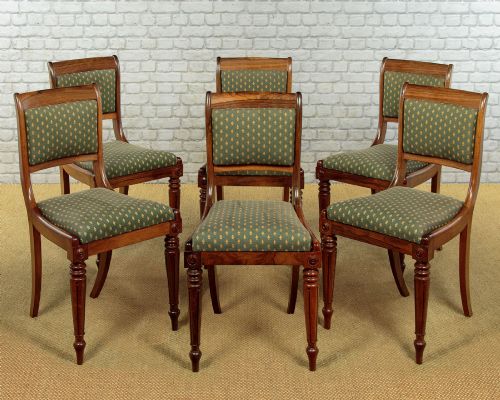
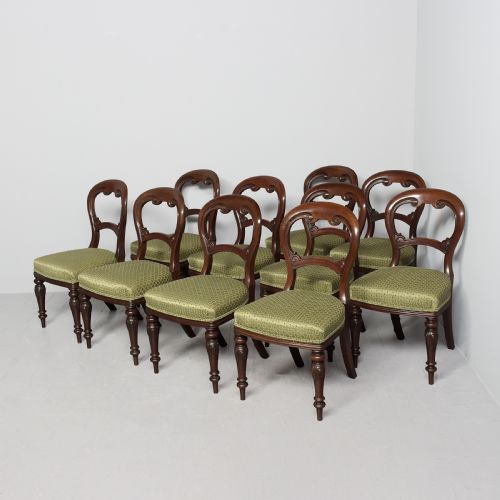
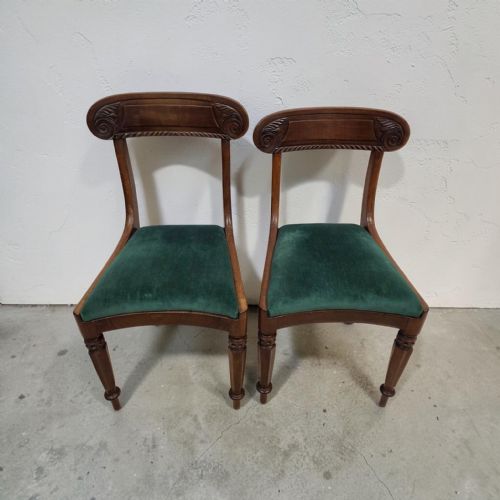
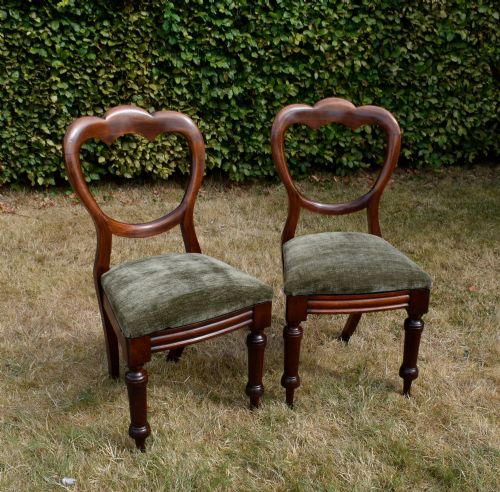
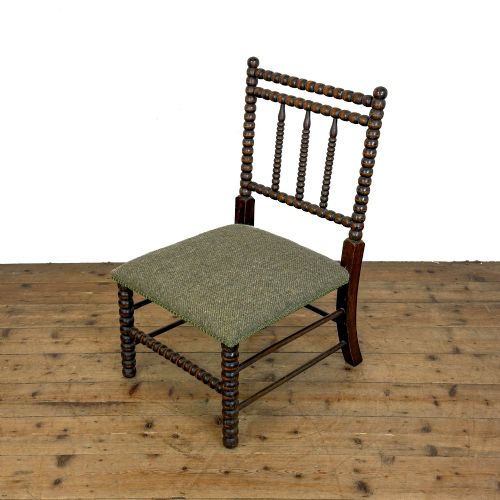


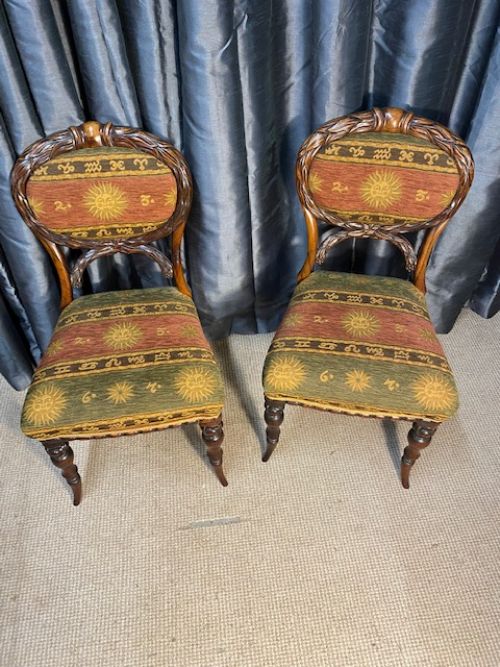


Green Turned Wood Chair
These green turned wood chair listings offer seating options drawn from nineteenth century and earlier periods.
How they were made
Construction relies upon timbers such as mahogany, oak, beechwood, ebonised wood, and rosewood, shaped through traditional joinery and turning techniques. Structural elements often incorporate brass fittings or support systems.
Upholstery materials include fabric, velvet, wool tweed, and standard padding that complement the exposed wooden frames of the dining chairs and armchairs.
What varies in quality
The standard of execution in turning and timber selection separates standard seating from finer examples. Richness in wood grain and the crispness of carved or turned details determine overall visual strength.
Integrity of the original frame structure and the preservation of period upholstery materials influence the character of each piece.
Listings feature nineteenth century periods alongside materials such as mahogany, fabric, velvet, brass, ebonised wood, oak, wool tweed, and upholstery.
The Green Turned Wood Chair Glossary
- Victorian
- A nineteenth century period marked by diverse revival styles and robust domestic furniture production. Pieces from this era often display heavy timber construction and varied upholstery.
- Mahogany
- A durable tropical hardwood prized for its deep reddish-brown colour and fine grain. Cabinetmakers utilised this material extensively for high-quality dining and side chairs.
- Ebonised wood
- Timber treated to imitate ebony through staining or painting. This technique creates a dense black finish popular on nineteenth century piano stools and bedroom chairs.
Green Turned Wood Chair: Frequently Asked Questions
What periods do these chairs represent?
The inventory covers pieces originating from the nineteenth century, including specific Regency, Victorian, and Georgian eras.
Craftsmen utilised traditional hardwoods and upholstery during these decades to build functional household seating.
Which room types suit these chairs?
Dining chairs and side chairs fit around dining tables and living spaces, whilst piano stools and bedroom chairs serve specific dressing or music rooms.
Rocking chairs and armchairs provide relaxed seating options for studies or parlours.
What woods appear in the listings?
Makers employed mahogany, oak, beechwood, rosewood, and ebonised wood across the various seating forms.
These materials provided the structural strength required for daily domestic use.
How do upholstery choices vary?
Coverings recorded in the inventory include fabric, velvet, and wool tweed applied to frames.
These textiles work alongside exposed wooden turnings and brass details.