
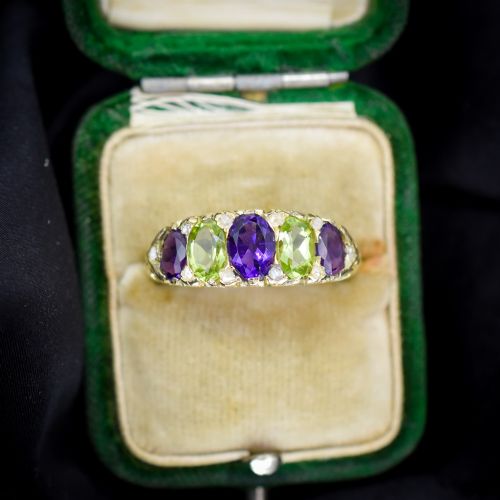
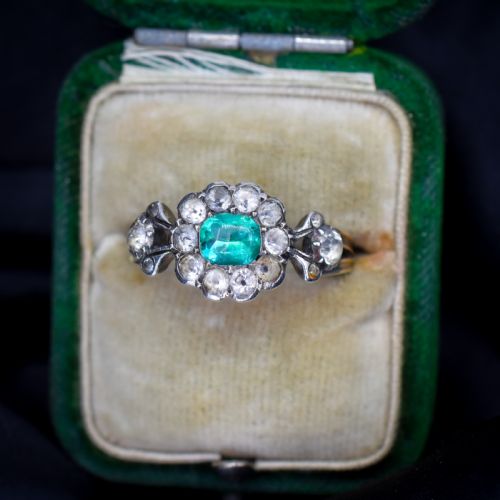
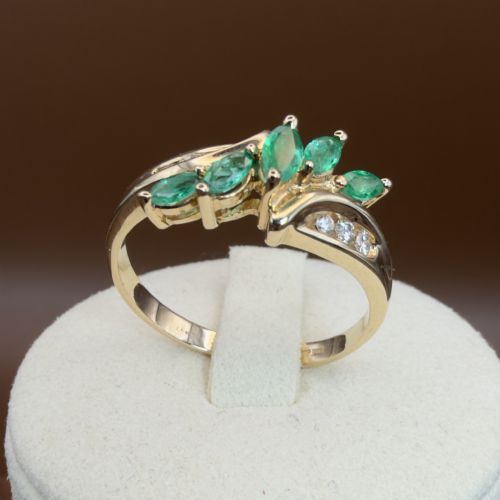
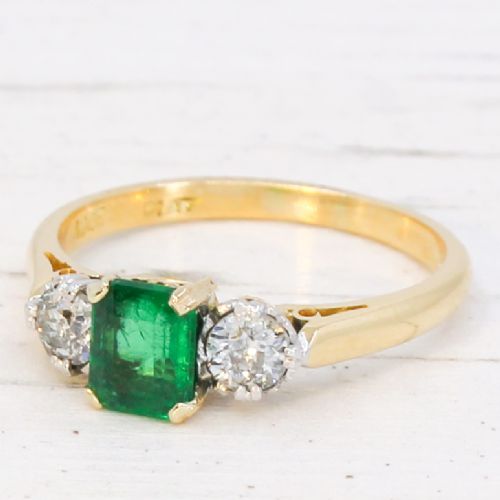
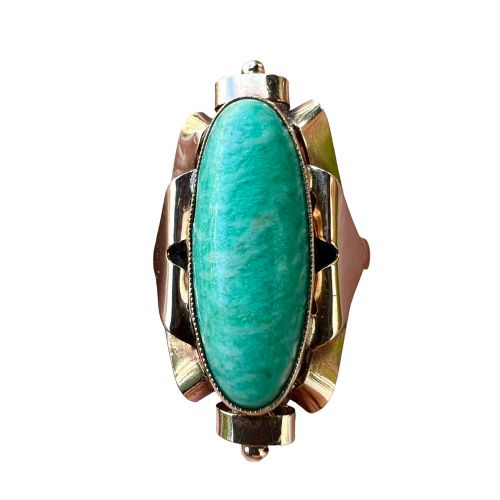
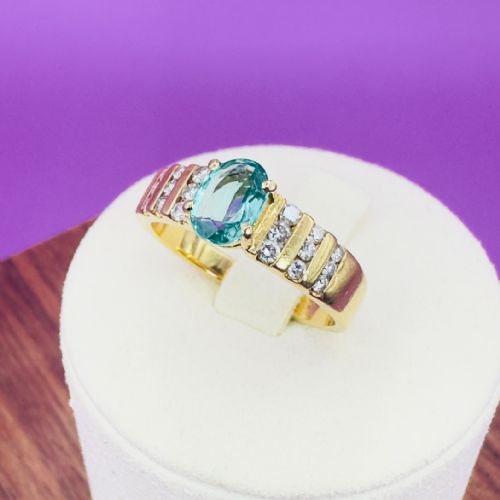


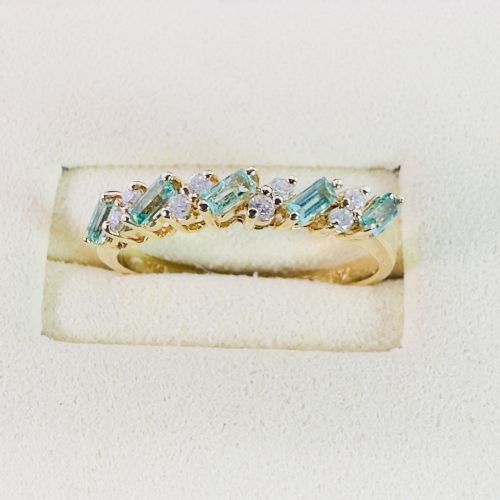

Green Stone Gold Ring
A green stone gold ring brings together vivid colour and precious metal across periods spanning the Georgian era to the mid-century.
Green Stone Gold Ring
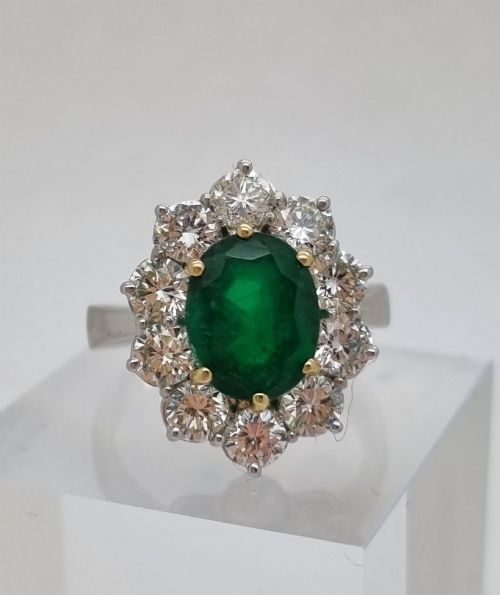
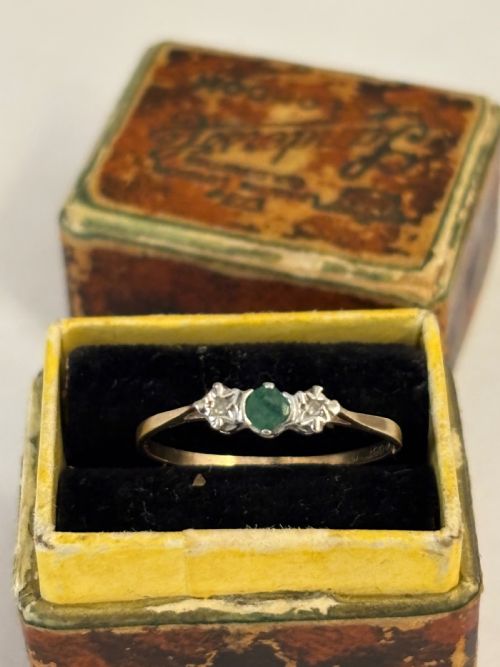
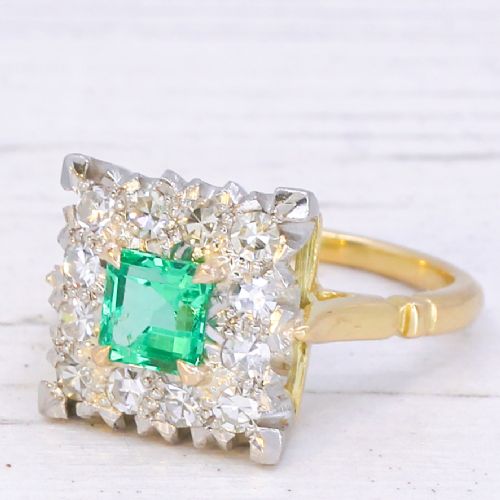
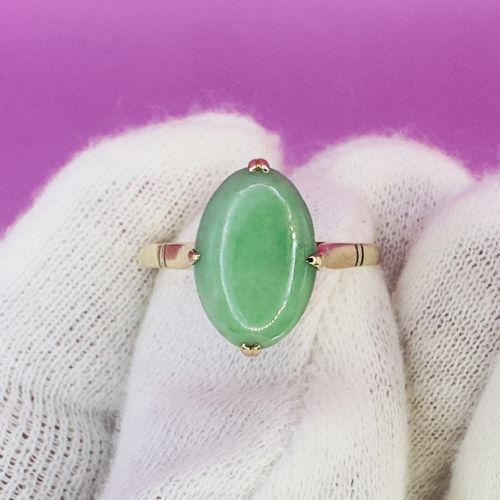
A green stone gold ring encompasses various forms from clusters to solitaires, utilising emerald, jade, bloodstone, chalcedony, aventurine, tourmaline, and demantoid garnet set in gold. You meet these pieces in traditional fine jewellery designs alongside styles such as Edwardian, Art Deco, retro modern, and mid-century.
The selections span the nineteenth century through the twentieth century, with numerous examples appearing from the 1900s, 1920s, 1930s, and 1960s. Cluster configurations and three-stone arrangements predominate among the rings, often accompanied by diamond accents in yellow gold, white gold, platinum, or silver-topped settings.
How they were made
Goldsmiths utilised yellow gold, white gold, and 14ct or 18ct gold alloys alongside platinum and silver to construct secure settings for green stones and diamonds. Stones such as emerald, jade, and demantoid garnet were shaped into cabochons, oval cuts, marquis cuts, or carved panels.
Techniques involve traditional cluster layouts, snowflake clusters, and toi et moi arrangements where gems are held by delicate claws or flush bezels. Metalwork frequently displays the characteristic geometric lines of the Art Deco period or the flowing grace of Edwardian and retro modern design.
Listings feature items from the Georgian period through the 1960s, constructed in 9ct, 14ct, and 18ct gold, platinum, and silver.
What varies in quality
Quality rests in the optical properties of the central green stone and the proportion of the surrounding diamonds. Natural emeralds with minimal oil treatment or fine jadeite exhibit superior depth of colour compared to lesser stones.
The precision of the metalwork, whether an intricate 18ct yellow and white gold cluster or a carved jade panel, dictates the finesse of the piece. Period integrity, from Georgian paste work to Art Deco platinum settings, preserves the original character of the ring.
The Green Stone Gold Ring Glossary
- Cluster ring
- A central stone surrounded by a border of smaller gems, usually diamonds. This setting maximises the visual impact of the primary green stone.
- Cabochon
- A gemstone shaped and polished with a smooth, rounded dome rather than faceted edges. This cut is frequently seen on jade and certain emeralds.
- Toi et moi
- A ring design featuring two main stones sitting side by side, translating from French as you and me. Edwardian examples often pair an emerald with a diamond.
- Paste
- Hand-cut glass used historically to imitate gemstones. Georgian clusters frequently employ green paste in place of mined minerals.
Green Stone Gold Ring: Frequently Asked Questions
What periods do these rings come from?
The inventory spans the nineteenth century up to the late twentieth century, taking in Georgian, Victorian, Edwardian, Art Deco, retro modern, and mid-century aesthetics.
Specific decades represented include the 1900s, 1910s, 1920s, 1930s, 1940s, 1950s, and 1960s.
Which green stones are used?
Emerald is the most frequent choice, appearing in various carat weights and treatments alongside Colombian origins.
Other green stones include jade, jadeite, bloodstone, chalcedony, aventurine, tourmaline, demantoid garnet, and green paste.
How do I care for a jade or emerald ring?
Emeralds and jade require gentle handling and should be kept away from harsh chemicals, ultrasonic cleaners, and sudden temperature changes.
Clean them softly with a damp cloth and store them separately to prevent scratching the gold and surrounding diamonds.
What metal types are typical?
Gold forms the primary metal structure, appearing predominantly in 9ct, 14ct, 18ct yellow gold, and white gold.
Platinum and silver-topped settings also feature in Edwardian and Art Deco pieces to support diamond and emerald arrangements.