
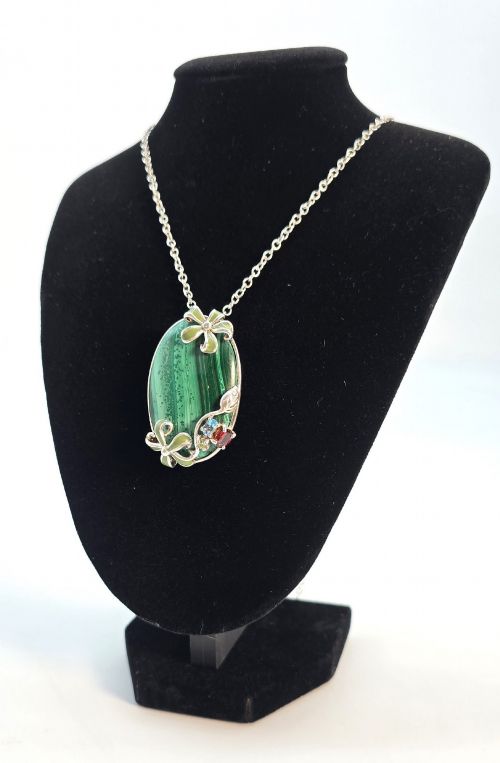


Green Silver Pendant
A green silver pendant brings together cool silver settings and verdant stones or enamel work across periods from the Victorian era to the mid-century.
Green Silver Pendant
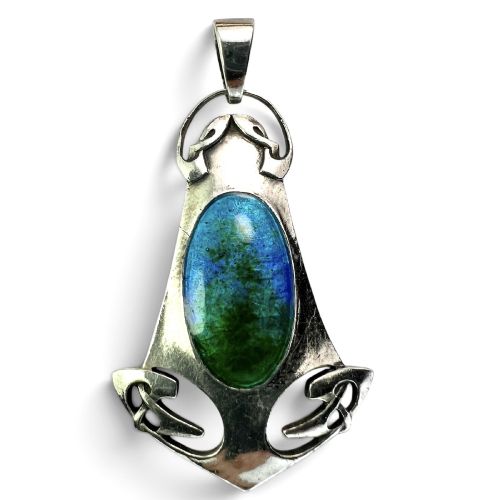
A green silver pendant spans several distinct design movements, most notably Art Nouveau, Arts and Crafts, and Art Deco. These pieces pair silver or silver gilt with green stones, glass, or enamel.
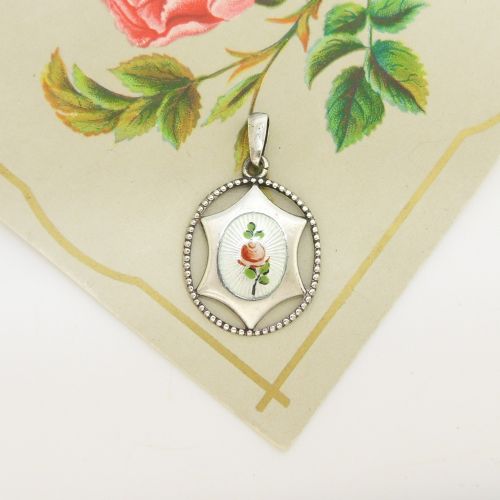
The form appears most frequently in early twentieth-century work, particularly from 1900 through the Edwardian period, often incorporating floral or botanical motifs.
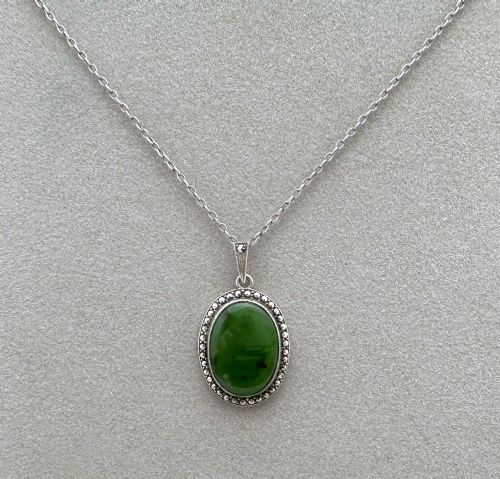
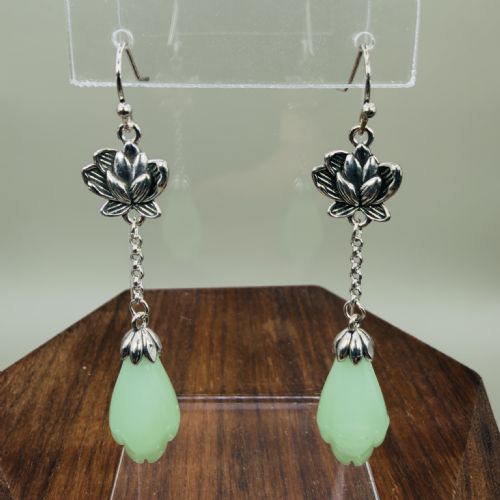
Makers utilise a range of green materials including jade, malachite, chrysoprase, chalcedony, amazonite, emerald, and vibrant vitreous enamels.
Materials and Technique
Craftsmen shape the metal base from sterling silver or silver gilt, employing techniques such as plique-à-jour enamel to let light pass through translucent green panels.
Gemstones and paste stones are cut and set into silver mounts, frequently accompanied by secondary materials like pearls, seed pearls, and mother of pearl.
Makers structure these pendants with drop elements, floral clusters, and intricate wirework typical of Arts and Crafts and Art Nouveau workshops.
Listings span the nineteenth century, Edwardian era, 1900, 1910, 1930, 1940, and 1950 periods.
Distinctions in Quality
The standard of a green silver pendant rests on the crispness of the metalwork and the complexity of the enamel technique, such as the precision found in plique-à-jour cells.
Pieces bearing documented association with notable designers or firms demonstrate superior craftsmanship in stone selection and structural assembly compared to anonymous workshop output.
Murrle Bennett·Archibald Knox·Liberty and Co·Levinger and Bissinger·Otto Prutscher·Meyle and Mayer·Heinrich Levinger·Charles Horner·Martin Mayer·Ludwig Knupfer·Theodor Fahrner
The Green Silver Pendant Glossary
- Plique-à-jour
- An enamelling technique where enamel is applied without a backing, creating a translucent, stained-glass effect within a wire framework.
- Chrysoprase
- A gemstone variety of chalcedony containing nickel, valued for its bright apple-green colour.
- Silver gilt
- Silver that has been coated with a thin layer of gold on its surface.
- Paste
- Hand-cut glass used as an affordable gemstone substitute in historic jewellery.
- Parure
- A matched set of jewellery pieces designed to be worn together, such as a necklace, earrings, and ring.
Green Silver Pendant: Frequently Asked Questions
How do I date a green silver pendant?
Dating relies on stylistic markers such as the flowing organic lines of Art Nouveau work or the geometric abstraction typical of Art Deco designs.
Assay marks, maker stamps, and the choice of materials like plique-à-jour enamel or specific green stones also point to definite periods of production.
What is plique-à-jour enamel?
Plique-à-jour is a delicate enamelling method resembling miniature stained glass, where enamel fills open wire cells without a solid backing.
This technique allows natural light to pass directly through the green vitreous colours, creating a luminous effect.
Are these pendants made of solid silver?
Most pieces utilise sterling silver or silver gilt settings, frequently paired with decorative elements of enamel, glass, or gemstones.
Some Edwardian and Art Nouveau examples combine silver with gold washes to enhance the visual warmth of the stones.
How should I care for enamel jewellery?
Enamel requires gentle handling because the glass material can chip or crack under sharp impacts or sudden temperature changes.
Cleaning should involve soft cloths without harsh chemical dips or ultrasonic baths that might damage stones like pearls or turquoise.