



Green Shop Counter
A green shop counter brings commercial character into domestic spaces, offering sturdy storage and display surfaces drawn from nineteenth- and twentieth-century retail environments.
Green Shop Counter
When searching for a green shop counter, buyers encounter substantial retail furniture designed for trade, most commonly represented here by large panelled timber counters and multi-drawer fittings.
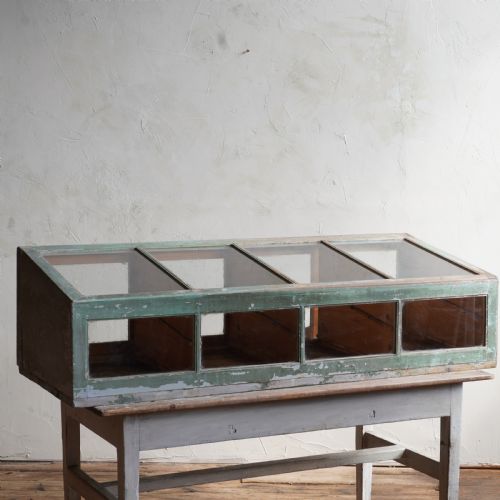
The inventory includes related commercial items such as countertop display cabinets, drapers tables, and grocers storage pieces originating from the Victorian, Edwardian, and Art Deco periods.
These items originate from various regional traditions, featuring French provincial examples alongside domestic British shop fittings finished in distinct painted surfaces.
How they were made
Construction relies primarily on robust timbers like pine and oak, built to withstand heavy daily use in nineteenth- and early twentieth-century mercantile settings.
Surfaces frequently show original or distressed paint finishes in light green shades, sometimes complemented by applied metal hardware, glass panels, and gold leaf detailing.
Green Shop Counter Retail Price Guide 2026
Typical asking prices for green shop counter among the pieces listed under this phrase on Sellingantiques today, from the lower quarter to the upper quarter. They describe what is for sale here now, not the wider market.
Listings span the nineteenth and twentieth centuries, featuring pine and oak construction alongside painted finishes.
What varies in quality
Distinction across the range lies in the integrity of the original timber construction and the character of the painted surface, where authentic patination elevates a piece.
The complexity of the form, such as multi-drawer configurations or integrated glass display components, determines the sophistication of the surviving commercial furniture.
The Green Shop Counter Glossary
- Panelled
- A method of construction where recessed or raised wooden sections are fitted within a sturdier outer frame. This technique prevents warping in large timber furniture.
- Distressed paint
- A surface finish showing natural wear, flaking, or weathering accumulated over decades of use. It indicates the age and working history of commercial pieces.
- Countertop display cabinet
- A glazed enclosure placed on top of trade counters to showcase small goods to customers. These units often feature timber frames and hinged rear doors.
- Drapers table
- A long, wide table historically used in textile shops for folding and measuring cloth. They provide substantial surface area and often incorporate lower shelving.
Green Shop Counter: Frequently Asked Questions
What is a green shop counter used for?
These large pieces serve as kitchen islands, sideboards, or focal storage units in modern residential interiors. Their deep drawers and broad top surfaces provide practical utility alongside strong visual character.
Originally built for trade, they now function well in domestic settings requiring robust furniture with historical presence.
How do I identify a Victorian shop counter?
Victorian examples typically rely on dense pine or oak construction with hand-cut joinery and heavy panelled sides. They often display layers of original green paint accumulated through decades of commercial service.
Examining the internal drawer construction and fixing methods helps confirm nineteenth-century origins.
Are these counters made from pine or oak?
The inventory includes both pine and oak examples, depending on the regional workshop and the intended commercial application. Pine is frequently found with painted finishes, while oak pieces often highlight the natural grain.
Both timbers provide the durability required for heavy daily use in historic retail environments.
How do I care for a painted shop counter?
Maintenance involves dusting with a soft cloth and avoiding harsh chemical cleaners that might compromise historic paint surfaces. Maintaining stable room humidity protects the underlying timber from movement.
Preserving the existing patination maintains the character acquired during the piece's working life.