


Green Shade Desk Light
A green shade desk light brings focused illumination and traditional character to a workspace, drawing on brass, toleware and glass forms from the nineteenth century to the mid-twentieth century.
Green Shade Desk Light
A green shade desk light encompasses task illumination, bouillotte lamps, and adjustable brass fixtures designed for writing surfaces and libraries. Buyers searching for a green shade desk light will frequently encounter French toleware and brass bouillotte designs alongside Edwardian and Victorian brass work.
The selection ranges from twin and triple toleware candle lamps to early twentieth-century bankers lamps and adjustable metal task lights. Pieces span periods from the nineteenth century through the 1930s, often combining painted metal shades with heavy metal bases.
Materials and construction methods
Makers utilised brass and bronze for structural frames, columns, and adjustable arms, pairing them with painted toleware or glass for the characteristic green shades. Cast components, repousse work, and patinated finishes define the metalwork across Victorian and twentieth-century examples.
Lamps frequently incorporate converted oil fittings, porcelain bodies, or marble bases to add weight and stability. Fabric, ceramic, and glass elements also appear in specific table lamp configurations from the Edwardian era and the 1930s.
A Victorian microscopy candle shade in its original case sits quietly among the heavy brass columns and French toleware.
Distinctions in craftsmanship
Superior examples show crisp casting in brass columns and mounts, alongside hand-painted detailing on toleware shades and ceramic bodies. Weight and stability indicate the substance of the base materials, whether solid brass, heavy marble, or cast bronze.
Adjustable mechanisms and multi-light fittings demonstrate mechanical precision in bouillotte and bankers lamps. Original surface patination and period wiring adaptations separate refined workshop production from standard utility lighting.
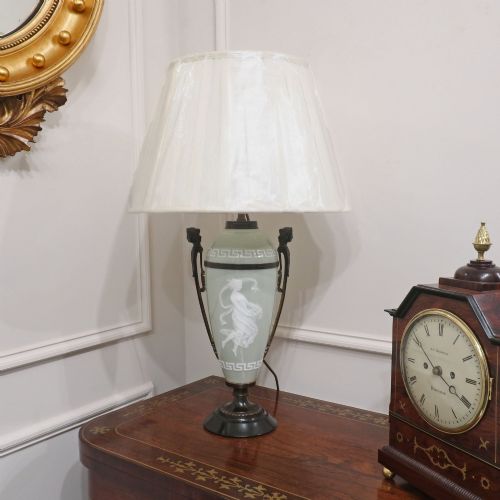
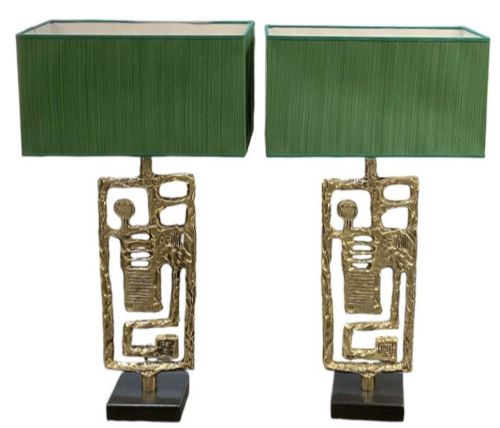
Angelo Brotto for Esperia·M Pillischer of London·Denby Ware
The Green Shade Desk Light Glossary
- Bouillotte lamp
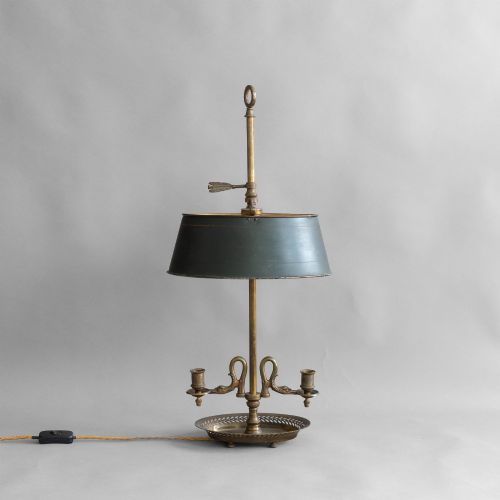
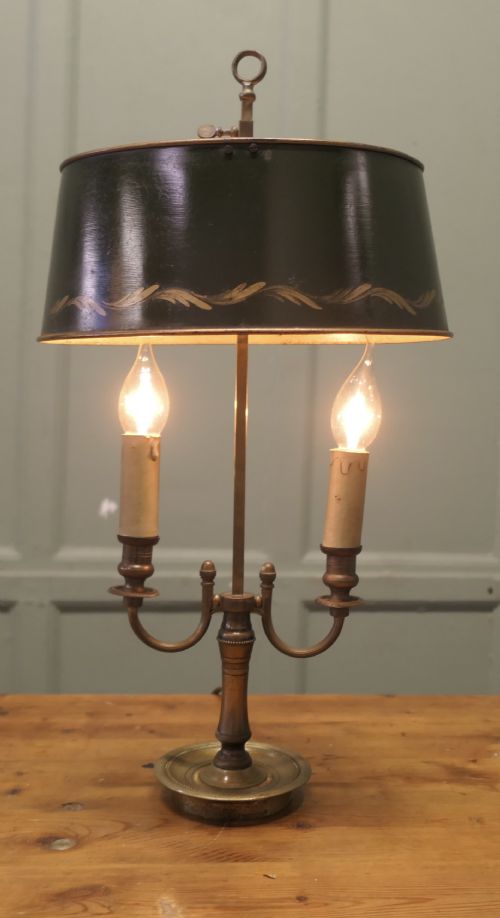
- A traditional adjustable desk lamp featuring a central standard, a painted metal shade that slides on the stem, and multiple candle arms. These French forms typically combine brass with green toleware.
- Toleware
- Painted or lacquered tinplate used extensively for lamp shades and canisters, frequently finished in deep green with gilt highlights. This material provides the characteristic reflective surface for directional desk illumination.
- Repousse
- A metalworking technique where the design is hammered into relief from the reverse side. It appears on decorative brass bases and oil lamp conversions from the nineteenth century.
- Corinthian column
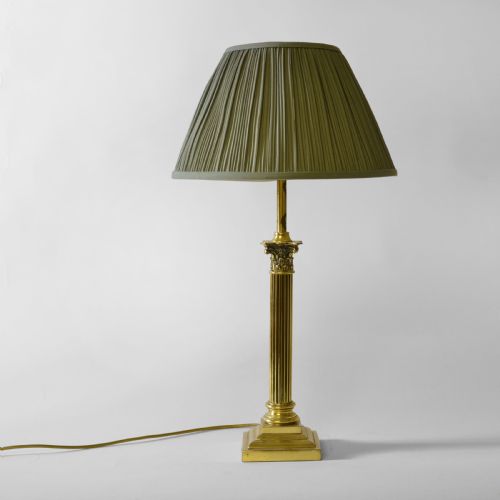
- An architectural column style adapted for lamp bases, featuring ornate acanthus leaf capitals. Victorian and Edwardian makers cast these in solid brass to create stately desk and table lights.
Green Shade Desk Light: Frequently Asked Questions
What is a bouillotte lamp?
A bouillotte lamp is a traditional French desk light featuring an adjustable shade that moves up and down a central metal rod. They typically hold two or three lights above a saucer base designed to catch wax.
These pieces were originally used for the card game bouillotte and remain popular for their focused downward illumination on a desk.
How do I date a brass desk lamp?
Dating relies on manufacturing techniques, weight, and stylistic details like neoclassical columns or art deco geometric lines. Nineteenth-century examples often feature heavy cast brass and hand-finished components.
Twentieth-century versions introduce simpler adjustable swan necks and standardised switch housings while retaining traditional brass and toleware materials.
Are these lamps converted from oil?
Many nineteenth-century and early twentieth-century desk lights started as oil or candle lamps before later conversion to electricity. These converted pieces retain original burner galleries, weighted reservoirs, or repousse bases.
Conversion methods vary, with professional adaptations preserving the structural integrity of the antique brass and bronze bodies.
Where were green toleware shades made?
Green toleware shades are strongly associated with French manufacturing, particularly on bouillotte and twin desk lamps from the nineteenth and early twentieth centuries. The painted metal provided a durable, heat-resistant shade with a reflective white interior.
French workshops paired these painted tin shades with polished brass frames and weighted saucer bases.