





Green Rococo Chairs
Green rococo chairs bring together fluid carved frames and rich upholstery, spanning centuries of revival design from Victorian parlours to Italian salons.
Green Rococo Chairs
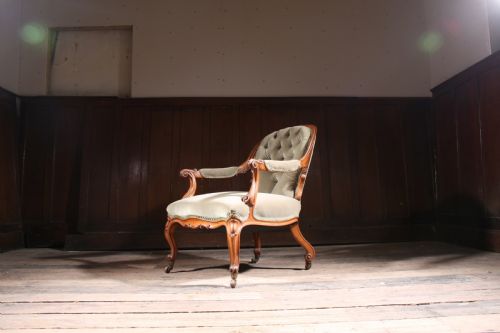
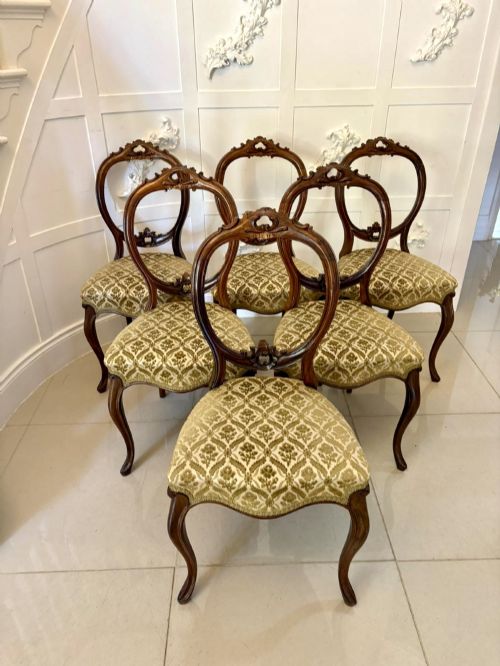
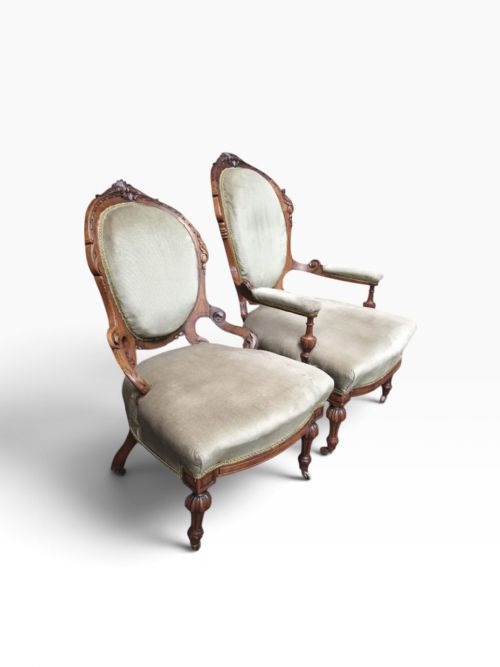
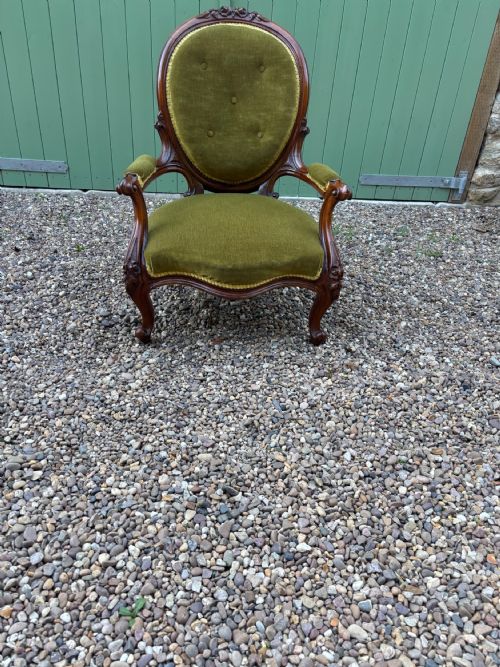
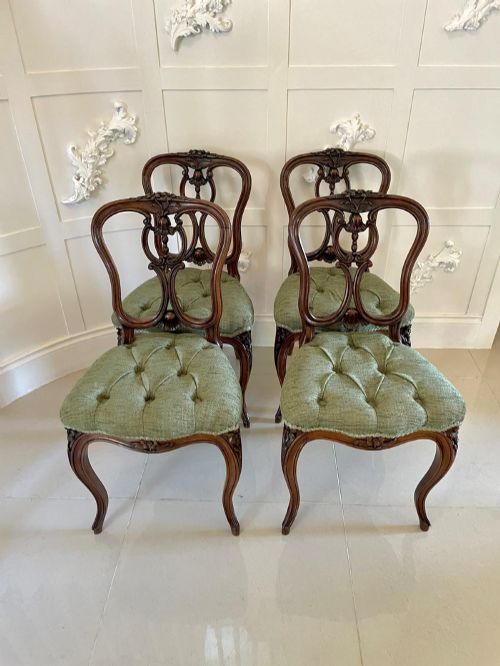
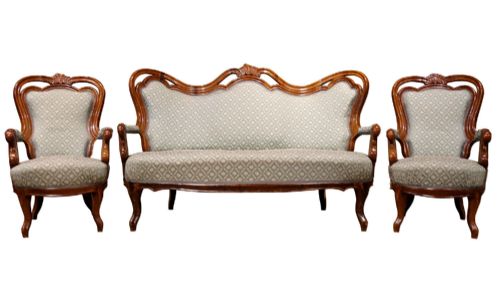
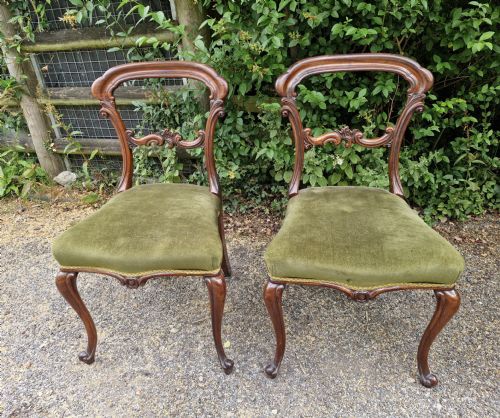
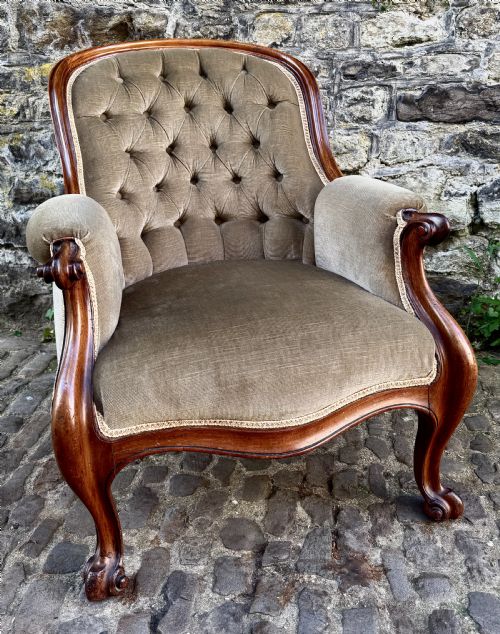
When buyers search for green rococo chairs, they encounter a diverse selection of seating including side chairs, armchairs, dining chairs, and salon suites. The most common versions on this page date from the Victorian period and the nineteenth century, alongside eighteenth-century Italian and Dutch examples.
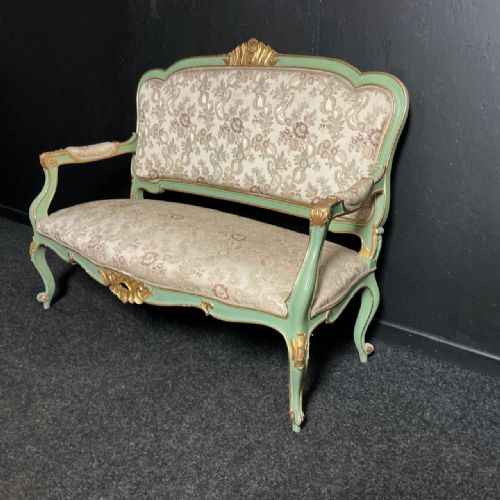
Forms range from compact ladies chairs and bedroom chairs to substantial open armchairs, dining sets, and giltwood settees. Makers and craftsmen across England, France, Italy, and the Netherlands interpreted the style through distinct regional lenses, producing painted, carved, and marquetry frames.
How they were made
Frames rely primarily on hardwoods such as walnut, rosewood, and mahogany, shaped through manual carving to achieve the characteristic asymmetric curves of the style. Giltwood and painted finishes appear alongside natural timber surfaces, sometimes augmented by brass castors.
Upholstery uses fabric, velvet, and specialised upholstery materials set within sprung or padded timber armatures. Joinery techniques combine traditional pegged joints with detailed surface decoration like lacquering and marquetry.
Green Rococo Chairs Retail Price Guide 2026
Typical asking prices for green rococo chairs among the pieces listed under this phrase on Sellingantiques today, from the lower quarter to the upper quarter. They describe what is for sale here now, not the wider market.
A sedan chair managed to sneak into the drawing room company.
What varies in quality
The distinction between tiers rests upon the depth and crispness of the hand carving on the wooden frame. Pieces with deeply undercut foliage and organic scrolls demonstrate superior workshop execution compared to simpler, flatter mouldings.
Cohesion of sets and originality of finish also dictate standing. Matching sets of ten or twelve dining chairs command significant attention, as do pieces retaining their original gilt decoration or period paintwork.
The Green Rococo Chairs Glossary
- Rococo Revival
- A nineteenth-century design movement that reinterpreted eighteenth-century French curvilinear motifs. This style heavily influences the Victorian seating found across these listings.
- Salon Suite
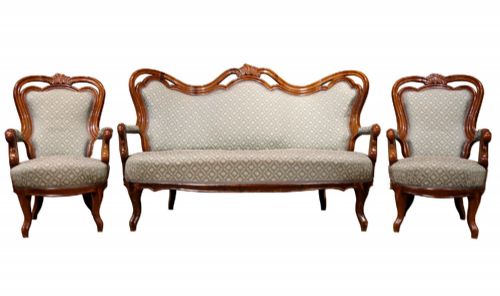
- A matched set of seating furniture designed for formal reception rooms. These typically comprise a sofa or settee alongside multiple armchairs and side chairs.
- Giltwood
- Timber coated with a thin layer of gold leaf or gilt preparation. It appears frequently on French and Italian decorative frames from various centuries.
- Fauteuil
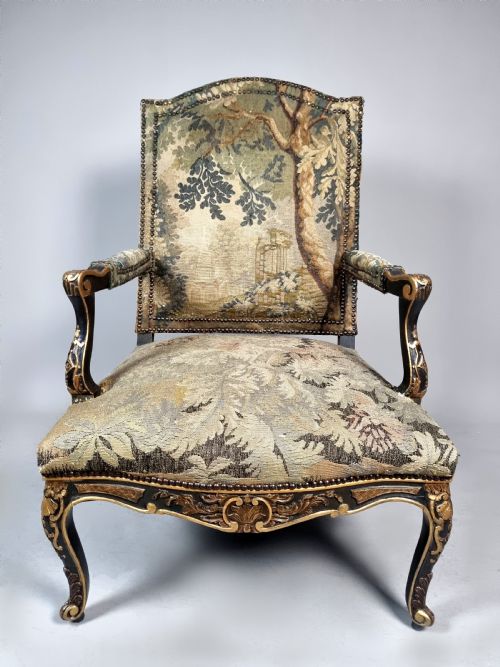
- An open-framed armchair with upholstered back and seat and exposed wooden arms. This traditional French seating form frequently displays carved rococo details.
- Marquetry
- Inlaid wood veneers arranged in decorative patterns. Dutch workshops employed this technique on high-back chairs to create floral and pictorial designs.
Green Rococo Chairs: Frequently Asked Questions
What periods do green rococo chairs cover?
The listings span from the eighteenth century through the nineteenth century and into later revival periods. Eighteenth-century examples originate largely from Italy and the Netherlands, while nineteenth-century pieces are predominantly Victorian.
Craftsmen across these eras drew upon Louis XV design principles, adapting them to local timbers and contemporary tastes in domestic seating.
How do I identify a salon suite?
A salon suite typically consists of a matching set of multiple chairs and a matching sofa or settee. These coordinated groups were designed to furnish formal drawing rooms and parlours.
Matching timber frames, upholstery fabrics, and carved motifs unify the individual pieces within the set.
Where were these chairs made?
Origin locations span several European countries, with notable examples coming from England, France, Italy, and the Netherlands. Regional workshops applied local materials and finishing techniques to the overarching style.
Italian and Dutch pieces often feature painted surfaces or marquetry, whereas English and French productions highlight walnut, rosewood, and giltwood frames.
How do armchairs and side chairs differ?
Armchairs feature structural side supports for the arms, offering a more enclosed and supportive seat for relaxation. Side chairs are built without arms to allow easy movement around dining tables and salon settings.
Both forms share matching carved wooden frames and upholstery when produced as part of a larger dining or salon set.