



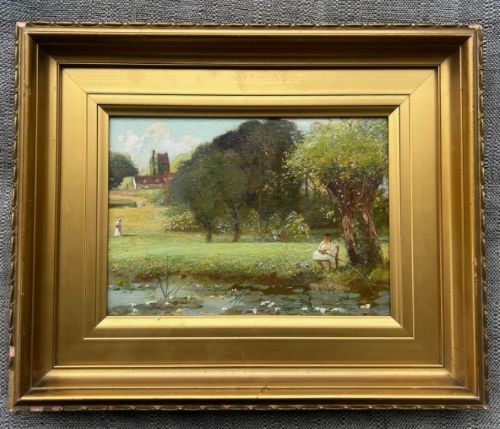


Green Riverbank Painting
These green riverbank painting works capture tranquil pastoral scenes along water, offering buyers a peaceful window into historical landscapes.
Green Riverbank Painting
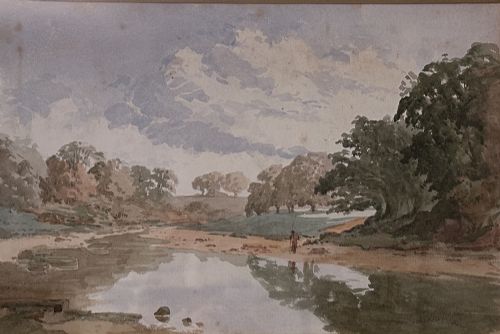
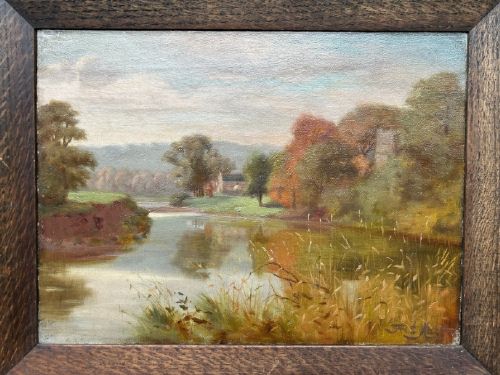
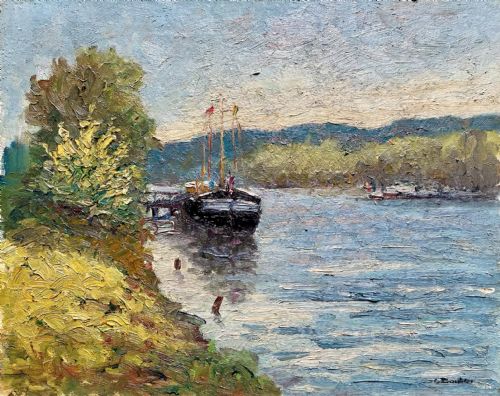
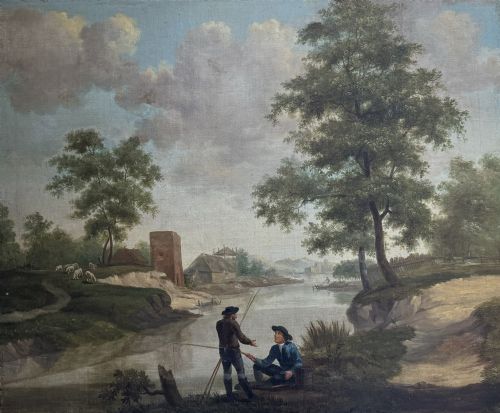
A green riverbank painting depicts natural watercourses, lush banks, and rural figures or animals spanning several distinct historical periods. Buyers seeking these pastoral scenes will find works ranging from eighteenth-century British school compositions to mid-twentieth-century French post-impressionist canvases.
The most common examples on this page date from the nineteenth century through the early twentieth century. These pieces frequently feature rivers, streams, and lakes accompanied by fishermen, cattle, or children along the grassy margins.
Materials and construction
Artists painted these works primarily with oil paint on canvas or wood panel supports. Watercolours on paper also appear across the selection, providing a lighter medium for river and stream depictions.
Canvases and wood panels receive layers of pigmented oil to build texture and depth in the foliage and water. Watercolour works utilise fluid washes on paper to capture the gentle atmosphere of riverbanks.
Green Riverbank Painting Retail Price Guide 2026
Typical asking prices for green riverbank painting among the pieces listed under this phrase on Sellingantiques today, from the lower quarter to the upper quarter. They describe what is for sale here now, not the wider market.
Materials across these listings include canvas, wood panel, and paper supporting oil paint and watercolour.
Distinctions in quality
Quality in a green riverbank painting rests upon the artist's handling of light, brushwork precision, and composition. Finer works display accomplished rendering of water reflections and atmospheric perspective rather than rigid outlines.
The integration of figures, animals, and landscape elements separates standard decorative works from master-level compositions. Brushwork vigour and pigment preservation further define the upper tier of these pieces.
Frederick Marriott·Honore Cavaroc·Archibald Kay·Sir David Murray·William Manners·Harry Davis·Pierre Emmanuel Eugene Damoye·Constant Ludovic Artz·Henry Cheadle·T.B. Garvie·Henry John Sylvester Stannard·Robert John Hammond·Augustus William Ennes·Sonia Mervyn·Thomas E Francis·George Neil·David Adolph Constant Artz
The Green Riverbank Painting Glossary
- Barbizon School
- A nineteenth-century French art movement focusing on realism in landscape painting, often featuring rural river settings. Painters in this style emphasised direct observation of nature.
- Impressionism
- A nineteenth-century style characterised by relatively small, thin, yet visible brush strokes and an open composition. It prioritises accurate depiction of light in landscape scenes.
- Wood Panel
- A rigid flat support made from timber used by artists as a base for oil painting before or alongside canvas. Panels offer a stable surface for detailed brushwork.
- Watercolour
- A painting method in which the paints are made of pigments suspended in a water-based solution. Artists apply these transparent washes onto specialised paper.
Green Riverbank Painting: Frequently Asked Questions
What periods do these paintings cover?
The works span from the eighteenth century through the mid-twentieth century, encompassing Victorian, impressionist, and modern movements.
Most pieces originate from the nineteenth and early twentieth centuries, reflecting changing landscape painting traditions across Britain and France.
What subjects appear in these scenes?
Common subjects include rivers, streams, and lakes bordered by lush vegetation and trees. Figures such as anglers, children, and farm workers frequently populate the foreground.
Animals like cattle, ducks, and horses grazing near the water also feature prominently in these pastoral compositions.
How do I care for an oil painting?
Keep oil paintings away from direct sunlight and fluctuating humidity to protect the canvas and pigment layers. Gentle dusting with a soft, dry brush maintains the surface safely.
Avoid using water or chemical cleaners on the paint surface. Consult a professional conservator for deep cleaning.
Are these works signed by artists?
Many of the paintings feature original signatures or attributions to named historical artists and regional schools. Signatures often appear in the lower corners of the canvas or paper.
Some pieces represent work by established British and European painters, while others originate from unnamed schools of the period.