

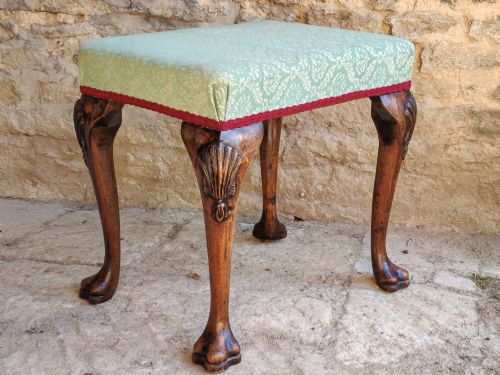


Green Piano Stool
A green piano stool offers a practical seat at the keyboard while bringing a distinct splash of colour to a room.
Green Piano Stool
A green piano stool is a specialised seat designed for musicians, appearing in forms ranging from simple revolving stools to adjustable music chairs. The pieces found here span the nineteenth century up to nineteen thirty, taking in periods such as the Victorian, Edwardian, Regency, and William IV eras.
Makers produced these functional seats in styles including Art Deco, Queen Anne, and Georgian Revival alongside classic Victorian Rococo Revival. Buyers will encounter various timber frames paired with rich upholstery, fulfilling both a musical and a domestic seating purpose.
How they were made
Cabinetmakers constructed the frames primarily from solid timbers like mahogany, walnut, oak, and satinwood, occasionally applying ebonised finishes or giltwood details. These hardwoods provided the structural strength required for heavy everyday use at the keyboard.
Upholsterers finished the seats using velvet, fabric, leather, and needlepoint, sometimes incorporating brass hardware for swivel mechanisms or adjustable heights.
Green Piano Stool Retail Price Guide 2026
Typical asking prices for green piano stool among the pieces listed under this phrase on Sellingantiques today, from the lower quarter to the upper quarter. They describe what is for sale here now, not the wider market.
Several pieces quietly double as dressing table stools, proving that pianists and vanity mirrors have long shared a taste for comfortable seating.
What varies in quality
The sophistication of the timber carving and the complexity of the mechanism separate standard seating from exceptional examples. Pieces featuring patent swivel bases, revolving screws, or intricate inlay demand higher craftsmanship than fixed four-legged variants.
The integrity of the original materials, from hand-stitched needlepoint to polished rosewood and mahogany, dictates the enduring character of each stool.
Harry & Lou Epstein
The Green Piano Stool Glossary
- Swivel base
- A mechanical arrangement allowing the seat top to rotate fully around the central support. This feature proved particularly useful for an organist or pianist reaching across a wider instrument.
- Needlepoint
- A form of counted thread embroidery worked through canvas mesh to create durable decorative seat covers. These textile panels often display floral or geometric patterns suited to period interiors.
- Patent music chair
- A nineteenth-century seating design incorporating mechanical adjustments for height or posture. Such pieces reflect the era's ingenuity in applying domestic ergonomics to musical performance.
- Giltwood
- Timber coated with a thin layer of gold leaf over a prepared gesso ground. This luxurious finish appears on more decorative revival pieces intended for formal reception rooms.
Green Piano Stool: Frequently Asked Questions
How do I date these stools?
Dating relies on examining the timber species, construction methods, and stylistic cues like inlay or carving. Nineteenth-century pieces often display heavy mahogany or walnut, while nineteen-thirty examples show Art Deco influences.
Comparing the turned legs and upholstery techniques to known period examples helps narrow the decade.
Where were they used?
These seats sat beside upright and grand pianos in domestic parlours, music rooms, and drawing rooms. They served musicians during practice and performance while blending with the room's overarching decorative scheme.
Many doubled as dressing table stools due to their versatile height and compact proportions.
How do I maintain the leather?
Leather upholstery requires gentle cleaning with a soft, damp cloth and occasional application of appropriate conditioning balms to prevent drying.
Avoiding direct sunlight helps preserve both the leather suppleness and the distinctive green hue.