
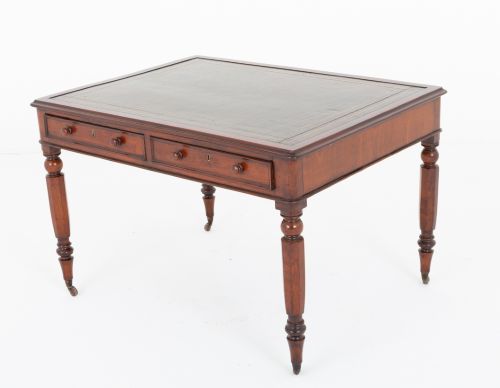
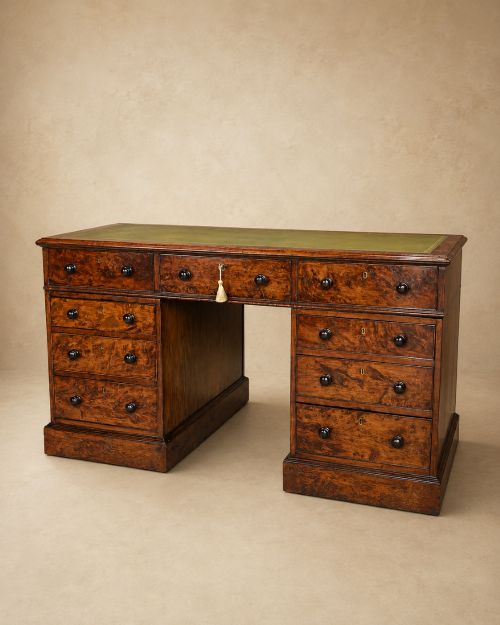
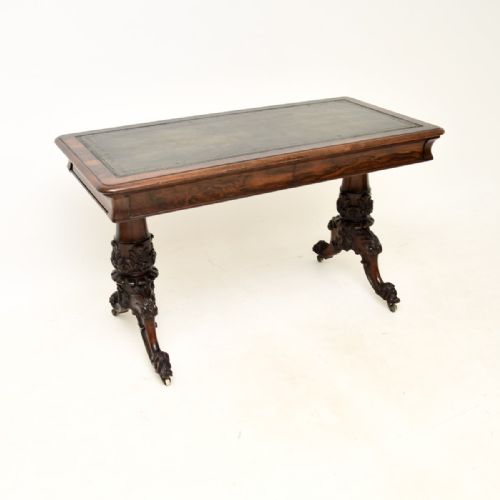
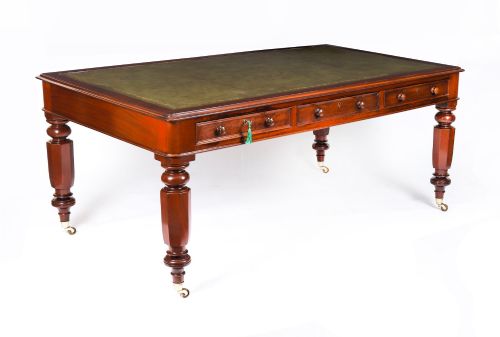

Green Leather Library Table
A green leather library table offers a substantial writing surface framed in rich timber, designed to anchor a traditional study or office.
Green Leather Library Table
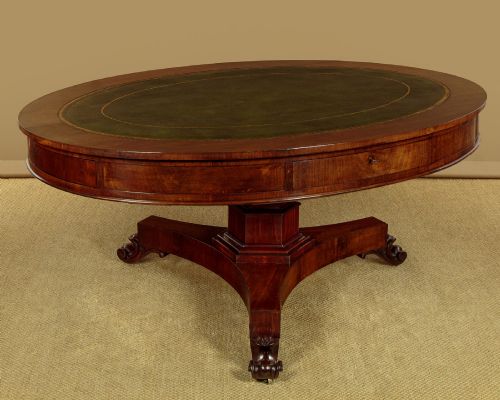
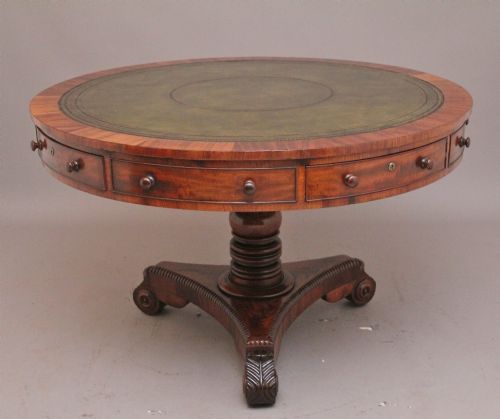
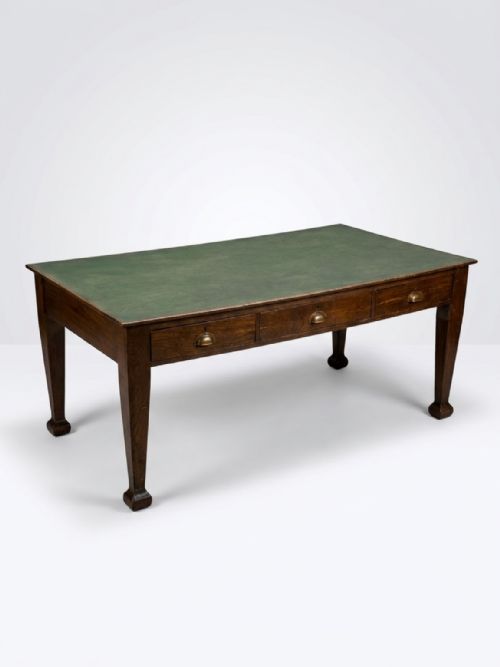
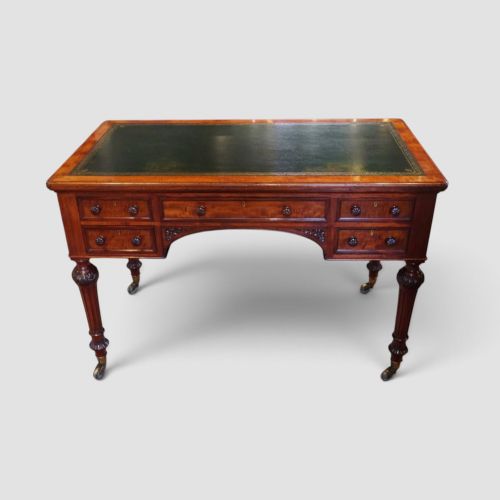
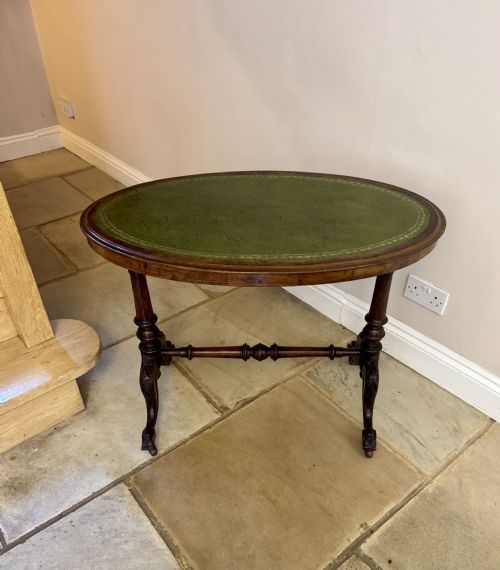
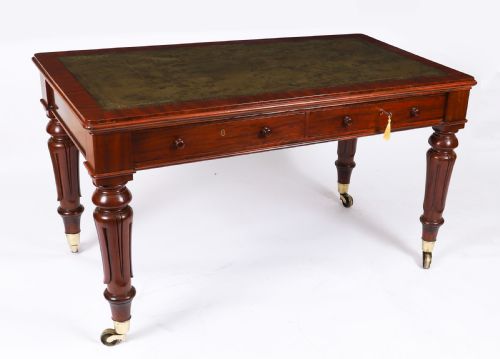
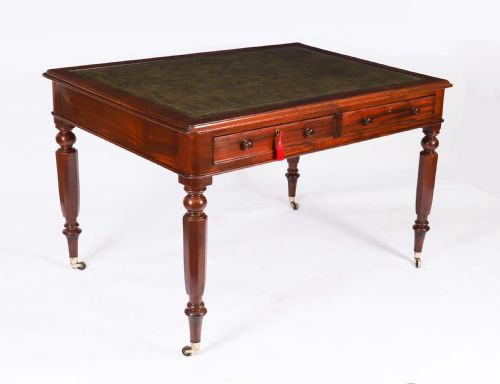
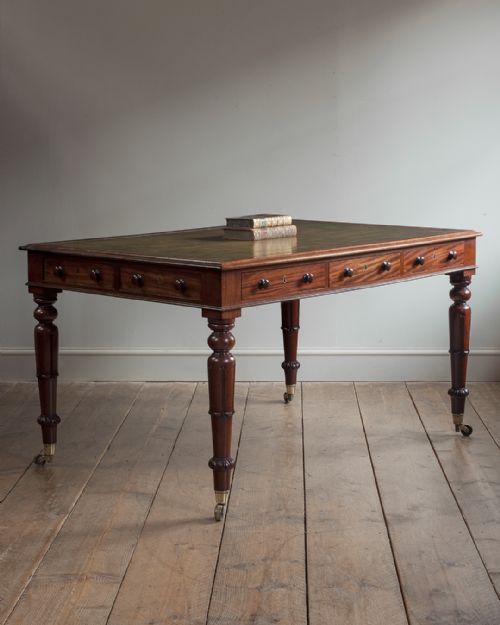
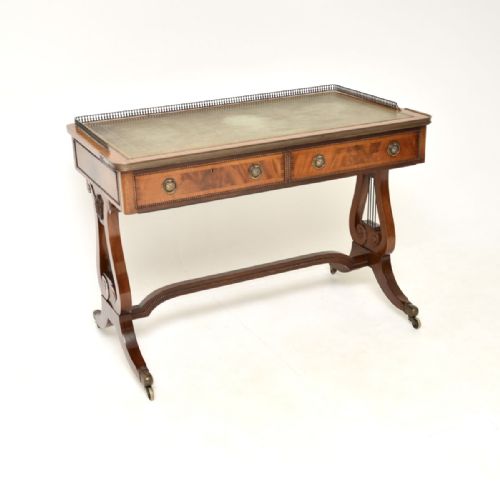
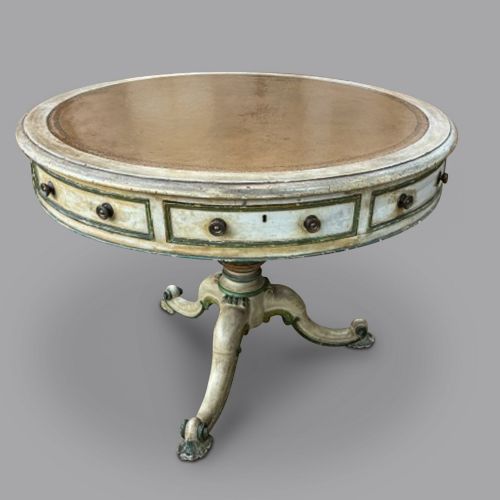
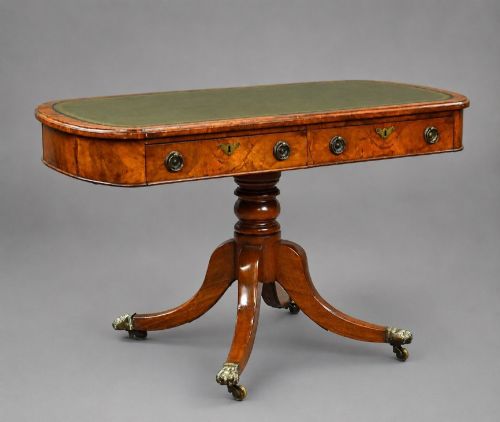
A green leather library table brings together classic timber framing and a durable writing surface designed for daily study or administrative work. You will encounter rectangular partner desks, freestanding writing tables, and circular drum tables spanning the Regency, William IV, and Victorian periods.
The materials recorded in these pieces rely heavily on solid mahogany, oak, and walnut, frequently accented with flame mahogany, burr walnut, and rosewood veneers. Many examples incorporate multiple drawers or pedestal configurations suitable for placement in the centre of a room.
While nineteenth-century examples dominate the selections, pieces range from Georgian origins through Edwardian productions, reflecting shifts in interior joinery. The surface leather is routinely tooled with gold leaf borders, completing the traditional aesthetic expected from a period workspace.
Materials and Construction
Cabinet makers utilised dense hardwoods such as mahogany, oak, and walnut for the structural carcase, framing, and drawer linings. Timber selection dictated the visual weight of the desk, with figured grains like flame mahogany and burr walnut chosen for prominent exterior panels.
The defining writing surface consists of cattle leather inset into the timber top, traditionally bordered by blind or gilt tooling. Brass hardware, including castors, drop handles, and escutcheons, secures the functional components of pedestal and partners desks.
Many nineteenth-century drawers still contain faint stains of old ink, reminding us of the endless correspondence written upon them.
Distinctions in Execution
Quality rests upon the selection of timber figures and the precision of the cabinet joinery, particularly in the dovetailing of drawer compartments and the stability of freestanding frames. Superior execution shows in the continuity of grain across drawer fronts and the weight of the secondary timbers utilised internally.
The finish of the leather insert and the crispness of the surrounding wood moulding differentiate standard production from workshop pieces bearing maker signatures. Original brass fittings and uniform fading across the timber surfaces indicate careful preservation over generations.
Holland & Sons·James Shoolbred & Co·Gill & Reigate
The Green Leather Library Table Glossary
- Partners desk
- A large double-sided desk designed so two people can work opposite each other simultaneously. These usually feature banks of drawers or cupboards on both sides.
- Drum table
- A circular table with a wide frieze containing drawers, revolving on a central pillar and tripod base. They often feature inset leather writing surfaces.
- Pedestal desk
- A heavy freestanding desk comprising a top section resting on two pedestals fitted with drawers. They are finished on all sides for placement in open spaces.
- Frieze
- The horizontal band running directly beneath the tabletop, frequently housing functional drawers. On better tables, this section contains concealed locking mechanisms.
- Tooled leather
- Leather decorated by impressing heated brass tools into the surface, often using gold leaf. This technique provides a decorative border around the perimeter of the writing area.
Green Leather Library Table: Frequently Asked Questions
Where should a partners desk be placed?
A partners desk is constructed to stand free in the middle of a room rather than against a wall. Because drawers and workspaces are accessible from opposing sides, positioning it centrally allows full utilisation.
Adequate clearance around all four sides is necessary to accommodate chairs and open drawers comfortably.
How do I care for the leather top?
The leather surface benefits from periodic treatment with appropriate leather dressings or balms to prevent drying and cracking. Avoiding direct sunlight helps preserve the colour and the gilded tooling.
Excessive moisture should be kept away from both the leather insert and the surrounding timber moulding during cleaning.
What is the difference between a library table and a writing table?
Library tables were traditionally built for general reference and large volumes, often featuring circular or spacious rectangular proportions finished on all sides. Writing tables focus specifically on desk work, frequently incorporating drawers within the frieze.
Both types utilise inset leather surfaces, but their proportions reflect different historical domestic tasks.
How can I identify a Victorian piece?
Victorian pieces typically display heavy timber construction in mahogany, walnut, or oak, often paired with deep colouring and robust proportions. Drawer linings frequently utilise secondary woods like pine or oak with hand-cut dovetails.
Turned legs, pedestal bases, and brass castors are common structural indicators of mid to late nineteenth-century manufacture.