
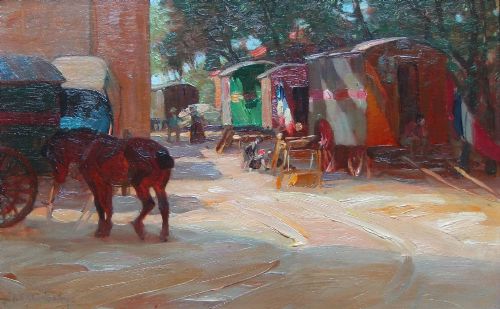


Green Landscape Horse Painting
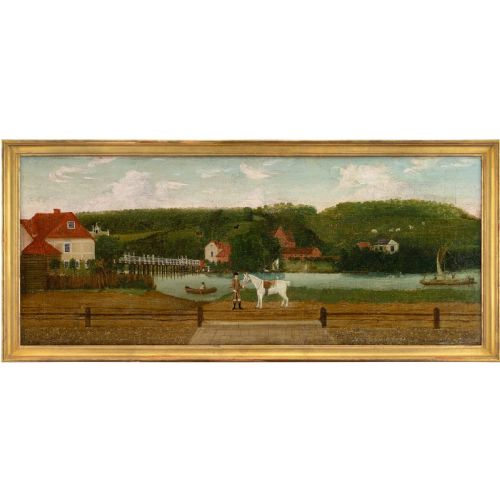
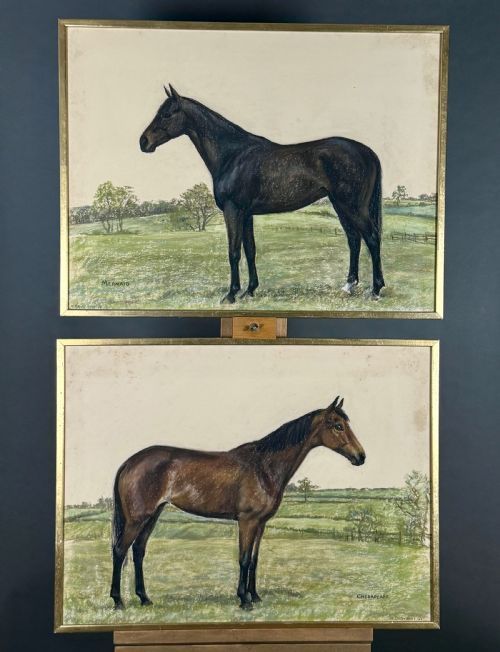
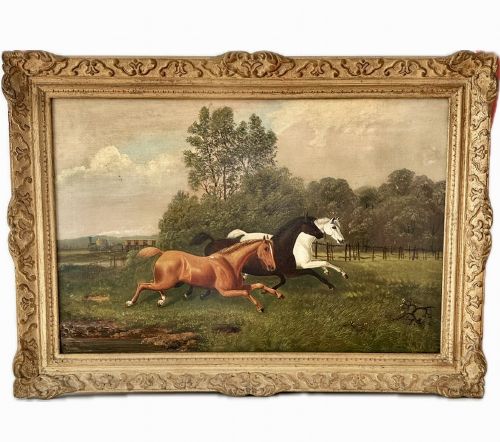
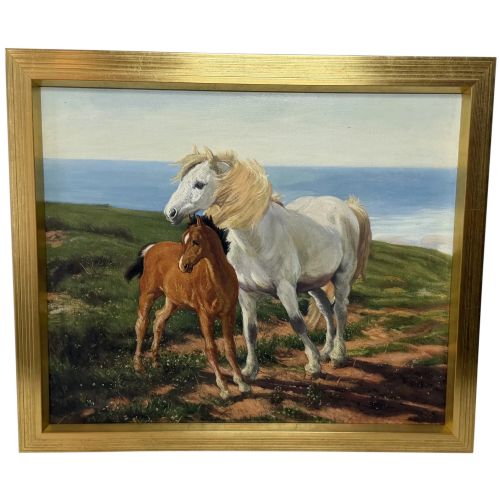
A green landscape horse painting captures pastoral tradition and sporting heritage through oil on canvas, watercolour, and pastel.
Green Landscape Horse Painting
A green landscape horse painting combines rural topography with equine subjects, spanning Victorian equestrian portraits to mid-twentieth-century pastoral views.
Buyers encounter works executed in oil on canvas, watercolour, and pastel, originating from nineteenth-century English schools through to twentieth-century British and French impressionism.
The most common formats on this page depict horses at work in fields, coaching scenes, hunting meets, and quiet rural farmyards.
Materials and execution
Artists painted primarily with oil paint upon stretched canvas or panel, utilising the medium's opacity and depth to render natural foliage and animal musculature.
Watercolour and pastel on paper frequently appear, relying on rapid handling to capture light across open fields and rural waterways.
Many works retain their period framing, utilising giltwood or wood mouldings appropriate to their Victorian, Edwardian, or mid-twentieth-century origins.
Listings feature works spanning the nineteenth century through the 1960s, utilising canvas, paper, and wood.
Evaluating quality and handling
Quality rests upon the artist's command of anatomy and spatial perspective, distinguishing competent academic rendering from stiff or formulaic composition.
Surface preservation significantly influences the piece, noting the stability of the paint layer and the absence of disfiguring restoration across the canvas.
The sensitivity of atmospheric light within the landscape and the natural posture of the animal demonstrate the painter's true skill.
Edward Priestley·Paul Ehrenberg·Harry Freckleton·Hazel M Barnett·George Wright·Gabriel Dauchot·John Sanderson Wells·Philip Henry Rideout·John Atkinson·John Linnell·John Alfred Wheeler·Clifton Tomson·Robert Hollands Walker·Frederick J Knowles·Ernest Higgins Rigg·Walter Duncan·George Turner·Donald Wood·Alfred George Stevens·Frederick J Haycock·John Parker Davis·John Baragwanath King·Reginald Mills
The Green Landscape Horse Painting Glossary
- Equestrian
- Pertaining to horses, horse riding, or the representation of horses in art. This term groups coaching, hunting, and racing subjects together.
- Provenance
- The documented history of ownership attached to a work of art. Established records add historical context to nineteenth-century and twentieth-century paintings.
- Pastoral
- A genre of art idealising rural life and agricultural landscapes. These scenes frequently incorporate working shire horses and farm laborers.
- Giltwood
- Wood carved and covered with a thin layer of gold leaf or gilt. It is commonly found on traditional frames enclosing oil paintings from the Victorian era onwards.
Green Landscape Horse Painting: Frequently Asked Questions
What subjects appear in these paintings?
The works depict horses in various rural and sporting contexts, including farm labour, coaching scenes, hunting meets, and quiet country pastures.
These subjects reflect the deep integration of horses into everyday life and leisure across the nineteenth and twentieth centuries.
How do I date an antique horse painting?
Dating relies on stylistic clues, costume details of any figures present, framing materials, and recorded biographical dates of the artist.
Paintings from the nineteenth century often exhibit darker varnishes and academic brushwork, while mid-twentieth-century pieces display brighter palettes and looser handling.
Where should I hang these artworks?
These paintings suit traditional living spaces, libraries, or studies, where their pastoral themes complement classic interior architecture and wood furnishings.
Direct sunlight and excessive humidity should be avoided to protect both the canvas support and the delicate oil or watercolour pigments.
What is the difference between oil and watercolour?
Oil paint utilises a drying oil binder, allowing for rich texture, layered depth, and subsequent retouching on canvas or wood panels.
Watercolour employs water-soluble pigments on paper, producing a luminous, transparent finish that requires protective glass framing.