



Green Jade Cabochon
Green jade cabochon pieces are polished, domed gemstones mounted in precious metals, offering a smooth touch and rich colour that collectors value for everyday wear.
Green Jade Cabochon
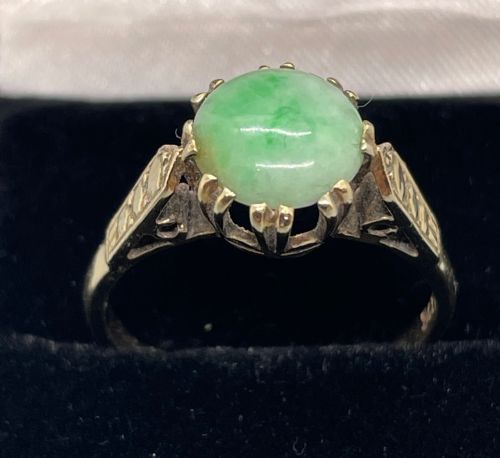
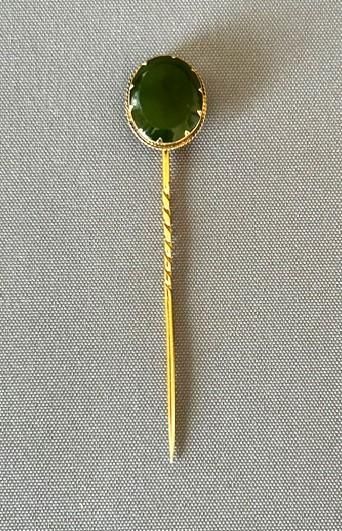
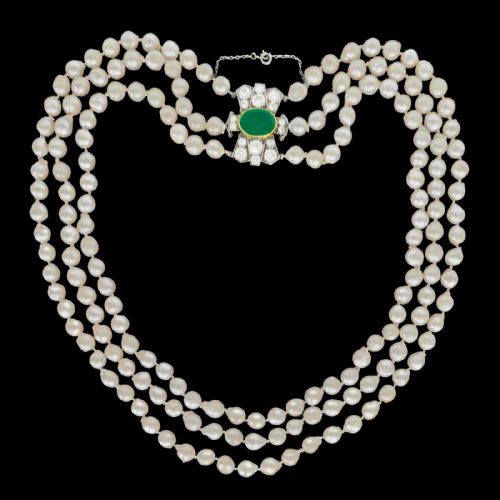
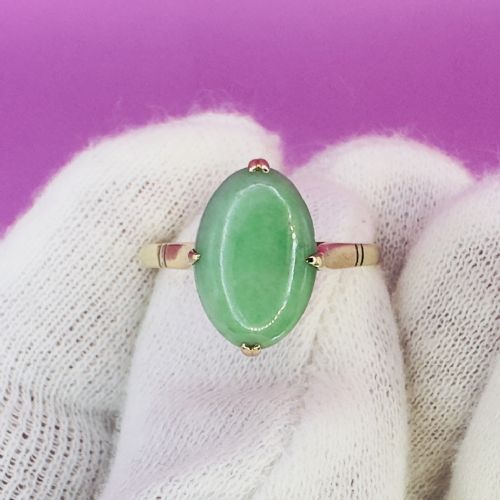
A green jade cabochon selection brings together polished, smooth-domed stones set across rings, earrings, stick pins, necklaces, and pendants. Buyers seeking a green jade cabochon will find forms spanning the Edwardian era, the Art Deco period, and mid-century modern design.
The pieces listed on this page run from early twentieth-century stick pins and carved rings to screw-back stud earrings and pearl necklaces fitted with decorative clasps. Most items combine the central green stone with precious metals like eighteen-carat gold, nine-carat gold, fourteen-carat gold, and silver.
Dating ranges from the nineteen-hundreds through to the nineteen-sixties, capturing distinct stylistic shifts from delicate Edwardian filigree to geometric Art Deco lines. Collectors encounter both pale jadeite and deeper green jade varieties mounted alongside diamonds or cultured pearls.
How they were made
Lapidaries shaped the green jade cabochon by grinding and polishing raw mineral material into smooth, convex domes without facets, maximising the natural lustre of the stone. Craftsmen then secured these polished stones into cast or fabricated metal mounts.
Goldsmiths and silversmiths utilised nine-carat, fourteen-carat, and eighteen-carat gold alongside silver to house the stones, frequently incorporating diamonds or pearls as secondary elements. Setting techniques included standard bezel surrounds, claw grips, and specialised screw-back mechanisms for earrings.
Makers during the Edwardian and Art Deco periods also integrated hallmarking and gemological reports, such as those from the Birmingham Assay Office, to document material authenticity.
Green Jade Cabochon Retail Price Guide 2026
Typical asking prices for green jade cabochon among the pieces listed under this phrase on Sellingantiques today, from the lower quarter to the upper quarter. They describe what is for sale here now, not the wider market.
Listings feature periods spanning from nineteen-hundred to nineteen-sixty, encompassing Edwardian, Art Deco, and mid-century design movements.
What varies in quality
The quality of a green jade cabochon depends heavily on the saturation, evenness, and translucency of the stone's green colour, alongside the precision of its domed polish. Superior stones display a vibrant, uniform hue without dull patches or heavy inclusions.
Metalwork execution dictates overall standard, separating solid eighteen-carat gold settings or intricate period mountings from simpler nine-carat designs. The integration of supporting diamonds and the survival of original clasps or screw-back mechanisms also influence the piece.
The Green Jade Cabochon Glossary
- Cabochon
- A gemstone shaped to be smooth and rounded rather than faceted. This traditional cut highlights the natural colour and texture of jade.
- Jadeite
- One of the two distinct mineral species accepted as jade, known for bright coloration and crystalline structure. It appears frequently in twentieth-century jewellery mounts.
- Art Deco
- A design style prominent in the nineteen-twenties and nineteen-thirties characterised by sleek geometric shapes and stylised motifs. Pieces from this era often feature structured stone settings.
- Screw-back
- An earring finding that uses a threaded post and a small nut to secure the piece without requiring pierced ears. This mechanism was standard on non-pierced earrings from the mid-twentieth century.
- Solitaire
- A jewellery setting featuring a single central gemstone. In rings, this puts the green stone entirely in focus.
Green Jade Cabochon: Frequently Asked Questions
What is a green jade cabochon?
A green jade cabochon is a gemstone polished into a smooth, rounded dome rather than faceted edges. It serves as the central decorative element in rings, earrings, and pendants.
These stones showcase natural green tones and are typically mounted in gold or silver settings from various twentieth-century periods.
How do I care for my jade jewellery?
Clean your jewellery with a soft, damp cloth and mild soap, avoiding harsh chemical cleaners or ultrasonic baths. Jade is durable but can scratch if stored alongside harder gemstones.
Store pieces individually in lined boxes to protect both the polished cabochon surface and the surrounding metal mount.
How can I tell the period of a piece?
Dating relies on stylistic clues like Edwardian openwork filigree, Art Deco geometric lines, or mid-century stud forms. Hallmarks stamped into the gold or silver provide official assay marks and metal purity.
Accompanying documentation, such as Birmingham Assay Office reports, can further confirm the era and material composition.
Were these pieces worn daily?
Many items, including stick pins, dress rings, and pearl necklaces with gemstone clasps, were created for regular social wear during the early and mid-twentieth century. Sturdier mounts in eighteen-carat gold accommodated frequent use.
Today, collectors continue to wear these historical pieces while taking standard precautions against heavy impact.