





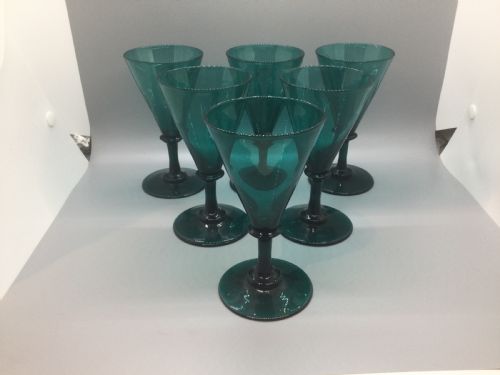


Green Glass Wine Set
These green glass wine set pieces bring rich tone and historic character to the table, making them a striking choice for any collector.
Green Glass Wine Set
A green glass wine set brings together matching drinking vessels and sometimes matching decanters intended for serving wine across various dining contexts. When you search for this phrase, you encounter sets spanning the Georgian, Victorian, and Edwardian eras alongside continental European examples.
The most common forms on this page are sets of six or eight wine glasses, often referred to as Bristol green or hock glasses, accompanied occasionally by tall overlay decanters. These items reflect distinct historical periods from the late eighteenth century through to the early twentieth century.
Originating from English, Bohemian, and German workshops, these sets showcase forms ranging from traditional tulip shapes to heavy cut crystal and traditional roemers. Each set preserves the distinct aesthetic preferences of its respective period, from Biedermeier simplicity to ornate Edwardian refinement.
How they were made
These items rely primarily on glass and crystal media, utilising coloured glass and overlay techniques to achieve deep emerald and pale green hues. Makers shaped the molten material into specific vessel forms before applying surface decoration.
Techniques such as intaglio engraving, surface enamelling, and the application of gold leaf appear across various pieces to create intricate visual detail. Cutting through overlay glass exposed the clear metal beneath, producing high-contrast geometric and floral patterns.
Green Glass Wine Set Retail Price Guide 2026
Typical asking prices for green glass wine set among the pieces listed under this phrase on Sellingantiques today, from the lower quarter to the upper quarter. They describe what is for sale here now, not the wider market.
Some nineteenth-century drinkers favoured emerald vessels so dark they hid the murky contents of suspect historical vintages completely.
What varies in quality
The standard of a green glass wine set depends heavily on the precision of the glassblower and the depth of the initial colour saturation. Finer sets display uniform wall thickness and consistent hue across every single glass within the group.
Execution of surface ornamentation separates standard production wares from superior examples, particularly in the hand-cut facets of crystal or the delicacy of intaglio engraving. Sets retaining crisp details and well-preserved enamel or gold leaf reflect a higher tier of historic craftsmanship.
Stevens & Williams·Theresienthal
The Green Glass Wine Set Glossary
- Roemer
- A traditional Germanic drinking vessel featuring a large bowl set upon a wide, ribbed stem and a conical foot made by wrapping hot glass threads. These pieces often appear in green glass.
- Overlay glass
- A technique involving at least two distinct layers of glass, usually a coloured outer layer over a clear or contrasting inner body. Artisans cut through the outer layer to expose the base material.
- Hock glass
- A tall-stemmed wine glass traditionally used for serving German white wine or hock. They frequently feature coloured bowls and decorated stems.
- Intaglio
- A method of engraving where the design is carved into the surface of the glass rather than raised in relief. This technique creates a frosted, recessed pattern.
- Bristol green
- A deep, vibrant shade of green glass traditionally associated with English production centres around the Bristol area during the eighteenth and nineteenth centuries. It became a staple colour for wine glassware.
Green Glass Wine Set: Frequently Asked Questions
What is a green glass wine set?
A green glass wine set comprises a matching group of drinking vessels, and occasionally matching decanters, produced in various shades of green. These sets were designed for dining tables and social gatherings across past centuries.
They range from simple Georgian Bristol green wine glasses to elaborate Edwardian and Bohemian crystal sets featuring cut or enamelled decoration.
How were these wine sets used?
These sets served wine during formal meals and evening gatherings, with specific vessel shapes tailored to different styles of wine. Tall hock glasses and liquor glasses accommodated specialised drinks of the period.
Hostesses utilised matching sets to create a cohesive and colourful tablescape during dinner parties and social entertainments.
How do I care for antique green glass?
Antique green glass requires gentle hand washing in lukewarm water using mild detergent to protect delicate surfaces and historic material. Avoid sudden temperature changes to prevent thermal shock and potential cracking.
Store the pieces securely in a stable cabinet away from direct sunlight and heavy vibrations to preserve their condition for daily enjoyment.
How can I tell the period of a set?
Dating a set involves examining the manufacturing techniques, stylistic markers, and the overall form of the glassware. Georgian pieces often display different weight and pontil marks compared to later Victorian or Edwardian examples.
Matching the decorative style, such as Biedermeier cuts or Art Nouveau enamelling, helps place the set within its correct historical era.