



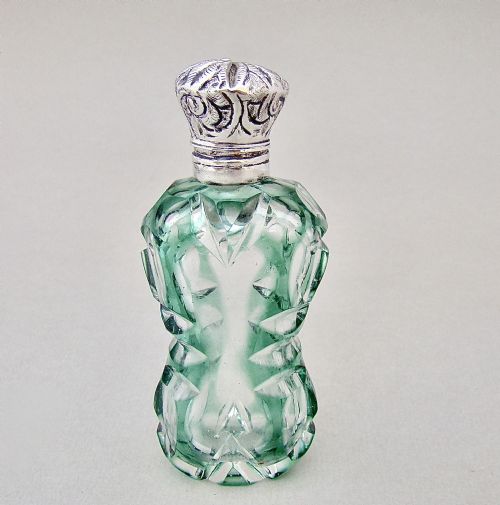


Green Glass Perfume
These green glass perfume pieces combine deep forest tones with precious silver mounts, offering a tactile piece of dressing table history.
Green Glass Perfume
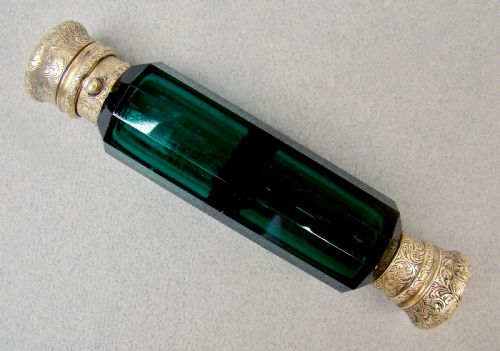
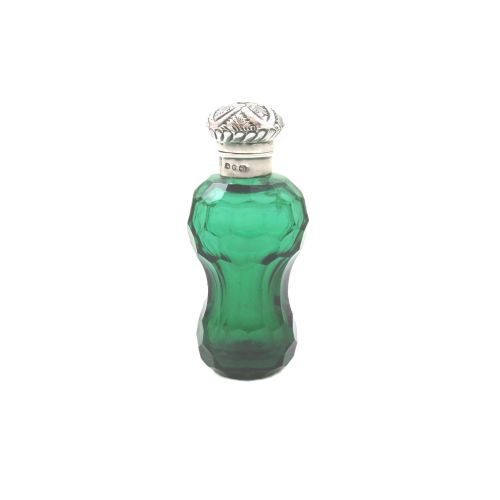
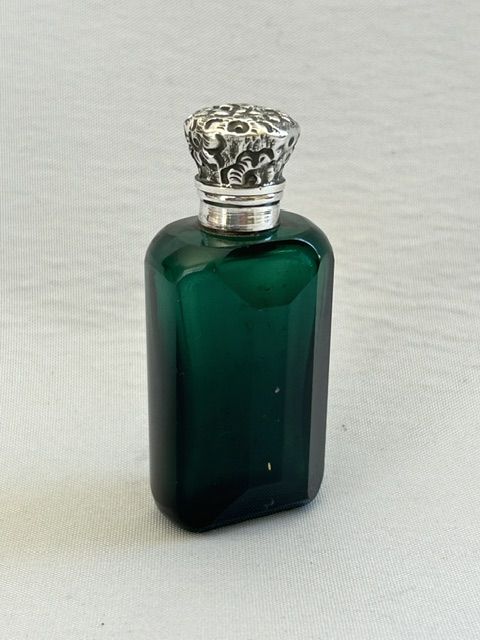
A green glass perfume search brings together scent bottles and dressing table items spanning from the Victorian era through the Art Deco period. The pieces you encounter most frequently on this page are individual scent bottles and atomisers rendered in rich shades of green.
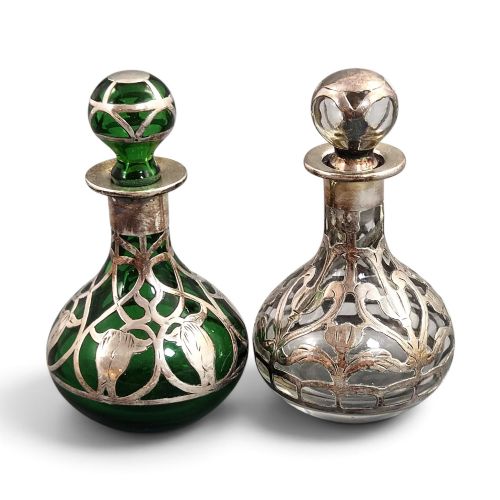
Makers shaped these items into double-ended bottles, overlay designs, and mounted containers intended for the boudoir. Origins stretch across English workshops, Bohemian glasshouses, and continental makers utilising distinctive coloured glass.
The selection ranges from nineteenth-century Victorian mountings to mid-century British dressing sets. Each vessel reflects the changing fashions of vanity accessories across several decades.
How they were made
Craftsmen blew or pressed the glass into distinct forms, frequently employing rich Bristol green or vaseline glass recipes to achieve the characteristic colour. Overlay techniques involved casing a layer of green glass over white or clear cores before cutting through the surface.
Metalworkers mounted sterling silver, silver gilt, and chrome collars, hinged caps, or pierced overlays directly onto the glass bodies. Enamel work, guilloché patterns, and cut glass detailing were added to embellish the exterior surfaces.
Green Glass Perfume Retail Price Guide 2026
Typical asking prices for green glass perfume among the pieces listed under this phrase on Sellingantiques today, from the lower quarter to the upper quarter. They describe what is for sale here now, not the wider market.
Listings span from the 1860s through to the 1940s, uniting Victorian silver mounts with Art Deco glass forms and Mid-Century British dressing table sets.
What varies in quality
The distinction between standard examples and finer items rests upon the depth of the glass colour, the crispness of any cut or overlay work, and the weight of the silver mounts. Heavier glass vessels with substantial metalwork and intact hallmarks represent the higher tier of production.
The intricacy of the secondary decoration, such as hand-painted enamel or detailed silver repoussé work, elevates certain pieces above simple utilitarian containers. Complete sets and works associated with documented makers show superior artistry in their execution.
Sampson Mordan·Gorham·Henry Perkins·Karl Palda·René Lalique·Mappin & Webb·Hermanova
The Green Glass Perfume Glossary
- Bristol Green Glass
- A deep, vivid green glass traditionally produced in the Bristol area during the eighteenth and nineteenth centuries. It gained popularity for domestic tableware and apothecary vessels.
- Vaseline Glass
- A type of glass containing uranium dioxide that produces a yellowish-green hue and fluoresces under ultraviolet light. It saw extensive use in Victorian decorative objects.
- Overlay Glass
- A method where a layer of coloured glass is fused over a contrasting base layer and selectively cut away. This technique creates complex patterns and panels on scent bottles.
- Guilloché Enamel
- A decorative technique where a precise geometric pattern is機械 engraved beneath a translucent enamel layer. It frequently appears on mid-century compacts and bottle caps.
- Atomiser
- A perfume spray bottle fitted with a bulb and internal tube mechanism to disperse scent in a fine mist. These became particularly common during the Art Deco period.
Green Glass Perfume: Frequently Asked Questions
How do I clean old scent bottles?
Wash the glass gently with warm soapy water using a soft bottle brush, avoiding harsh abrasives that might scratch the surface.
Keep silver polish away from the glass body to prevent staining, and ensure cork or glass stoppers dry thoroughly before replacing them.
Can I still use these for perfume?
Many vintage bottles retain their original stoppers and can hold modern fragrances for display or occasional use.
Check that internal seals or corks remain intact, as historical materials may degrade or leak when exposed to alcohol-based liquids.
How do I date a silver mounted bottle?
Examine the silver mounts for British hallmarks, which typically include date letters, assay office marks, and maker's stamps.
Unmarked continental or American pieces rely on stylistic clues such as Art Nouveau curves or geometric Art Deco lines for dating.