

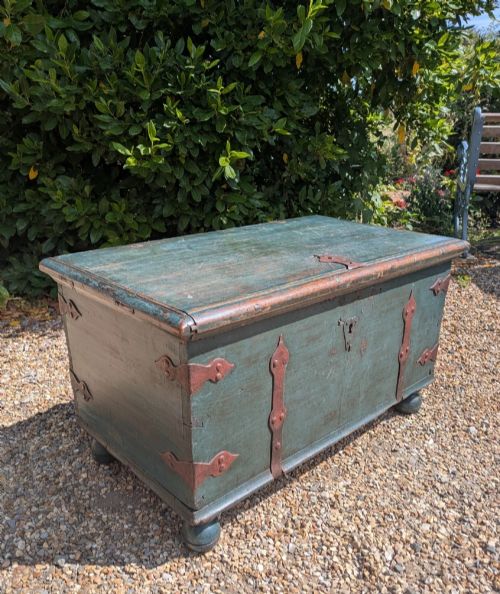


Green Folk Art Trunk
A green folk art trunk brings rustic character and historic painted charm directly into your living space.
Green Folk Art Trunk
A green folk art trunk encompasses painted pine chests, strong boxes, and domed marriage coffers dating from the eighteenth century through to the Edwardian era. You are most likely to encounter nineteenth-century Scandinavian and European examples featuring original paintwork and sturdy timber construction.
These functional containers served domestic storage needs in rural communities, often commissioned as marriage chests or strong boxes to hold valuables. Today, they function effectively as coffee tables, blanket boxes, or statement storage pieces in contemporary interiors.
How they were made
Cabinetmakers and rural joiners built these trunks primarily from solid pine and timber planks, utilising durable construction methods suited to heavy everyday use. Surfaces were then finished with hand-mixed green paint, preserving the natural grain and tool marks of the wood beneath.
Iron and wrought iron played a crucial role in reinforcement and security, appearing as hand-forged strapwork, hinges, and corner brackets. Casket and chest lids often featured domed profiles constructed to shed dust and water, secured by robust metal locks.
Green Folk Art Trunk Retail Price Guide 2026
Typical asking prices for green folk art trunk among the pieces listed under this phrase on Sellingantiques today, from the lower quarter to the upper quarter. They describe what is for sale here now, not the wider market.
Current listings feature nineteenth-century Scandinavian and Romanian pieces, utilising pine, oak, and sycamore with hand-forged iron.
What varies in quality
The survival of original surface paint distinguishes superior examples from those with later overpainting or stripped timber. Depth of colour, patination on the green pigments, and the undisturbed character of the finish determine the visual authority of a trunk.
The integrity of the structural joinery and the presence of untouched ironwork elevate a piece. Trunks retaining their original hand-forged strapwork, hinges, and operational locks demonstrate a higher degree of regional craftsmanship.
The Green Folk Art Trunk Glossary
- Coffer
- A large wooden chest traditionally used for storing valuables, linens, or documents. These sturdy containers often feature domed lids and reinforced iron strapwork.
- Strapwork
- Ornamental or reinforcing bands of iron affixed across the exterior of a trunk or chest. In folk pieces, these strips are typically hand-forged.
- Marriage chest
- A specially commissioned box or chest created to hold a bride's dowry. They frequently display specific dates, initials, or decorative regional painting.
- Strong box
- A heavily fortified small chest designed for securing money and precious items. These compact boxes utilise thick timber walls and robust iron locks.
Green Folk Art Trunk: Frequently Asked Questions
Where should I place a trunk?
These pieces suit living rooms, hallways, and bedrooms where they provide both surface area and internal storage.
Position them away from direct heat sources and strong sunlight to protect the historic pine timber and original green paint.
How do I clean the painted finish?
Dust the surface regularly with a soft, dry cloth to prevent the accumulation of dirt within the wood grain.
Avoid chemical cleaning products or excess moisture, which can damage fragile historical paint layers and lift patination.
Can I use a trunk for storage?
Trunks and coffers offer generous interior space ideal for blankets, winter textiles, and household items.
Ensure stored items are dry and clean before placing them inside enclosed wooden compartments to prevent mildew.
How do I identify the period?
Examine the construction joints, timber preparation, and the nature of the forged iron hardware used on the piece.
Earlier eighteenth-century examples display hand-hewn tool marks and domed forms, while nineteenth-century items often show refined regional paint styles.