



Green Enamel Jewellery
Green enamel jewellery brings together vibrant metallic hues and precious metals across styles from the nineteenth century to the mid-century.
Green Enamel Jewellery
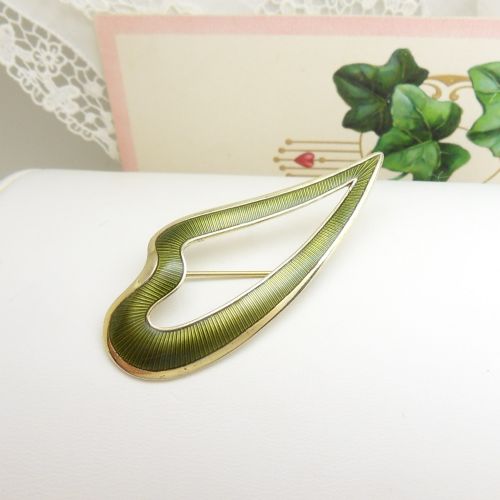
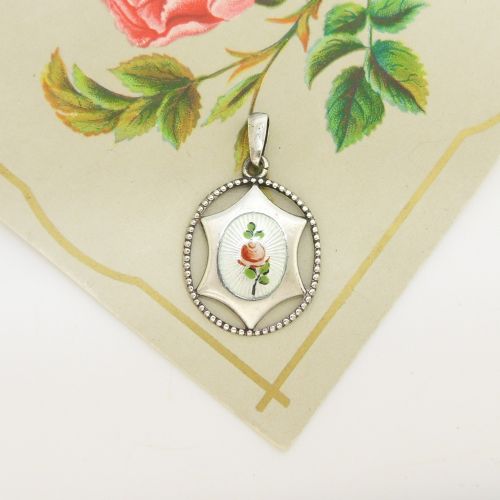
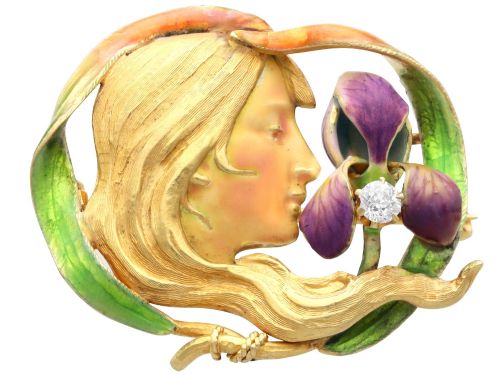
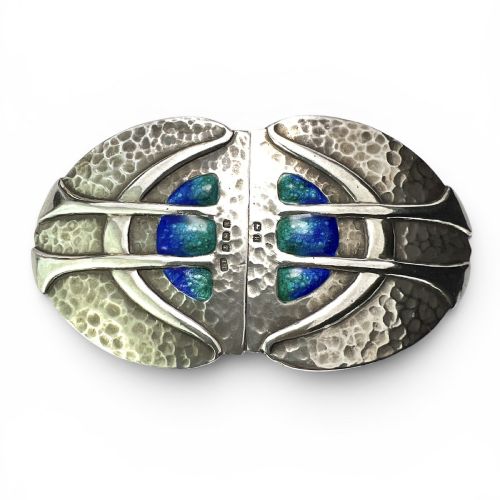
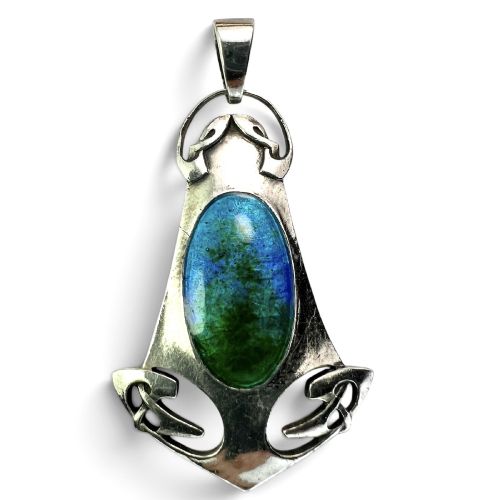
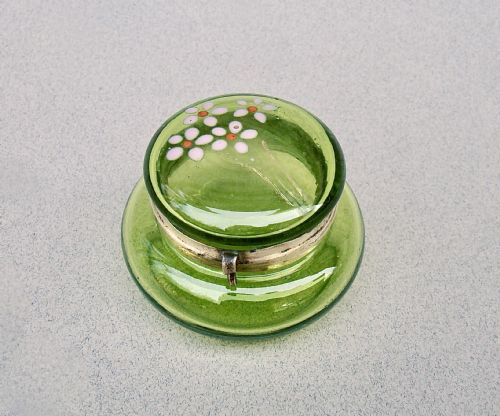
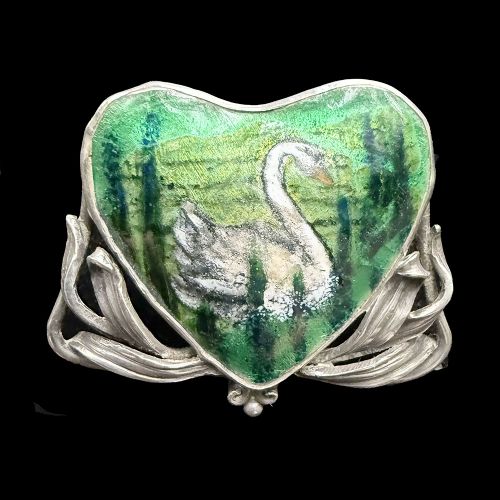
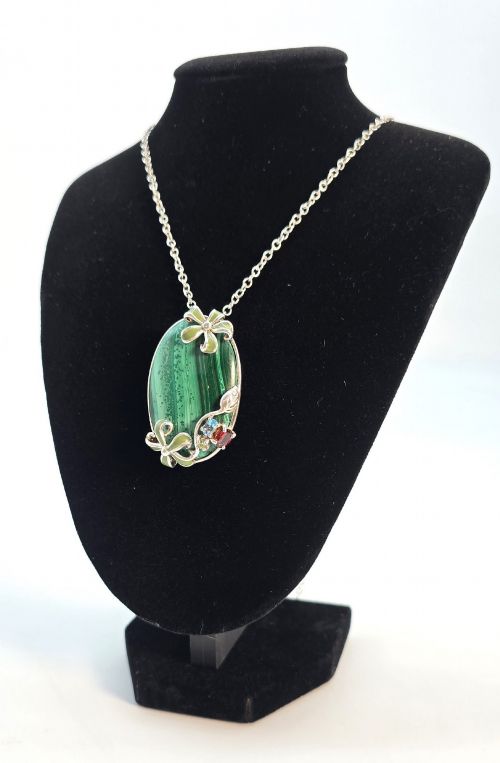
Green enamel jewellery encompasses brooches, pendants, bracelets, necklaces, and trinket boxes decorated with vitreous or porcelain glass coatings. Pieces frequently appear in Art Nouveau, Art Deco, Arts and Crafts, and Edwardian styles, alongside Scandinavian modernist designs and mid-century rings.
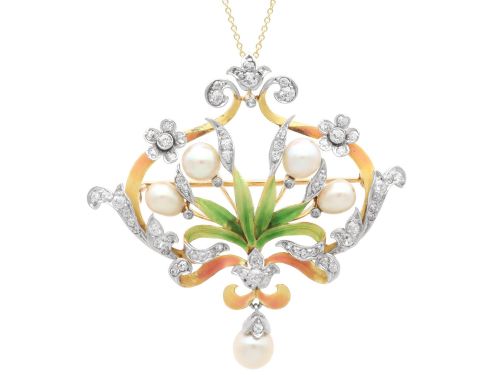
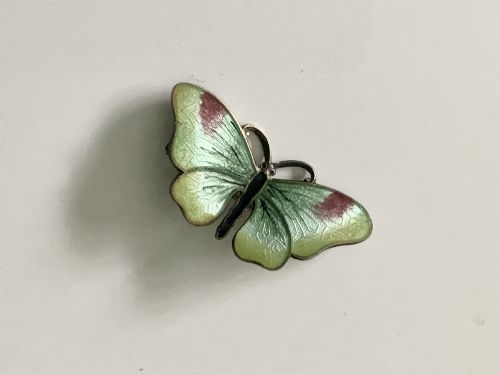
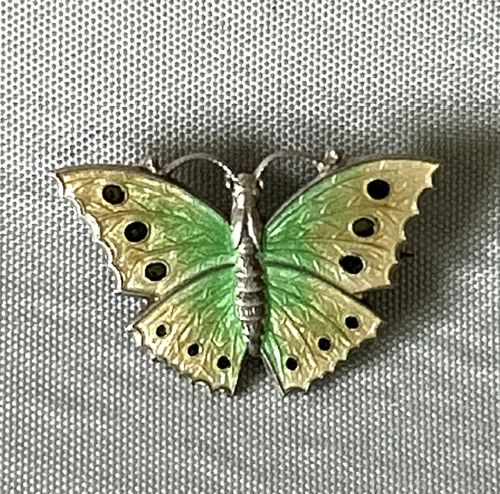
The selection ranges from early twentieth-century silver butterfly brooches and guilloche trinket boxes to complex gold and silver gilt pendants set with pearls, chrysoprase, and citrine. Buyers encounter works drawing on Jugendstil and Renaissance Revival aesthetics, alongside geometric chrome bracelets from the 1930s.
Materials and Techniques
Makers fused powdered glass onto metal bases including sterling silver, silver gilt, gold, brass, and chromium through high-temperature firing. Techniques such as guilloche engrave precise geometric patterns beneath translucent enamel layers, while plique-a-jour suspends translucent enamel within delicate wire frameworks without a solid backing.
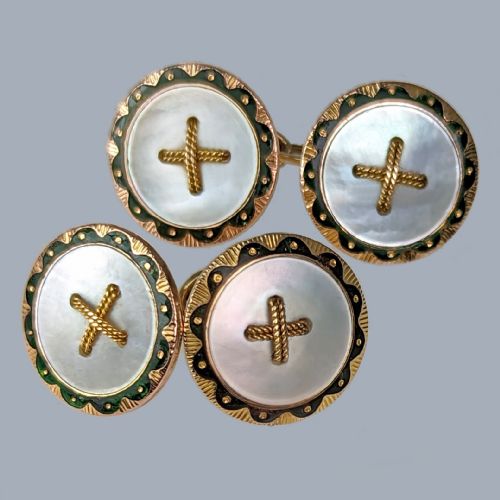
Compositions often incorporate natural accents alongside the metal and enamel, including pearls, mother of pearl, malachite, chalcedony, citrine, and marcasite. Artisans constructed these items using silver and gold frames, brass settings, and occasionally porcelain or glass body elements for boxes and decorative wares.
The listings span the Victorian period, Edwardian era, Art Nouveau, Arts and Crafts, Art Deco, and Mid-Century Modern aesthetics.
Variations in Quality
Excellence in these items rests on the precision of the metalwork and the clarity of the vitreous coating. Superior examples display even colour saturation across the enamel surface, secure stone settings, and crisp structural definition in chased or cast frames.
The reputation of the workshop or designer influences the standing of a piece, with documented items from established makers commanding distinct attention. Workmanship involving complex plique-a-jour or detailed engine-turned guilloche demonstrates higher technical execution than plain flat enamel applications.
Solomon Blanckensee Son·James Fenton·Murrle Bennett·Archibald Knox·Jakob Bengel·Levinger and Bissinger·Fahrner and Bennett·Otto Prutscher·Meyle and Mayer·Heinrich Levinger·Charles Horner·Martin Mayer·Ludwig Knupfer·Theodor Fahrner
The Green Enamel Jewellery Glossary
- Guilloche
- An ornamental technique in which a very precise, intricate recurring pattern or design is mechanical engraved into an underlying metal surface. This process creates reflective depth beneath translucent enamel coatings.
- Plique-a-jour
- A enamelling technique where the enamel is applied within open cells of a metal framework, lacking a backing. This lets light shine through the coloured glass much like miniature stained glass windows.
- Silver Gilt
- Silver that has been coated with a thin layer of gold. This treatment provides the warm appearance of solid gold while utilising a silver base structure.
- Vitrous Enamel
- A material made by fusing powdered glass to a substrate by firing, usually between seven hundred and nine hundred degrees Celsius. The powder melts, flows, and hardens to a smooth, durable glass coating.
- Marcasite
- Polished pyrite stones faceted and set closely together in jewellery to produce a sparkling, metallic effect. It frequently complements silver settings in Art Deco pieces.
Green Enamel Jewellery: Frequently Asked Questions
How do I clean green enamel jewellery safely?
Clean enamel items gently using a soft cloth dampened in lukewarm water with mild soap. Avoid harsh chemical dips, ultrasonic cleaners, and abrasive brushes that might scratch the glass surface or damage delicate metal settings.
Dry the piece thoroughly after washing, particularly if it incorporates organic elements like pearls or mother of pearl. Store each item separately in a lined box to prevent scratching from neighbouring pieces.
How can I tell Art Nouveau from Art Deco pieces?
Art Nouveau items feature flowing, organic lines inspired by natural forms such as flowers, insects, and sinuous curves. Plique-a-jour and delicate silver wirework are common markers of this period.
Art Deco design relies on geometric precision, clean straight lines, and symmetrical arrangements. Chrome, stark contrasts of colour, and engine-turned guilloche patterns define this later twentieth-century aesthetic.
What is guilloche enamel?
Guilloche enamel involves mechanical engraving on a metal base, typically silver or gold, before translucent coloured glass is applied. The engraved pattern shines through the glossy coating to create shimmering visual depth.
This technique appears frequently on vintage powder compacts, trinket boxes, and modernist bracelets from the 1920s and 1930s.
Can I wear these items every day?
Enamel provides a durable surface, but vitreous glass can chip or crack if struck sharply against hard objects. Rings and bracelets face higher daily impact than brooches and pendants, requiring extra care during routine wear.
Remove your jewellery before engaging in heavy manual work, swimming, or applying cosmetics and perfumes to preserve both the metal and the enamel finish.