





Green Cut Glass
Green cut glass brings vibrant colour and precise wheel-carved facets to tables and dressing rooms through nineteenth and twentieth century decanters, hock glasses, and scent bottles.
Green Cut Glass
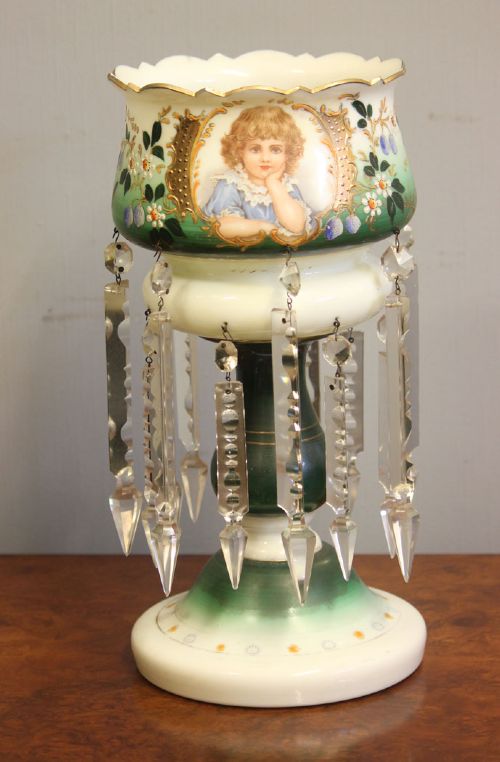
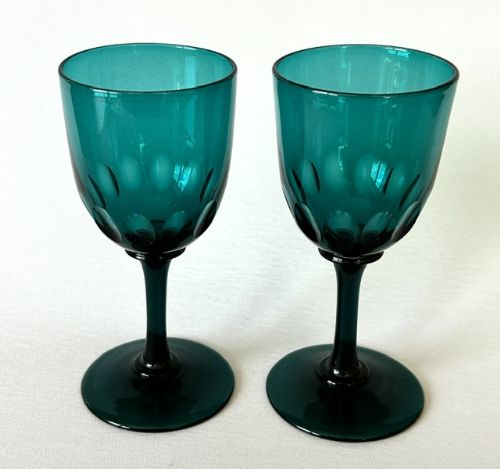
Green cut glass items span the nineteenth and twentieth centuries, originating from British, Bohemian, Belgian, and French makers. The selection centres on drinking vessels such as hock glasses and wine glasses, alongside mantel lustres, scent bottles, decanters, and vases.
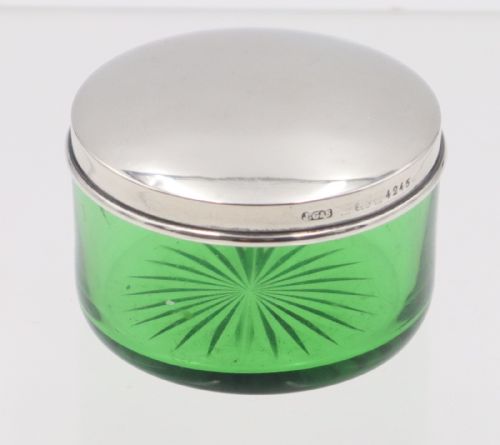
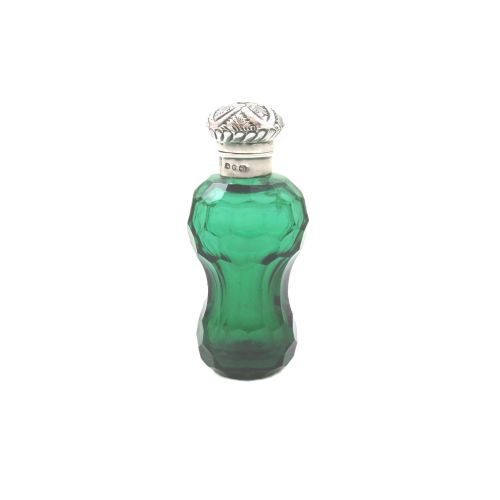
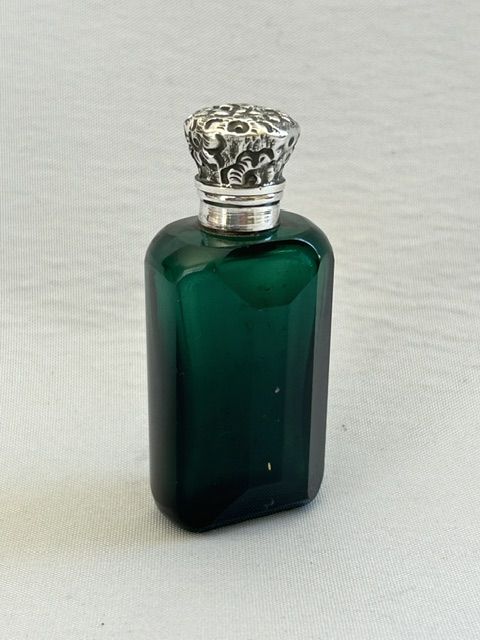
Victorian pieces frequently take the form of table lustres with hanging crystal prisms or silver-mounted Bristol green scent bottles. Later twentieth-century examples lean towards Art Deco designs from makers in Belgium and Bohemia, incorporating layered crystal and geometric cutting.
Buyers encounter distinct forms ranging from functional barware like claret jugs and decanters to decorative mantel items and dressing table accessories. Each period introduces characteristic shapes, from early Victorian silhouettes to sleek 1930s profiles.
Materials and Technique
The manufacture relies on heavy lead crystal or standard glass combined with overlay techniques, where a layer of green glass is fused over clear crystal before being cut away. Artisans use wheels to grind through the outer green casing, exposing the clear glass beneath to create sharp geometric or floral patterns.
Many items incorporate sterling silver mounts, guilloché enamel, or ormolu fittings attached to the glass bodies. Surface decoration frequently includes engraved or gilded motifs applied after the initial cutting and polishing stages.
Green Cut Glass Retail Price Guide 2026
Typical asking prices for green cut glass among the pieces listed under this phrase on Sellingantiques today, from the lower quarter to the upper quarter. They describe what is for sale here now, not the wider market.
Listings feature periods spanning from 1800 to 1940, incorporating materials such as sterling silver, enamel, lead crystal, and cased glass.
Gradations in Quality
Quality depends on the depth and crispness of the wheel-cut facets, where sharper edges and deeper penetration through the green overlay reveal greater technical skill. Superior overlay pieces show precise contrast between the saturated green exterior and the clear crystal core.
The integration of precious metals, such as hallmarked sterling silver collars or guilloché enamel caps, influences the overall standard of the piece. Well-balanced proportions in complex items like mantel lustres and multi-piece decanter sets distinguish higher workshops from mass production.
Baccarat·Charles Graffart for VSL·Henry Perkins·Joseph Simon for Val St. Lambert·Mappin & Webb
The Green Cut Glass Glossary
- Overlay glass
- A technique involving a layer of coloured glass fused over a clear or contrasting body before cutting through the outer layer. This method creates high-contrast visual patterns when the wheel exposes the base material underneath.
- Hock glass
- A traditional tall-stemmed wine glass specifically designed for hock or white wine. These vessels often feature coloured bowls and elaborate stem cutting.
- Mantel lustre
- A decorative ornamental vase or urn hung with cut crystal prisms designed to catch the light. They sit typically in pairs on fireplace mantels.
- Guilloché enamel
- Decorative metalwork covered with translucent enamel over an engine-turned mechanical pattern. It appears frequently on the caps and stoppers of perfume bottles.
- Vaseline glass
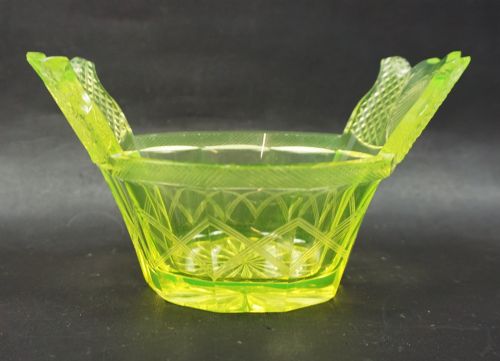
- Glass containing uranium dioxide that produces a distinct greenish-yellow hue and glows under ultraviolet light. It was widely produced during the nineteenth century.
Green Cut Glass: Frequently Asked Questions
How do I identify uranium glass?
Uranium glass displays a distinctive yellowish-green tint under natural light due to the inclusion of uranium dioxide in the batch. Under ultraviolet light, these pieces emit a bright green fluorescent glow.
Most examples date from the nineteenth and early twentieth centuries, appearing in tableware and decorative objects such as small dishes and wine glasses.
What is overlay glass?
Overlay glass consists of a core vessel of clear crystal encased entirely in a second layer of coloured glass, such as deep green. Artisans cut deep facets through the outer green layer to expose the clear glass beneath.
This technique produces strong geometric contrast and requires exceptional precision from the glass cutter to maintain even wall thickness.
How were mantel lustres used?
Mantel lustres served as ornamental fireplace mantel decorations during the Victorian period. They were rarely utilised to hold flowers, functioning instead as light-catching centrepieces.
Suspended glass prisms hung from the rims to refract candle or gas light within the room.
How do I care for silver-mounted glass?
Silver mounts require gentle cleaning with a specialist silver cloth to avoid abrasive contact with the surrounding glass surface. Care must be taken around enamel panels or glued sterling collars during maintenance.
Hand washing in lukewarm water preserves both the glass clarity and the integrity of vintage adhesives.