



Green Ceramic Tray
These green ceramic tray pieces offer useful colour and form for the table or desk, drawing the eye with rich glazes and painted details.
Green Ceramic Tray
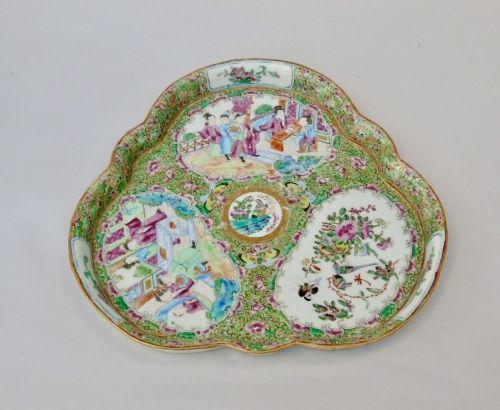
When you search for a green ceramic tray, you encounter a range of forms from cabinet dishes and dressing table sets to desk inkwells and serving plates. These pieces serve practical and decorative functions across periods from the Georgian era through to the early twentieth century, reflecting varied British, continental, and Asian traditions.
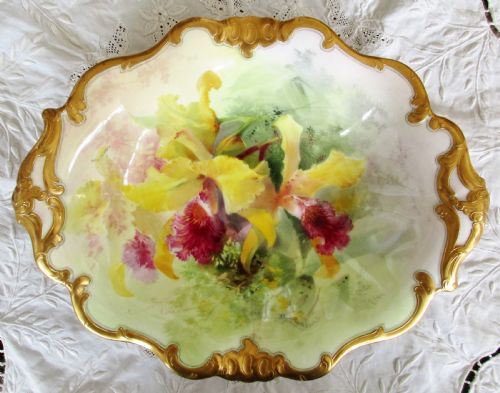
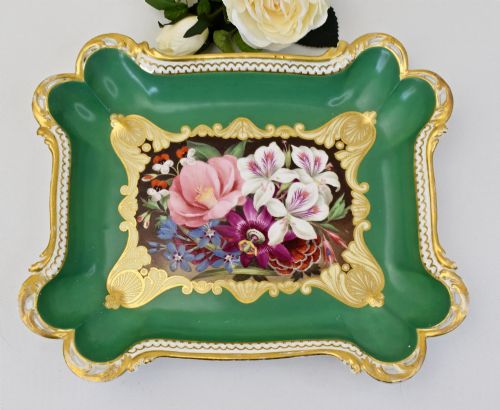
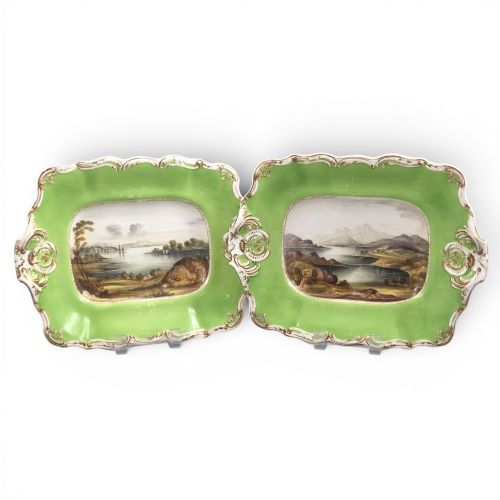
The selection on this page centres on porcelain and earthenware bodies finished with coloured glazes or overglaze enamels. You find works featuring floral studies, landscape views, and figurative elements alongside solid green colourways and transfer-printed patterns.
Materials and methods
Potters shaped these items using hard-paste porcelain or earthenware bodies, applying fluid glazes and overglaze enamels to create lustrous green surfaces. Some pieces incorporate painted details such as orchids or botanical scenes, while others rely on moulded relief work and gilt highlights.
Makers utilised techniques like hand-painting over printed outlines and dipping vessels into coloured glaze baths before kiln firing. Gold leaf and gilt accents frequently finish the rims and structural edges of cabinet dishes and desk accessories.
Green Ceramic Tray Retail Price Guide 2026
Typical asking prices for green ceramic tray among the pieces listed under this phrase on Sellingantiques today, from the lower quarter to the upper quarter. They describe what is for sale here now, not the wider market.
An Art Nouveau maiden leans casually against a porcelain shell, ready to catch your pocket change.
Factors in quality
Quality rests in the crispness of the moulding and the control evident in the hand-painted decoration. Finer examples show precise brushwork in floral motifs and smooth, even glaze application without pooling or surface blemishes.
The sophistication of the design execution and the refinement of the ceramic body separate standard production ware from superior cabinet pieces. Weight, balance, and the crisp definition of gilt or enamel detailing further distinguish better items.
Royal Doulton·Doe and Rogers·Copeland and Garrett·Royal Dux·Macintyre and Co.
The Green Ceramic Tray Glossary
- Cabinet dish
- A decorative plate intended for display rather than table service. These pieces usually feature fine hand-painted artwork and gilt borders.
- Overglaze enamel
- Pigments applied over a fired and glazed ceramic surface, then fixed with a lower temperature second firing. This technique allows for brilliant polychrome decoration.
- Hard-paste porcelain
- A dense, durable ceramic composed of kaolin and petuntse, fired at high temperatures. It rings when struck and resists scratching.
- Majolica
- Earthenware covered with an opaque tin-lead glaze and painted with metallic oxide colours. The technique produces rich greens, browns, and blues.
- Vide poche
- A small tray or bowl designed for emptying pockets of small items such as coins or keys. The term translates from French as empty pocket.
Green Ceramic Tray: Frequently Asked Questions
Were these trays meant for food use?
Many items categorized as cabinet dishes or decorative trays served primarily for display or dressing table organisation rather than dining. Enamel paints and gilt edges on nineteenth-century pieces can wear down with regular food contact and washing.
Larger serving dishes and meat plates from the Georgian and Victorian eras were designed for the dining table. Check the glaze condition and interior surfaces before using any antique piece for serving food.
How do I distinguish earthenware from porcelain?
Porcelain has a dense, vitrified body that often appears translucent when held to a strong light. Earthenware is more porous, heavier, and opaque, with a softer clay body beneath the glaze.
Examine the unglazed foot ring underneath the piece to see the exposed ceramic material. Porcelain clay is typically white and fine-grained, while earthenware shows a darker or coarser structure.
What is a vide poche?
A vide poche is a small shallow dish, tray, or bowl designed to hold loose pocket items like coins, keys, or jewellery at the end of the day. They often feature figurative porcelain models or decorative moulded edges.
Originating in France, these desk and dressing table accessories became popular decorative objects across Europe during the Art Nouveau and Edwardian periods.