



Grand Canal Art
Grand canal art captures the enduring appeal of Venetian waterways through oil paintings and watercolours depicting iconic palaces and gondolas.
Grand Canal Art
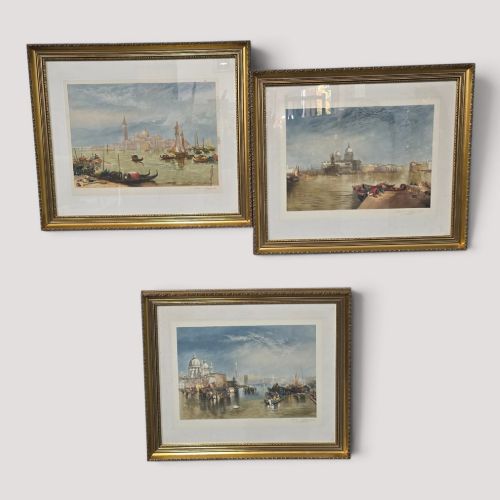
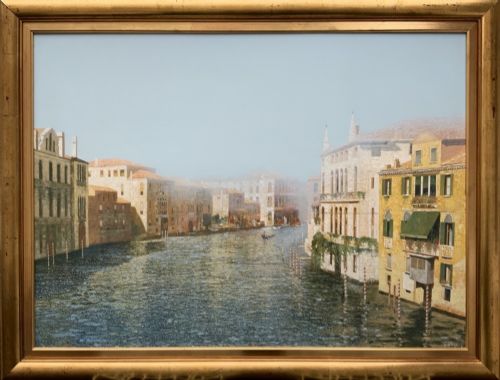
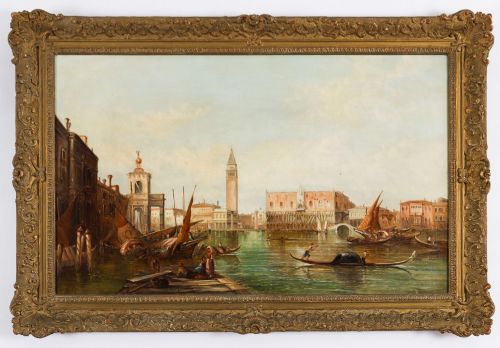
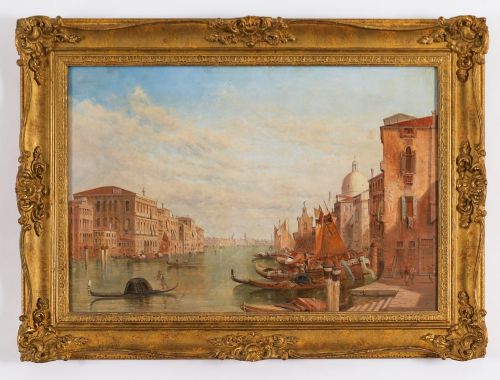
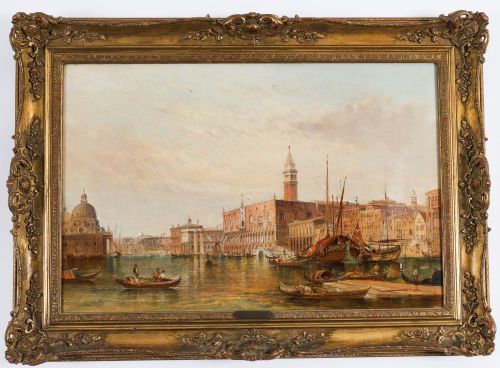
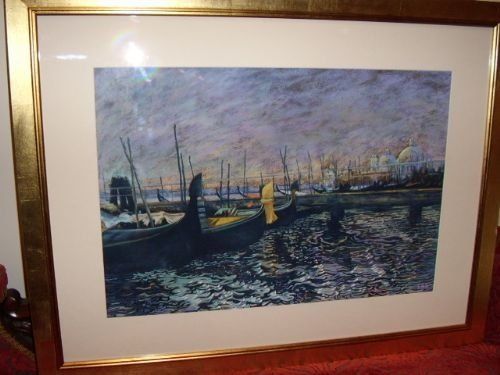
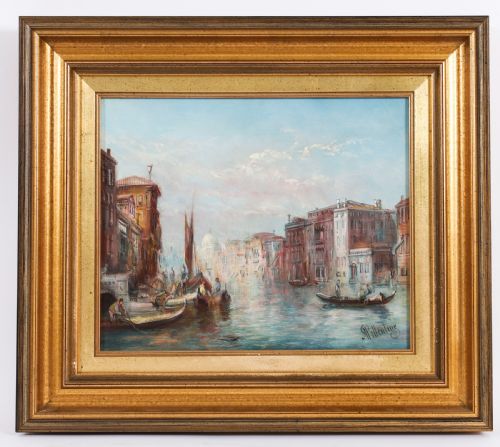
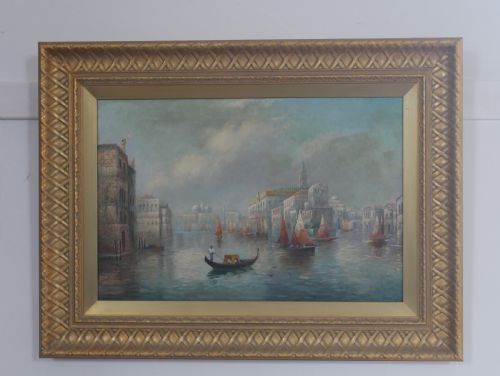
Grand canal art brings together historical depictions of Venice, focusing on famous landmarks such as the Doge's Palace, the Santa Maria della Salute, and the Rialto or Bridge of Sighs. Buyers searching for this phrase encounter townscapes and architectural views that celebrate the unique light and water of the lagoon. These works capture specific topographical scenes ranging from busy waterways with gondolieri to quiet moonlit vistas.
The pieces available on this page lean heavily towards nineteenth-century works and later interpretations, spanning periods from the late nineteenth century into the mid-twentieth century. Oil paintings on canvas and delicate watercolours on paper dominate the selection, often housed in decorative giltwood frames. Artists working in this genre recorded the changing atmospheric conditions of Venice using traditional European and romantic styles.
Materials and techniques
Painters of these Venetian scenes relied primarily on oil on canvas to build rich, textured compositions, or applied watercolour and gouache onto paper for a lighter, more luminous effect. These mediums allowed artists to render the reflections of light upon the water and the detailed stonework of historic palazzos with distinct precision. Ink pen and pastel additions also appear, providing fine linear detail to architectural elements and gondolas.
Framing played a significant role in the presentation of these works, with many pieces set within carved wood and gilded frames that complement the traditional Italian and Victorian aesthetic. The combination of durable canvas supports and quality pigments ensured that these townscapes retained their visual depth over decades. Canvas works often show the weave of the fabric beneath thin layers of oil paint, while watercolours rely on the bright white of the paper to illuminate the canal scenes.
Grand Canal Art Retail Price Guide 2026
Typical asking prices for grand canal art among the pieces listed under this phrase on Sellingantiques today, from the lower quarter to the upper quarter. They describe what is for sale here now, not the wider market.
At least one artist clearly found the gondolas harder to wrangle than the palaces, leaving the boats to wobble while the architecture stands proud.
Distinctions in quality
Quality in these Venetian paintings rests on the artist's ability to command perspective and capture the distinct atmospheric light of the lagoon. Works by established named painters demonstrate superior handling of architectural proportions and lively handling of figures like gondolieri. The depth achieved in the water reflections and the clarity of distant palazzos distinguish the finest examples from standard topographical records.
The integrity of the medium and the preservation of the surface further separate works at different levels. Original oil on canvas pieces with stable paint layers and minimal past restoration hold greater artistic weight. Similarly, watercolours that retain their original pigment vibrancy without excessive fading demonstrate superior historical care and material strength.
Alfred Pollentine·Jane Vivian·William Raymond Dommersen·Hercules Brabazon Brabazon·Antoine Bouvard Senior
The Grand Canal Art Glossary
- Veduta
- A highly detailed, topographical painting or watercolour of a cityscape, particularly associated with eighteenth and nineteenth-century views of Venice. These works served as visual records for travellers on the Grand Tour.
- Gouache
- An opaque watercolour paint consisting of natural pigment, water, and a binding agent such as gum arabic. It provides a heavier, more solid coverage than transparent watercolour.
- Giltwood
- Wood that has been treated with a thin layer of gold leaf or gold paint. It forms the decorative surface of many traditional frames housing these paintings.
- Gondolier
- A traditional oarsman who propels a Venetian gondola. Figures of gondolieri frequently animate the foreground or middle distance of canal scenes.
- Dogana
- The former customs house of Venice, situated at the confluence of the Grand Canal and the Giudecca Canal. It is a recurring architectural landmark in Venetian townscapes.
Grand Canal Art: Frequently Asked Questions
What periods do these paintings date from?
The works represented here span from the nineteenth century through to the mid-twentieth century, with a strong concentration of pieces created during the late Victorian era. Artists working during these decades repeatedly returned to Venice as a primary source of inspiration.
Dates are determined by artist life spans, dated signatures, and stylistic conventions characteristic of nineteenth-century romanticism and later European painting traditions.
How should I display a watercolour painting?
Watercolours on paper require careful placement away from direct sunlight to prevent the pigments and paper from fading over time. Glazing with conservation-grade glass helps protect the delicate medium from moisture and atmospheric pollutants.
Keeping these works in rooms with stable temperature and humidity levels ensures the paper support remains flat and undamaged.
What is the difference between oil and watercolour views?
Oil paintings on canvas offer a heavier texture, deeper colour saturation, and a robust surface that historically suited grand salon displays. Watercolours on paper provide a translucent, luminous quality that captures the bright, fleeting light of the Venetian lagoon with immediacy.
Both mediums were utilised by professional artists to document the same iconic architecture, but they offer entirely different visual textures.
Are these paintings signed by the artists?
Many of the pieces feature visible artist signatures, monograms, or period inscriptions identifying the creator and the specific Venetian location depicted. Signatures provide a direct link to the hand of the artist and assist in attributing the work to specific nineteenth-century schools.
Unsigned works still offer significant visual merit through their composition, technique, and period framing.