





Graduated Gold Necklace
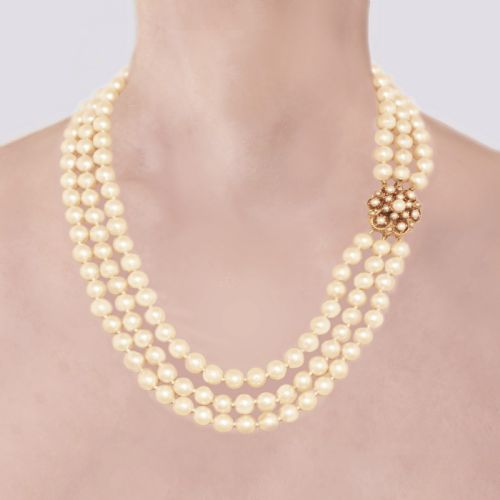
A graduated gold necklace brings together the quiet lustre of pearls and coral with the structural weight of gold links.
Graduated Gold Necklace
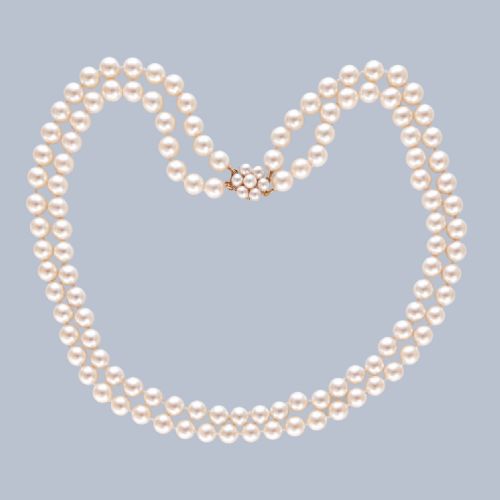
A graduated gold necklace spans several distinct eras, appearing in Victorian, Art Deco, and Mid-Century forms alongside traditional designs. When you search for a graduated gold necklace, you encounter everything from heavy curb link watch chains to delicate multi-strand pearl arrangements secured by precious clasps.
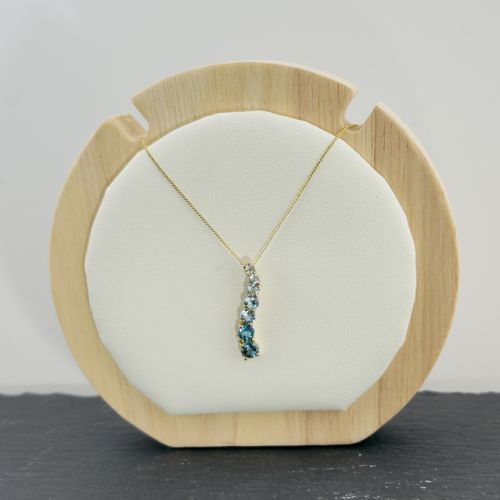
The most common versions on this page pair strings of cultured pearls or natural coral with 9ct gold clasps or settings. Other variations include pendant necklaces featuring gemstones like citrine, topaz, and smoky quartz, or heavier 9ct gold pocket watch chains adapted for neck wear.
How they were made
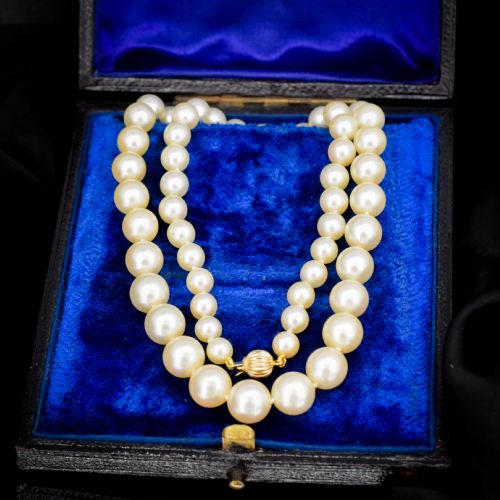
Makers constructed these pieces using 9ct and 18ct gold, combining precious metals with cultured pearls, natural pearls, and coral beads threaded on silk. Clasps often incorporate diamonds, sapphires, garnets, or pearls set into gold mounts, serving as both functional fastenings and decorative centerpieces.
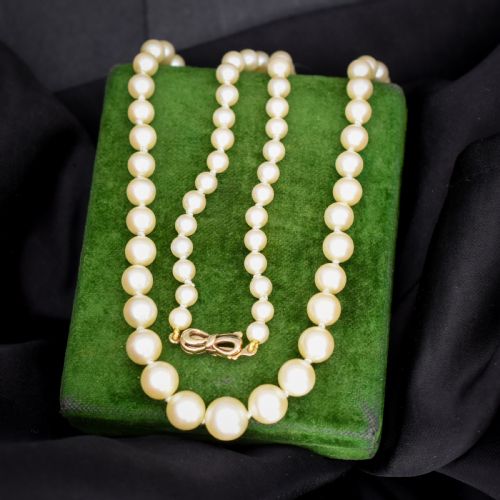
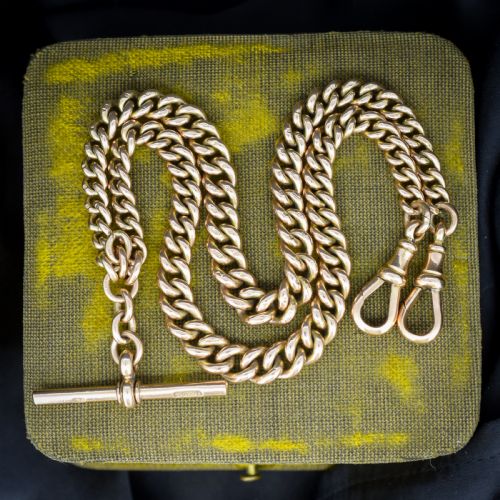
Link chains utilise hollow or solid curb links fashioned from gold, while bead necklaces rely on careful graduation by size along the strand. Gemstone pendants are bezel or prong set in gold settings suspended from matching chains.
Graduated Gold Necklace Retail Price Guide 2026
Typical asking prices for graduated gold necklace among the pieces listed under this phrase on Sellingantiques today, from the lower quarter to the upper quarter. They describe what is for sale here now, not the wider market.
Several pieces started life keeping time in gentleman's pockets before finding a second career as heavy gold curb link necklaces.
What varies in quality
Quality rests in the uniformity and lustre of the pearls or coral beads, and the complexity of the goldwork in the clasp or chain links. Superior pieces feature matched saltwater pearls with deep nacre or well-cut diamonds set into heavier gold mounts.
The construction of the stringing and the heft of the gold components distinguish finer examples from lighter commercial pieces. Hallmarking and maker marks on the gold elements also elevate the standing of a piece.
The Graduated Gold Necklace Glossary
- Graduation
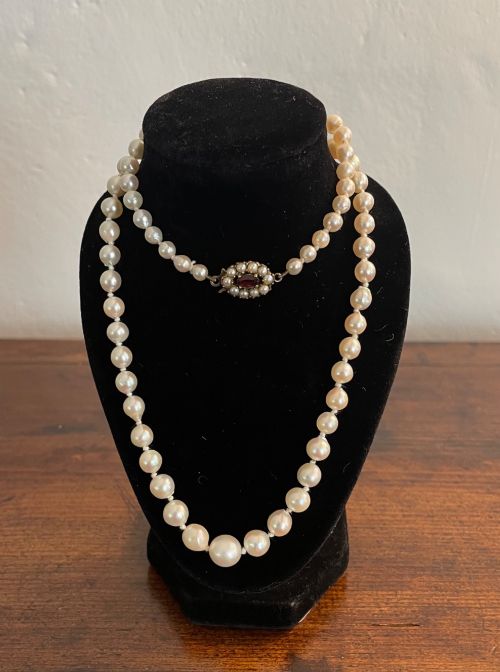
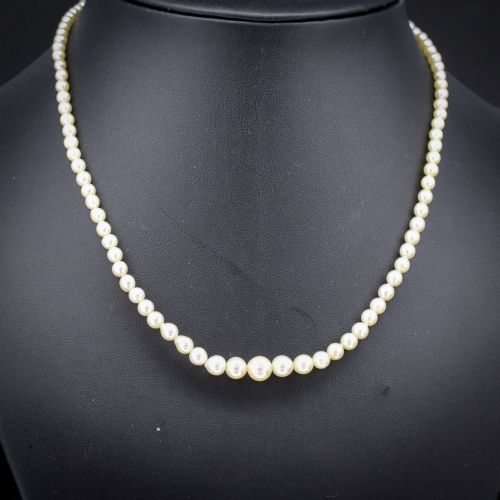
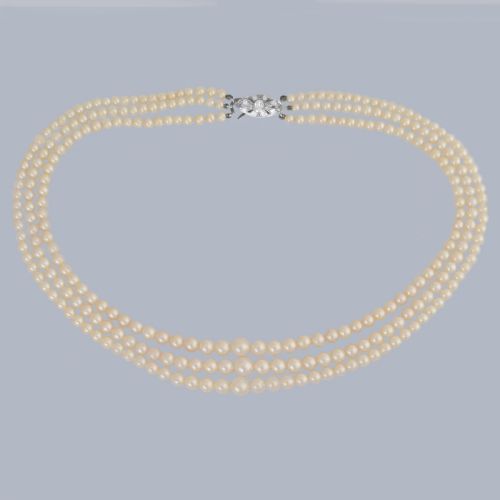
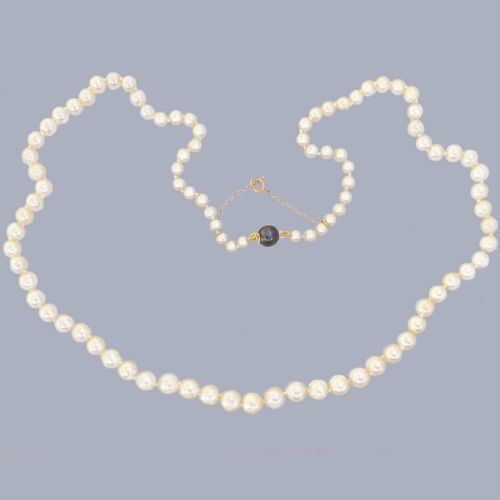
- The deliberate scaling of beads or links from smaller diameters at the ends to a larger centrepiece. This technique creates a balanced silhouette along the neckline.
- Albert chain
- A heavy watch chain originally designed to attach to a waistcoat pocket. These solid gold curb link chains are frequently worn as necklaces today.
- Cultured pearl
- An oyster-grown pearl initiated by the insertion of a bead nucleus. These form the primary strand material in mid-century examples.
- Clasp
- The mechanical fastening at the back or side of a necklace. In fine pieces, these incorporate diamonds, sapphires, or garnets set in gold.
- Nacre
- The organic substance secreted by molluscs to form pearls. Thick nacre provides durability and deep lustre.
Graduated Gold Necklace: Frequently Asked Questions
How do I wear a watch chain as a necklace?
Pocket watch chains feature sturdy curb links and T-bars or swivel clasps designed for waistcoats. When adapted for the neck, they sit shorter and heavier than standard bead necklaces.
You can fasten the chain using its original swivel clasp, letting any remaining elements drop naturally as part of the collar.
Are these pearls saltwater or freshwater?
The pearl necklaces listed here rely predominantly on cultured saltwater pearls. These exhibit the deep orient and smooth surface typical of mid-century pieces.
Many listings specify cultured saltwater origins alongside diamond or garnet set clasps from the 1930s to the 1960s.
How do I identify the period of a gold clasp?
Clasps carry stylistic markers and hallmarks that point to their exact decade of manufacture. Art Deco clasps feature geometric diamond clusters, while Victorian examples often utilise simpler gold boxes or integrated safety chains.
Birmingham assay office marks and specific gold carat stamps further clarify the date of production.
What is the difference between single and multi-strand necklaces?
Single strand necklaces feature one continuous line of beads or pearls resting against the skin. Multi-strand versions use double or triple parallel ropes.
Multi-strand arrangements typically require an elaborate box clasp designed to hold several strings in alignment.