


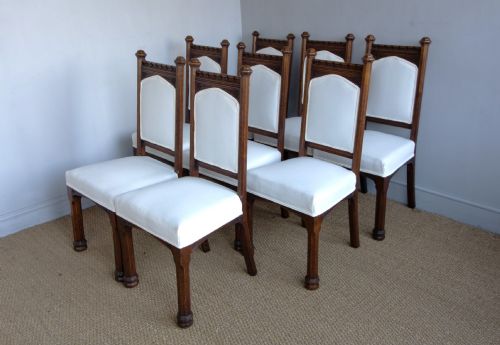
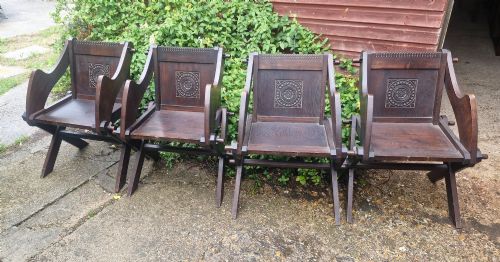
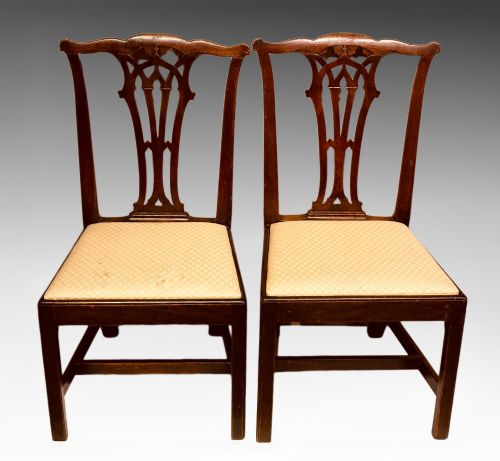
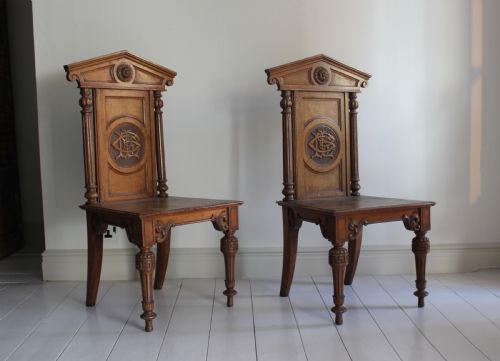
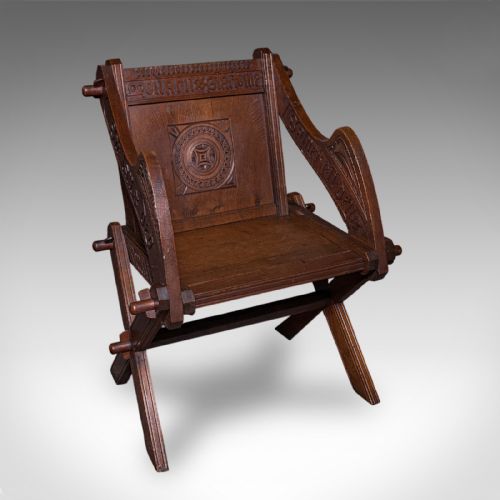
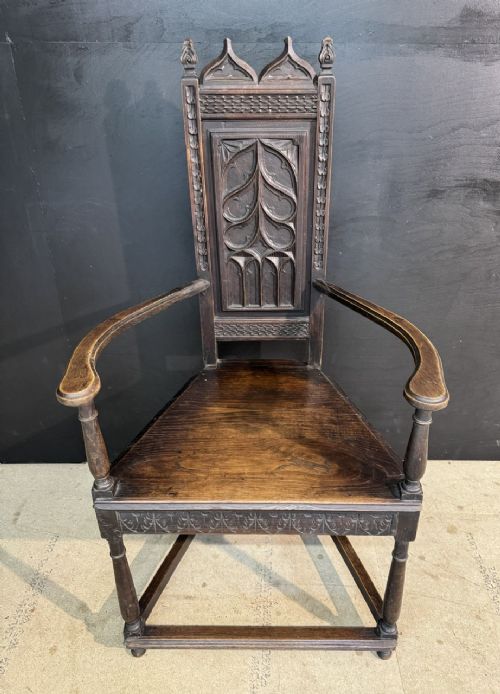
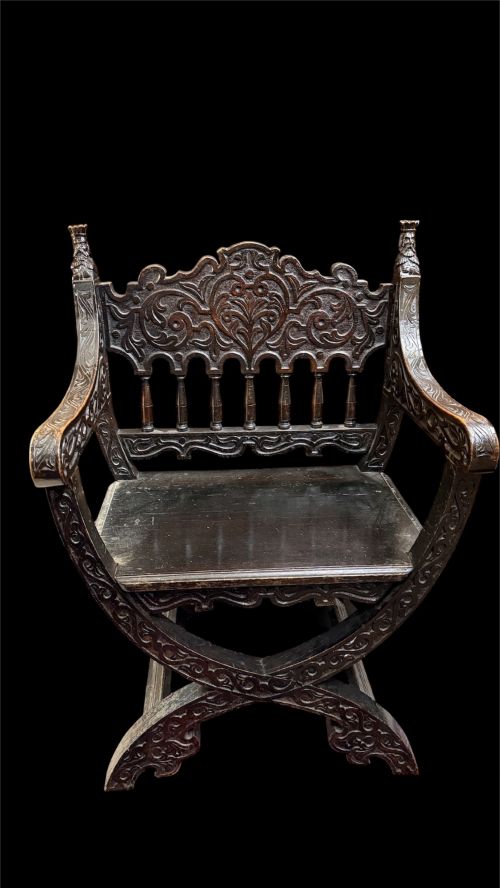
Gothic Wooden Chair
A gothic wooden chair brings architectural presence and heavy timber character into a room.
Gothic Wooden Chair
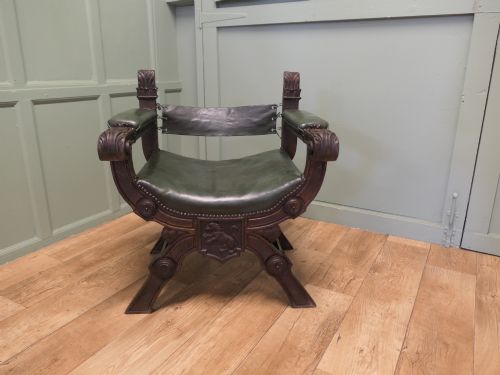
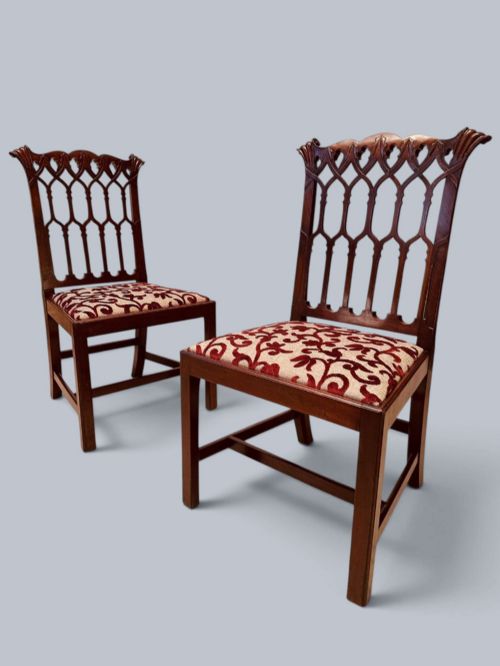
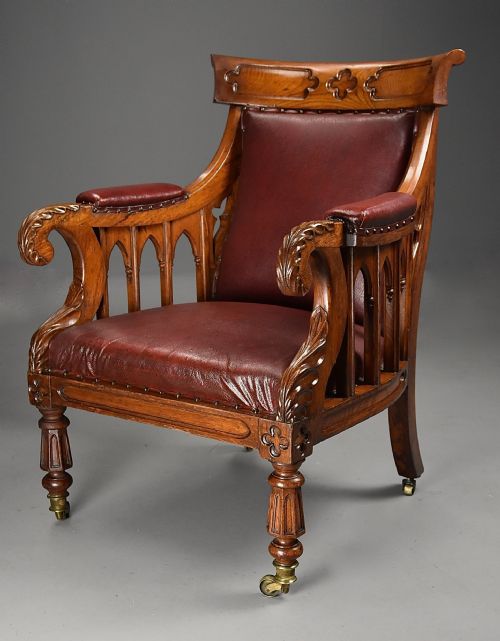
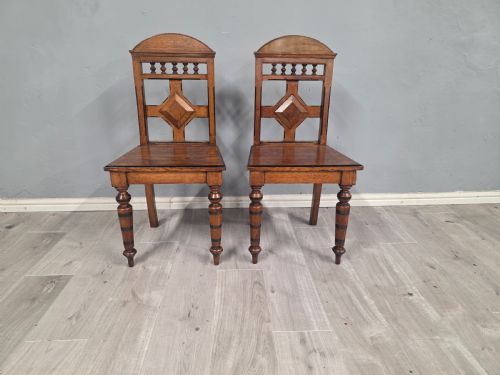
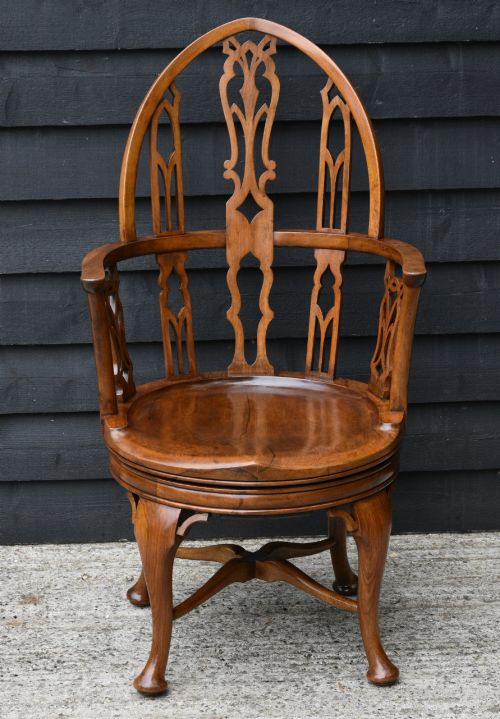
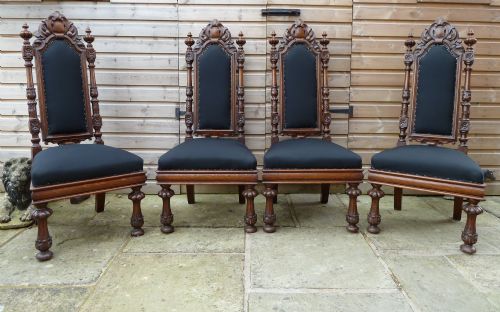
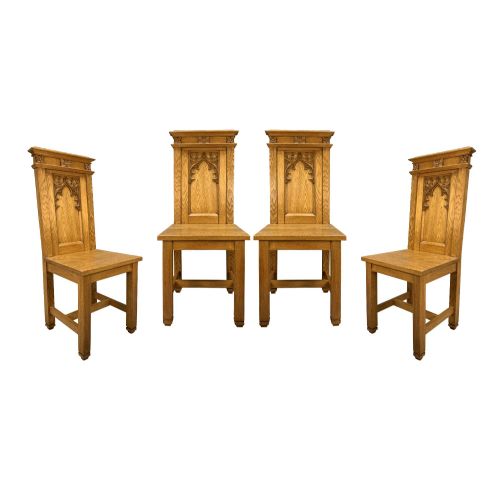
A gothic wooden chair draws upon centuries-old medieval design traditions, interpreted through nineteenth-century revival movements. When searching for a gothic wooden chair, buyers encounter diverse forms ranging from upright hall seats and sturdy library armchairs to monastic settles and revolving desk chairs.
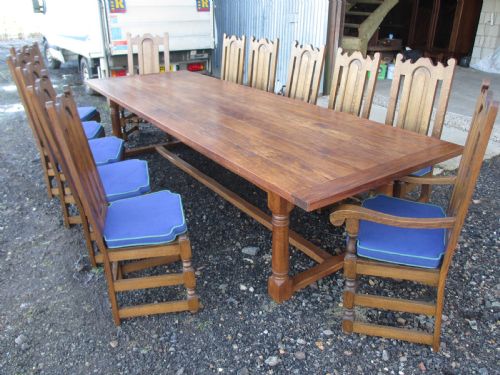
The pieces on this page emerge predominantly from the nineteenth century, spanning Victorian, Edwardian, and later revival periods. Oak dominates the selection, appearing alongside walnut, pitch pine, and mahogany in both single seats and matched sets.
Makers utilised various regional interpretations, producing pieces influenced by French Renaissance revival, Jacobean styles, and English ecclesiastical workshop traditions. These seats function as utilitarian furniture while providing strong decorative accents through pointed arches, tracery, and carved panels.
How they were made
Carpenters and cabinetmakers relied primarily on solid timbers such as English oak, walnut, and pitch pine to construct these robust frames. Joinery techniques involved traditional mortise and tenon joints, pegged constructions, and hand-carved detailing applied directly to the structural wood.
Surface decoration frequently incorporated linenfold panelling, blind tracery, and turned elements like barley twists. Selected examples integrate brass fittings, leather upholstery, or fabric inserts to complement the heavy timber frames.
Gothic Wooden Chair Retail Price Guide 2026
Typical asking prices for gothic wooden chair among the pieces listed under this phrase on Sellingantiques today, from the lower quarter to the upper quarter. They describe what is for sale here now, not the wider market.
Listings feature solid oak and pitch pine construction across multiple seating forms including church pews, hall chairs, and revolving desk seats.
What varies in quality
The distinction between ordinary production and superior work rests on the crispness of the hand-carved ornamentation and the selection of timber. Dense, well-figured oak with deep, deliberate chisel work indicates a higher grade of craftsmanship than flat, mechanical stamping.
Structural integrity also separates examples, as pieces retaining original pegged joints and uncompromised timber frames command greater appreciation. The balance of architectural proportion, whether in a tall hall chair or a low armchair, dictates the visual success of the piece.
Guillows·Norwich Maker
The Gothic Wooden Chair Glossary
- Gothic Revival
- An architectural and decorative style drawing inspiration from medieval design, featuring pointed arches and structural verticality. This movement heavily influenced nineteenth-century seating.
- Wainscot Chair
- A heavy, solid wooden armchair characterised by a panelled back and panelled seat base. These pieces date back to earlier centuries but saw revival production in the Victorian era.
- Glastonbury Chair
- A folding armchair design with intersecting X-shaped underframes and sloped armrests. Examples from the nineteenth century often bear inscribed religious or historical texts.
- Hall Chair
- An upright, timber-seated chair designed for entranceways and reception rooms. These items frequently display carved shields, crests, or pierced backsplats.
- Monks Bench
- A dual-purpose convertible piece of furniture functioning as a bench with a solid back that tilts forward to form a table top. They are typically constructed from heavy oak.
Gothic Wooden Chair: Frequently Asked Questions
Where were these chairs placed originally?
These seats found homes in entrance halls, libraries, dining rooms, and ecclesiastical buildings. Their sturdy construction suited high-traffic areas where visual impact mattered.
Grand reception spaces often featured matched pairs of hall chairs, while libraries and studies accommodated heavier armchairs and revolving desk seats.
How do I identify a revival period piece?
Nineteenth-century revival pieces display machine-sawn timber elements alongside hand-finished carving. Examining the underside and joint construction reveals the manufacturing methods of the Victorian era.
Secondary woods and consistent hardware provide further clues to dating these items accurately within the Victorian and Edwardian periods.
Are these seats comfortable for daily use?
Timber seats without upholstery offer firm support rather than deep cushion comfort. Adding loose squabs or cushions changes the seating experience while preserving the wooden frame.
Armchairs with wider proportions and angled backs provide more relaxed seating for studies or reading corners.
How should I care for antique oak furniture?
Maintaining these timber surfaces involves regular dusting with a soft, dry cloth. Avoiding direct sunlight and extreme temperature fluctuations protects the wood from drying out.
Applying occasional natural wax feeds the grain and preserves the historic patina without sealing the timber beneath artificial finishes.