


Gothic Tracery Display Cabinet
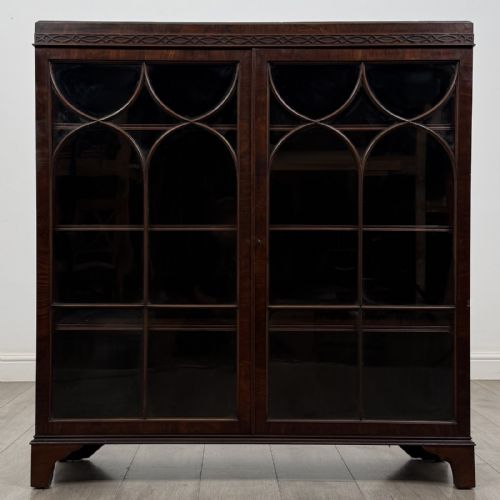
A gothic tracery display cabinet brings architectural pointed arches and vertical mullions to domestic storage, housing collections behind glazed doors with lasting architectural presence.
Gothic Tracery Display Cabinet
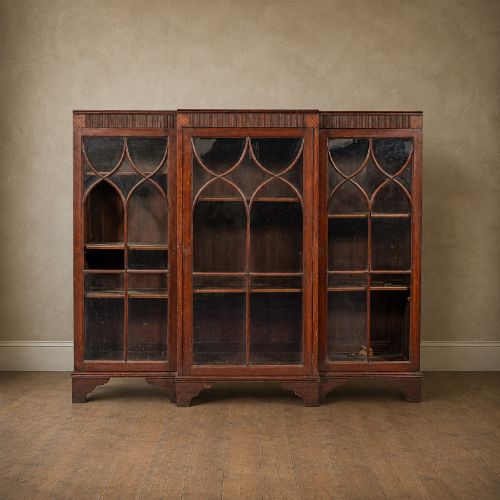
A gothic tracery display cabinet draws on architectural stone window designs translated into timber and glass furniture forms. When you search for a gothic tracery display cabinet, you encounter tall bookcases, breakfront storage units, and glazed cabinets originating from the nineteenth century onwards.
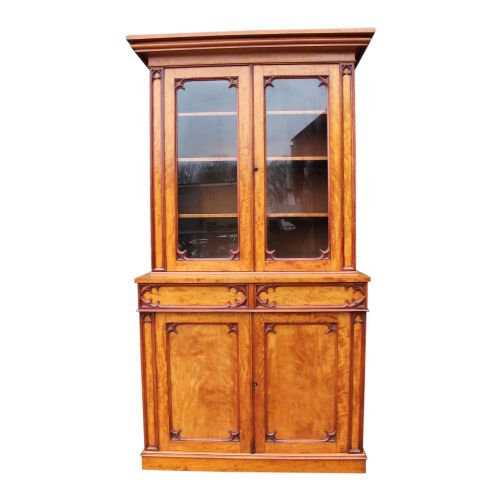
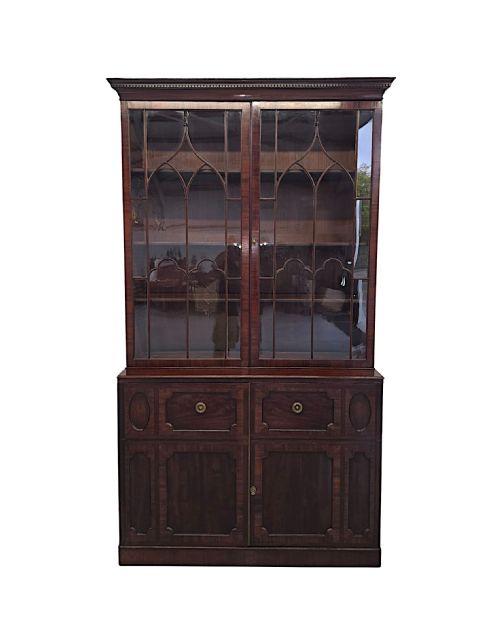
The pieces appearing here span multiple eras, notably the Victorian Gothic Revival and Edwardian periods. Examples range from large breakfront libraries down to compact oak and mahogany cabinets fitted with adjustable shelving and internal fabric linings.
Makers drew on Georgian revivals alongside nineteenth-century interpretations, producing both English country house pieces and Northern European formats. Each variation employs glazed upper sections designed to exhibit books or curated objects safely.
How they were made
Cabinet makers utilised dense hardwoods including mahogany, walnut, oak, and satinwood to construct these large vertical carcases. Selected timbers were often polished to highlight natural grain patterns across breakfront facades and plinth bases.
Glazing bars were shaped by hand to form pointed arches and geometric tracery patterns across door frames. Metal brass fittings and occasional scrumbled painted pine surfaces completed the exterior construction.
Some nineteenth-century makers snuck medieval church windows into living rooms just so books felt holy.
What varies in quality
The refinement of the timber selection dictates the overall calibre of a piece, distinguishing standard utility storage from grand country house library furniture. Finely figured mahogany, satinwood, and solid rosewood indicate a higher tier of workshop production.
The precision and complexity of the architectural woodwork define the standard of the tracery itself. Delicate mullions, intricate glazed framing, and balanced proportions separate ambitious revival pieces from simpler vernacular cabinets.
The Gothic Tracery Display Cabinet Glossary
- Tracery
- Stonework-inspired intersecting ribwork in the upper window or door lights of a cabinet. It dictates the characteristic pointed architectural aesthetic of the style.
- Breakfront
- A piece of furniture where the central section projects forward from the flanking wings. This configuration adds depth and formal presence to large library bookcases.
- Glazed
- Fitted with transparent glass panes to protect contents from dust while allowing visibility. It remains the defining feature of display cabinets and bookcase upper sections.
- Scrumbled
- Painted with a translucent glaze over an opaque base coat to imitate finer wood grain. This technique appears on vernacular pine pieces.
- Mullion
- A vertical slender bar dividing the sections of a glass window or door. These structural elements form the geometric pattern of the tracery.
Gothic Tracery Display Cabinet: Frequently Asked Questions
What is a gothic tracery display cabinet?
These are large wooden storage pieces featuring glazed doors decorated with pointed arches and vertical timber bars mimicking medieval architecture. They were built primarily to house extensive library collections and display valued objects.
Most examples seen here date from the nineteenth century, including Victorian Gothic Revival and Edwardian interpretations. They range from grand breakfront bookcases to smaller domestic cabinets.
How do I date a gothic tracery cabinet?
Dating relies on identifying the underlying timber choice, construction methods, and stylistic revival markers. Pieces from the early nineteenth century often display Regency or George III proportions, while later examples incorporate Victorian Gothic or Edwardian Sheraton revival details.
Examining the interior shelving, backboards, and brass hardware provides further clues to the decade of manufacture. Nineteenth-century pieces typically show hand-finished dovetails and traditional joinery.
Where were these cabinets used originally?
They originated in formal libraries, studies, and principal rooms of large country houses and town residences. Their primary function was to protect delicate leather-bound volumes and display curated collections.
Today, they suit similar domestic settings where their vertical architectural presence anchors a room. They function effectively as high-end bookcases or china display units.
What woods were used for these cabinets?
Cabinet makers predominantly used mahogany, walnut, and oak to achieve structural stability and rich surface grain. More decorative items incorporated satinwood veneers or solid rosewood for added visual depth.
Vernacular pieces occasionally utilised pine finished with painted scrumbled surfaces. Interior linings sometimes featured fabric inserts behind the glazed doors.