




Gothic Style Side Chairs
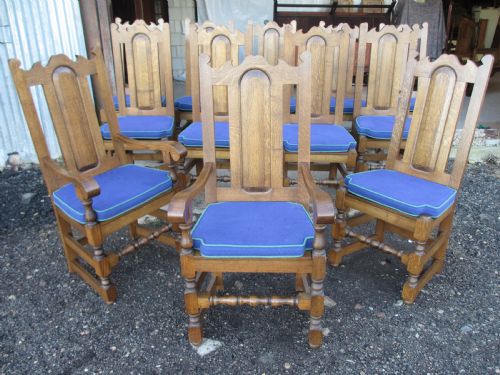
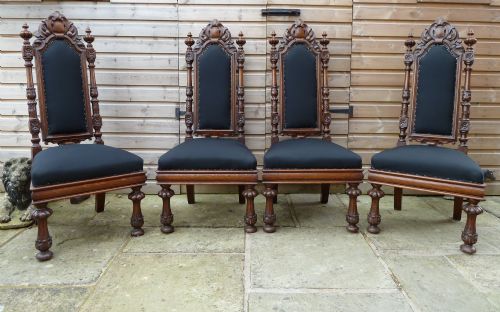
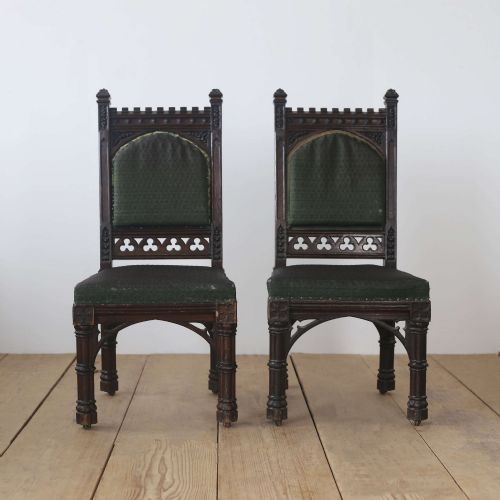
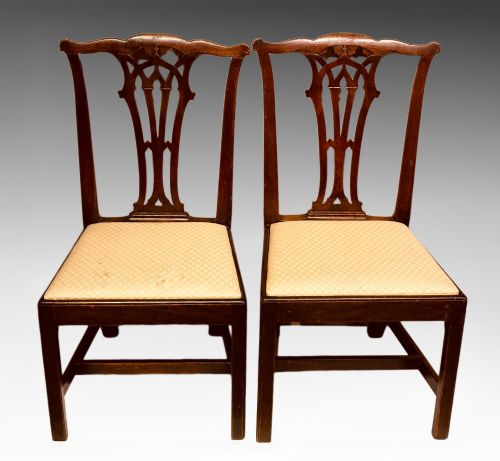
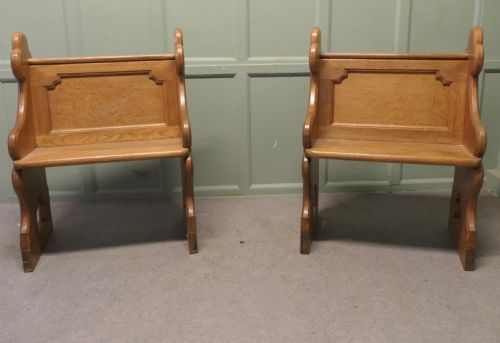
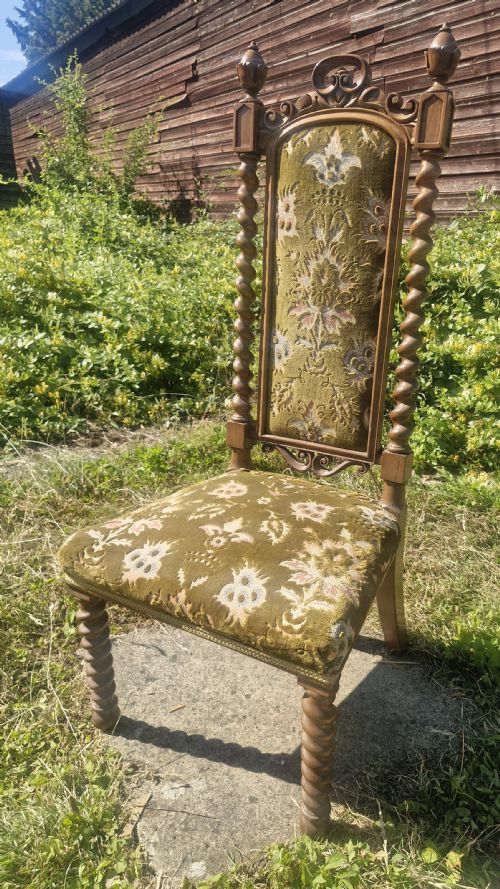
Gothic style side chairs bring architectural timberwork to the dining room, offering high carved backs and sturdy frames.
Gothic Style Side Chairs
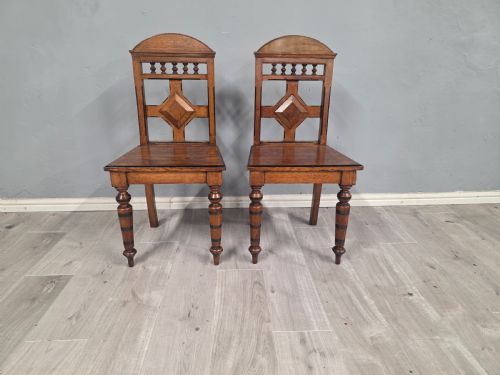
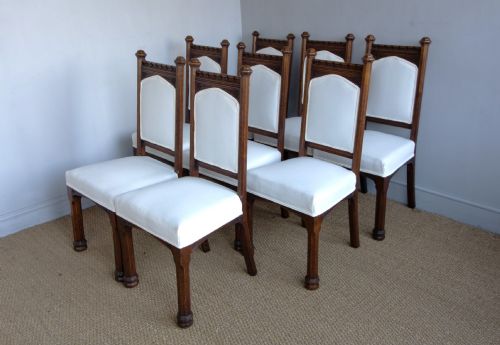
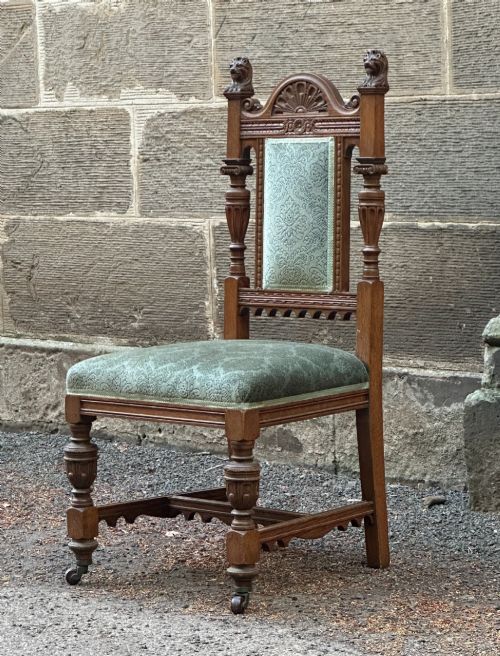
When searching for gothic style side chairs, you encounter seating built primarily during the nineteenth century, drawing heavily on medieval architectural forms. These pieces often function as dining chairs or hall chairs, displaying pointed arches and tracery.
The most common examples on this page are carved from oak and mahogany, spanning the Victorian period and the Gothic Revival movement. Makers of the time looked back to earlier eras, producing chairs with high backs and solid wooden seats or upholstered inserts.
How they were made
Carpenters constructed these chairs using solid timbers such as oak, mahogany, walnut, and pitch pine, often joining the frame with traditional mortise and tenon joints. Carvers then worked directly into the wood to create pointed arches, linenfold panels, and heraldic motifs.
Upholstered versions relied on materials like leather, velvet, and various upholstery fabrics, secured with brass tacks to the wooden foundation. Rosewood and ebonised finishes also appear, showing the range of treatments applied to the timber.
Gothic Style Side Chairs Retail Price Guide 2026
Typical asking prices for gothic style side chairs among the pieces listed under this phrase on Sellingantiques today, from the lower quarter to the upper quarter. They describe what is for sale here now, not the wider market.
Listings feature oak, mahogany, rosewood, walnut, and pitch pine across pieces dated from the eighteenth to the early twentieth century.
What varies in quality
The depth and crispness of the timber carving set superior examples apart from simpler production. Sharp relief work on the tracery and linenfold panels indicates skilled workshop execution.
The choice of primary wood and the integrity of the frame construction determine the tier of the piece. Heavy, dense oak or well-figured mahogany with tight joinery represents the upper end of the range.
Norwich Maker·Bruce Talbert·Gillows·A. W. N. Pugin
The Gothic Style Side Chairs Glossary
- Gothic Revival
- A nineteenth-century design movement that revived medieval architectural motifs in furniture and buildings. It heavily influenced the makers of these chairs.
- Tracery
- Openwork ornamentation in stone or wood, typically consisting of intersecting ribwork. On chairs, this appears carved into the backs.
- Sgabello
- A light, highly portable wooden chair featuring a box-like base or trestle supports rather than four legs. These Italian Renaissance forms occasionally surface alongside gothic designs.
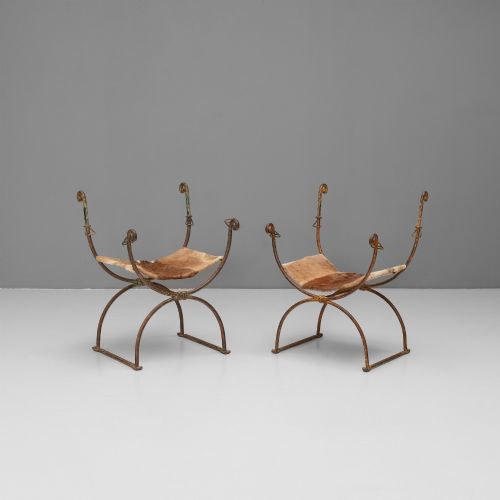
- X-framed chair
- Seating constructed with intersecting diagonal members forming an X shape when viewed from the side. This early form was reinterpreted during the nineteenth century.
Gothic Style Side Chairs: Frequently Asked Questions
How do I spot a genuine nineteenth-century Gothic chair?
Examine the timber grain and the hand-carved details on the backrest, as nineteenth-century pieces display tool marks absent in later reproductions. The choice of woods like solid oak or pitch pine also points to the period.
Check the joinery underneath the seat to confirm traditional construction methods were used. Heavy hand-carved elements without modern mechanical fasteners generally indicate a true nineteenth-century origin.
Were these chairs used at dining tables?
Many examples on this page served around large dining tables, while others functioned as hall or library seating. Sets of matching chairs were produced specifically for formal dining rooms.
Single chairs and pairs more often served as decorative hall seats or occasional pieces. Their high backs and rigid timber frames made them suited for upright posture rather than lounging.
How do I care for antique oak and mahogany chairs?
Keep wooden chairs away from direct heat sources and dramatic humidity changes to prevent the timber from splitting. Regular dusting with a dry cloth maintains the finish without building up residue.
Feed dry wood occasionally with appropriate wax to preserve the sheen of the grain. Avoid using modern chemical polishes that can soften historic wax surfaces.