



Gothic Rustic Table
A gothic rustic table combines heavy medieval architectural lines with honest vernacular timbers, offering robust character and a grounded presence.
Gothic Rustic Table
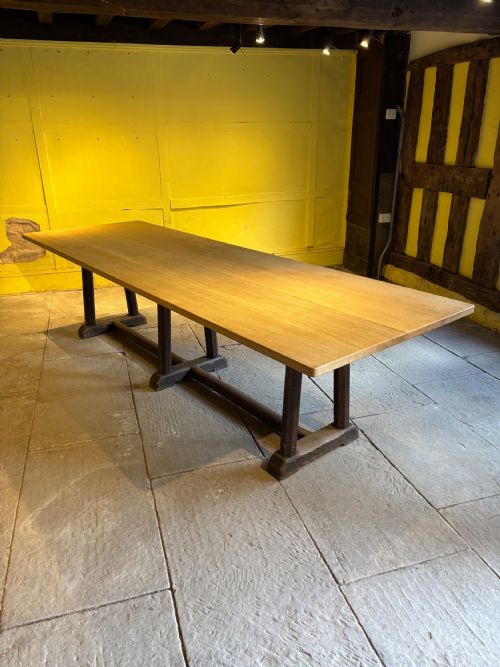
A gothic rustic table is a functional domestic or institutional surface defined by medieval architectural detailing executed in vernacular woods. When searching for a gothic rustic table, buyers encounter forms ranging from massive refectory and monastery dining tables to narrower side, console, and prep tables.
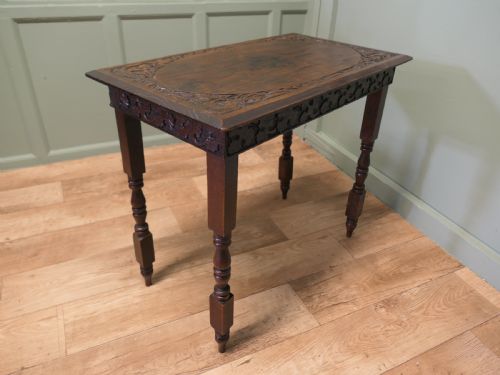
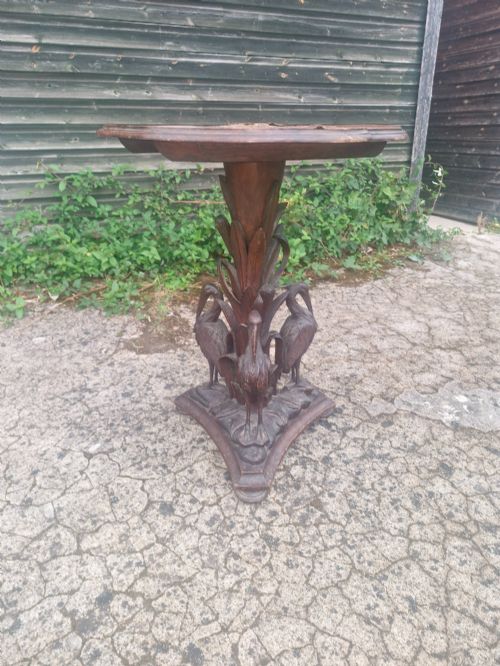
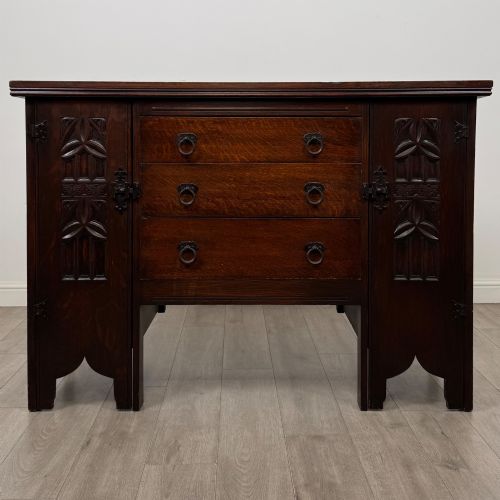
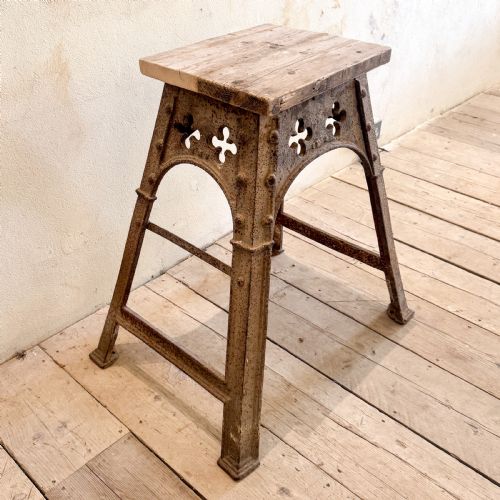
The pieces appearing in this category span the nineteenth century through the early twentieth century, taking in Victorian, Edwardian, and Arts and Crafts interpretations. Stools, sideboards, and occasional tables also emerge alongside the primary dining and serving surfaces.
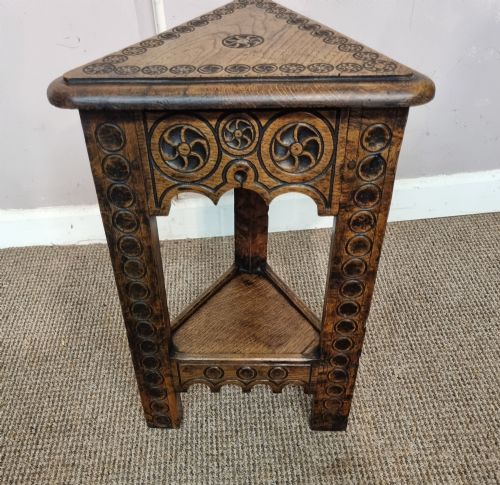
Makers of these items drew upon Gothic Revival, Celtic Revival, and Jacobean Revival vocabularies to embellish utilitarian forms. The resulting furniture bridges ecclesiastical and domestic spheres, serving practical functions while displaying arches, tracery, and heavy timber construction.
How they were made
Construction relies primarily on solid oak, pine, pitch pine, and elm timbers selected for durability and grain presence. Iron and cast iron components appear in structural supports or hardware, contributing to the industrial and utilitarian aspect of the pieces.
Carpenters utilised traditional joinery methods to build heavy trestle, refectory, and pedestal frames capable of supporting substantial wooden tops. Carving is executed directly into the timber, featuring motifs such as Celtic patterns, tracery, and chamfered edges.
Gothic Rustic Table Retail Price Guide 2026
Typical asking prices for gothic rustic table among the pieces listed under this phrase on Sellingantiques today, from the lower quarter to the upper quarter. They describe what is for sale here now, not the wider market.
Some nineteenth-century church tables quietly retired from Sunday service to spend their golden years holding bottles in domestic wine racks.
What varies in quality
Quality depends upon the integration of architectural ornament with structural integrity in the timber. Pieces featuring crisply carved details and well-proportioned trestle or refectory bases stand apart from simpler utilitarian variants.
The choice of material influences the character, with dense old-growth oak and pitch pine providing superior weight and surface depth compared to softer or more utilitarian woods. The harmony between the rustic construction and the Gothic revival detailing dictates the overall success of the piece.
The Gothic Rustic Table Glossary
- Refectory table
- A long, narrow dining table traditionally used in monasteries and communal dining halls. These sturdy surfaces form a cornerstone of the rustic Gothic aesthetic.
- Trestle table
- A table consisting of two or more support frames connected by a horizontal beam underneath a top. This construction allows for maximum legroom along the length of the surface.
- Gothic Revival
- An architectural and decorative style drawing inspiration from medieval design elements like pointed arches and heavy tracery. It heavily influences nineteenth-century furniture production.
- Pitch pine
- A resinous softwood noted for its pronounced grain pattern and durability. It frequently appears in nineteenth-century utilitarian and serving tables.
- Tracery
- Openwork ornamentation resembling stone ribbing in Gothic windows. Carpenters translated this architectural feature into woodwork on panels and friezes.
Gothic Rustic Table: Frequently Asked Questions
What is a gothic rustic table?
A gothic rustic table is a heavy wooden surface that combines medieval architectural ornamentation with vernacular domestic construction. These pieces typically date from the nineteenth and early twentieth centuries.
They manifest as dining tables, refectory tables, and smaller side surfaces utilising oak, pine, and elm. The style merges ecclesiastical motifs with everyday utility.
How do I date a gothic rustic table?
Dating relies on examining the timber species, joinery techniques, and stylistic revival influences present in the construction. Pieces from the Victorian and Edwardian periods often exhibit specific Gothic or Arts and Crafts revival characteristics.
Secondary woods, tool marks, and hardware also provide physical evidence of the era of manufacture. Comparing the decorative carving style to documented nineteenth-century cabinetmaking helps narrow the timeframe.
Where were these tables used?
These tables served in a variety of domestic, institutional, and country house settings throughout the nineteenth and early twentieth centuries. Larger refectory and monastery formats fulfilled communal dining roles in large houses or establishments.
Smaller variants functioned as prep tables, side tables, or serving surfaces in kitchens and pantries. Their robust build suited them to heavy daily use.
How do I maintain a wooden rustic table?
Maintenance involves protecting the solid timber surfaces from excessive moisture and rapid temperature fluctuations. Regular dusting with a dry cloth preserves the finish of oak, pine, or elm.
Applying appropriate waxes or oils helps nourish older wood without sealing the grain permanently. Avoiding direct heat sources prevents warping in heavy table tops.