

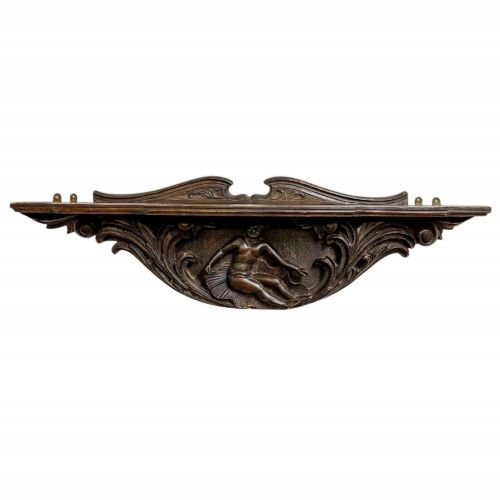
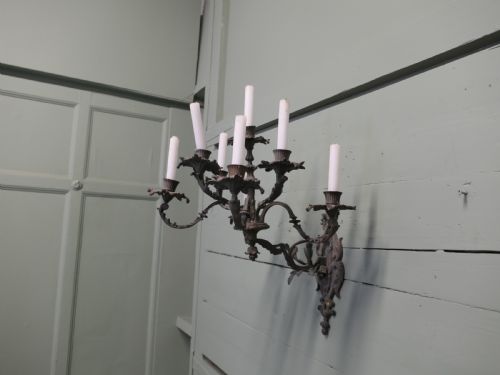


Gothic Revival Wall Bracket
These gothic revival wall bracket examples bring architectural carved character and period shelf space to a room.
Gothic Revival Wall Bracket
A gothic revival wall bracket brings architectural form and shelf space into interiors, often drawing on Victorian and Renaissance Revival styles. Buyers seeking a gothic revival wall bracket will find architectural carvings, wall shelves, and candle sconces designed to mount securely onto vertical surfaces.
The pieces on this page span from the nineteenth century into the twentieth century, encompassing varied forms like oak carved overdoors, gilt terracotta winged sirens, and wrought iron shelves. Most examples lean towards Victorian Gothic Revival or Arts and Crafts interpretations executed in timber, metal, and terracotta.
How they were made
Maker execution relies heavily on carved timber, ranging from solid oak and rosewood to pine and walnut. Artisans shaped these woods into structural brackets and decorative wall shelves using traditional hand-carving techniques.
Metalworking forms another pillar of production, utilising wrought iron, bronze, and copper for wall lights and sconces. Terracotta and gilt finishes additionally appear, providing textural contrast and surface ornamentation.
Gothic Revival Wall Bracket Retail Price Guide 2026
Typical asking prices for gothic revival wall bracket among the pieces listed under this phrase on Sellingantiques today, from the lower quarter to the upper quarter. They describe what is for sale here now, not the wider market.
Listings span multiple decades from the nineteenth into the twentieth century, incorporating materials from wrought iron and oak to gilt terracotta.
What varies in quality
Quality rests primarily in the crispness and depth of the carving, where master handiwork distinguishes itself from simpler production. Pieces bearing named provenance or detailed figural work, such as archangels or sirens, demonstrate superior artisan investment.
Material selection and structural integrity further divide the range, with dense hardwoods and finished metals holding finer detail than lesser mediums. The sophistication of the period revival style, whether strictly Gothic or blending Renaissance motifs, dictates the visual depth of the bracket.
Luigi Frullini
The Gothic Revival Wall Bracket Glossary
- Gothic Revival
- An architectural and decorative style drawing on medieval ecclesiastical forms, pointed arches, and heavy ornamentation. It dominated much of the nineteenth century across furniture and interior fittings.
- Wall Bracket
- A supporting architectural member projecting from a wall to hold a shelf, light, or sculpture. These structural elements combine utility with decorative carving.
- Wall Sconce
- A candle or electric light fixture fixed to a wall, frequently mounted on a decorative backplate or bracket. They project illumination outward into the space.
- Provenance
- The documented history of ownership of an object, providing a paper trail for its origin and authenticity. It adds historical context to antique pieces.
- Architectural Carving
- Ornamental woodwork or stonework designed as part of a building's structure or fitted interior. These carvings often translate large cathedral motifs into domestic furniture.
Gothic Revival Wall Bracket: Frequently Asked Questions
What rooms suit a gothic revival wall bracket?
These brackets suit hallways, libraries, and living spaces where architectural timber and metalwork complement period interiors. They mount easily onto plaster or wood-panelled walls to display small objects or hold lighting.
Because they project outward, placing them above eye level or in transit zones ensures they command attention without obstructing movement through the room.
How do I mount a heavy antique bracket?
Mounting heavy timber or bronze pieces requires locating wall studs or using heavy-duty wall anchors rated for the weight of the material. Oak, wrought iron, and bronze examples carry substantial mass that standard picture hooks cannot support.
Consulting a professional installer ensures the bracket anchors securely into the wall structure without damaging the antique wood or metal.
How do I tell Victorian gothic from Arts and Crafts?
Victorian gothic pieces often display heavier ecclesiastical ornamentation, pointed arches, and deep, dramatic relief carving. Arts and Crafts variants tend to showcase simpler, hand-worked metals like copper alongside honest timber construction.
Comparing the surface finishes and decorative restraint helps distinguish between the elaborate Victorian aesthetic and the later, more simplified craft movement.