

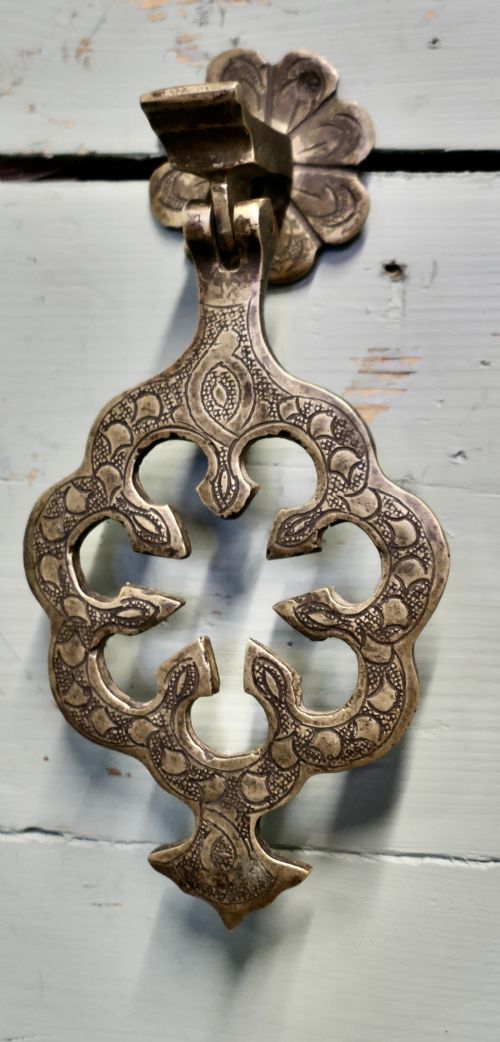


Gothic Door Hardware
These gothic door hardware pieces give heavy doors a strong historical character using iron, brass, and bronze.
Gothic Door Hardware
When you search for gothic door hardware, you encounter functional items built to secure and operate heavy entryways. The examples appearing here span from the seventeenth century through the Victorian era, offering substantial metalwork for period properties.
The most common forms you meet on this page are door knockers, handles, hinges, and bolts. These pieces combine utility with decorative motifs drawn from medieval architecture and design.
Makers utilised durable metals such as brass, bronze, iron, wrought iron, and steel to construct these items. Many pieces incorporate oak or other woods alongside the metalwork to complete locks and functional assemblies.
Materials and construction
Items in this category rely heavily on cast and wrought metals shaped by hand or in a foundry. Brass and bronze pieces often feature detailed piercing, casting, and hand-finishing to accentuate their ornamental shapes.
Ironwork relies on blacksmithing techniques including twisting, forging, and riveting to create robust hinges, handles, and bolts. Wooden elements like oak are joined to steel components to form working locks and internal mechanisms.
Gothic Door Hardware Retail Price Guide 2026
Typical asking prices for gothic door hardware among the pieces listed under this phrase on Sellingantiques today, from the lower quarter to the upper quarter. They describe what is for sale here now, not the wider market.
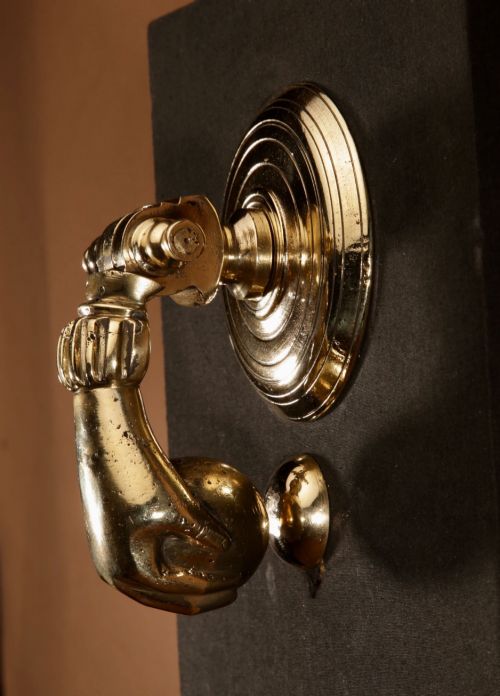
Someone spent hours casting a heavy bronze hand to greet your visitors before they even step inside.
Assessing quality
Quality in these metal components rests on the crispness of the casting and the weight of the material used. Heavier brass, bronze, and iron castings retain sharper details in piercing and shaping than lighter, more simplified productions.
The integrity of working parts, such as the pivot of a knocker or the mechanism of a lock, distinguishes superior examples from standard utility pieces. Original fixings and intact patination also elevate the standing of a piece.
The Gothic Door Hardware Glossary
- Door Knocker
- A hinged metal device mounted on a door for striking the wood to gain attention. These often take sculptural forms such as hands or geometric revival patterns.
- Gothic Revival
- An architectural and decorative style popular during the nineteenth century that revived medieval forms, pointed arches, and heavy ornamentation.
- Wrought Iron
- Iron that has been heated and worked with tools by a blacksmith rather than cast in a mould. This process results in tough, fibrous metal well suited to hinges and structural hardware.
- Door Bell Pull
- A mechanical linkage passing through a door jamb connected to a bell inside the house. Pulling the exterior handle rings the bell to announce visitors.
Gothic Door Hardware: Frequently Asked Questions
What periods do these pieces come from?
The inventory on this page spans several centuries, including seventeenth-century elements and nineteenth-century Victorian pieces.
Victorian Gothic Revival items are particularly common, reflecting a nineteenth-century fascination with medieval design.
Which metals are used most often?
Brass and bronze appear frequently in decorative knockers, handles, and bell pulls. These metals offer durability and a warm metallic tone.
Iron and steel are typically employed for structural items like hinges, bolts, and locks where maximum strength is required.
How do I identify a Victorian Gothic piece?
Victorian Gothic items often combine heavy cast brass or iron with architectural motifs such as pointed arches and twisted bars. They were produced to complement the Gothic Revival buildings of the nineteenth century.
Earlier seventeenth-century pieces display simpler, utilitarian forging methods suited to period timber doors.
Can I install these antique items on modern doors?
Many of these handles, knockers, and bolts remain functional and can be fitted to solid wooden doors. You should check the dimensions and fixings of each piece against your door thickness.
Professional installation is recommended for complex items like locks and bell pulls to avoid damaging the antique mechanisms.