


Golden Brown Walnut Sideboard
A golden brown walnut sideboard brings rich grain and practical storage to a room, spanning Victorian and Art Deco forms.
Golden Brown Walnut Sideboard
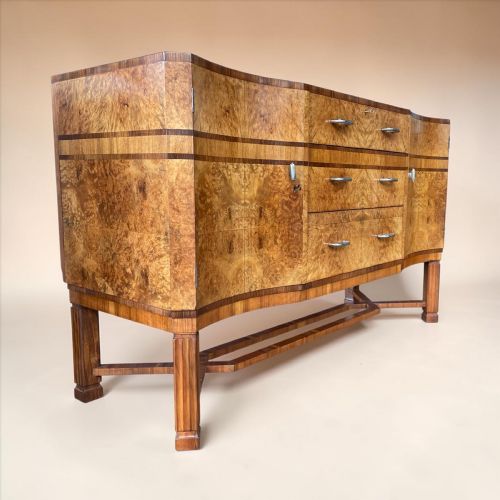
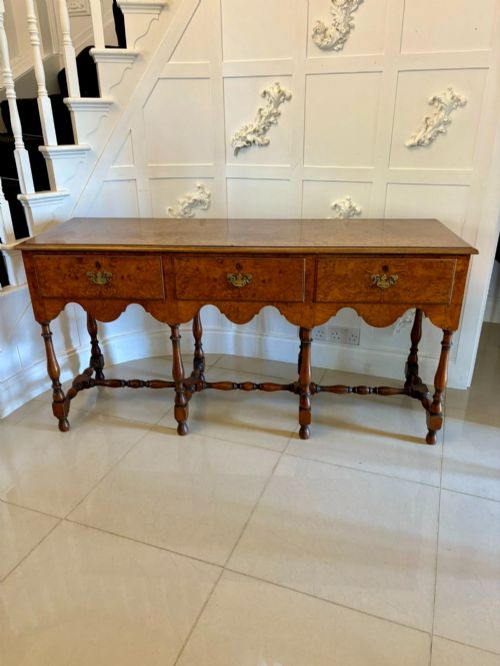
A golden brown walnut sideboard covers a range of large storage furniture designed for dining rooms and living spaces, appearing in forms such as credenzas, side cabinets, and serving tables. These items span periods from the nineteenth century through the Edwardian era and into the Art Deco style of 1930.
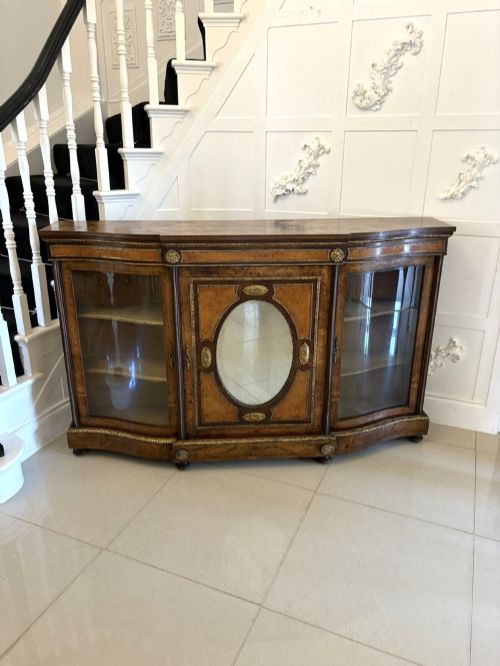
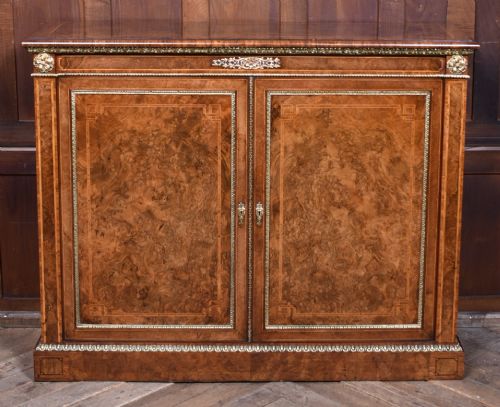
The version most commonly met on this page is the Victorian burr walnut credenza or side cabinet, alongside Art Deco sideboards dated to 1930. Makers utilised walnut and burr walnut veneer to build these functional storage pieces, often pairing the timber with glass, brass, or ormolu mounts.
How they were made
Cabinet makers utilised solid walnut and burr walnut veneer over supportive timber carcases to create rich, figured surfaces. The distinctive grain patterns rely on careful slicing of burr timber to display complex natural swirls across the main body and doors.
Hardware and decorative elements include cast brass handles, chrome hardware, and ormolu mounts affixed to the timber structures. Some pieces incorporate fitted mirrors and glass panels to enhance the internal storage or display capacity.
Materials recorded across these pieces include burr walnut veneer, plain walnut, brass, ormolu, glass, chrome hardware, and mirror.
What varies in quality
The refinement of the timber selection dictates the visual impact, with tightly figured burr walnut veneer demonstrating superior patterning compared to plain walnut boards. Surface finishing also plays a role, where hand-polished timber reveals the depth of the grain more effectively.
Construction detail separates standard production from finer examples, visible in the integration of cast ormolu mounts, brass fittings, and glass elements. The balance of proportions across credenzas, sideboards, and serving tables determines the overall elegance of the design.
Harry and Lou Epstein
The Golden Brown Walnut Sideboard Glossary
- Burr Walnut
- A timber obtained from the warted growths on walnut trees, prized for its swirling grain patterns. It is sliced into thin veneers for furniture surfaces.
- Credenza
- A low cabinet or sideboard, frequently featuring glass doors or curved ends. Victorian examples often incorporate ormolu mounts.
- Ormolu
- Gilded bronze ornamentation applied to furniture. It is commonly found on nineteenth-century pieces.
- Serving Table
- A long, narrow table designed for dining room service. Examples appear from the early twentieth century.
Golden Brown Walnut Sideboard: Frequently Asked Questions
What is a golden brown walnut sideboard?
A golden brown walnut sideboard is a large storage unit built from walnut timber, encompassing nineteenth-century credenzas, Edwardian dresser bases, and 1930s Art Deco designs.
These items provide surface space and enclosed storage for dining rooms and reception rooms, utilising figured veneers for visual depth.
How do I date a walnut sideboard?
Dating relies on stylistic markers and construction methods, distinguishing Victorian pieces from 1930s Art Deco models.
Victorian credenzas frequently feature ormolu mounts and curved glass, whereas 1930s sideboards display streamlined geometric forms and sometimes chrome hardware.
Where were these sideboards used?
These items served primarily in dining rooms and grand hallways for storing tableware, linens, and serving dishes.
Their decorative surfaces also allowed them to display ornaments and serving tables offered supplementary space during meals.
How do I care for walnut veneer?
Walnut veneer requires protection from direct sunlight and excessive moisture to prevent fading and lifting of the timber.
Regular dusting with a dry cloth helps maintain the polish on the burr walnut surfaces without damaging the finish.